

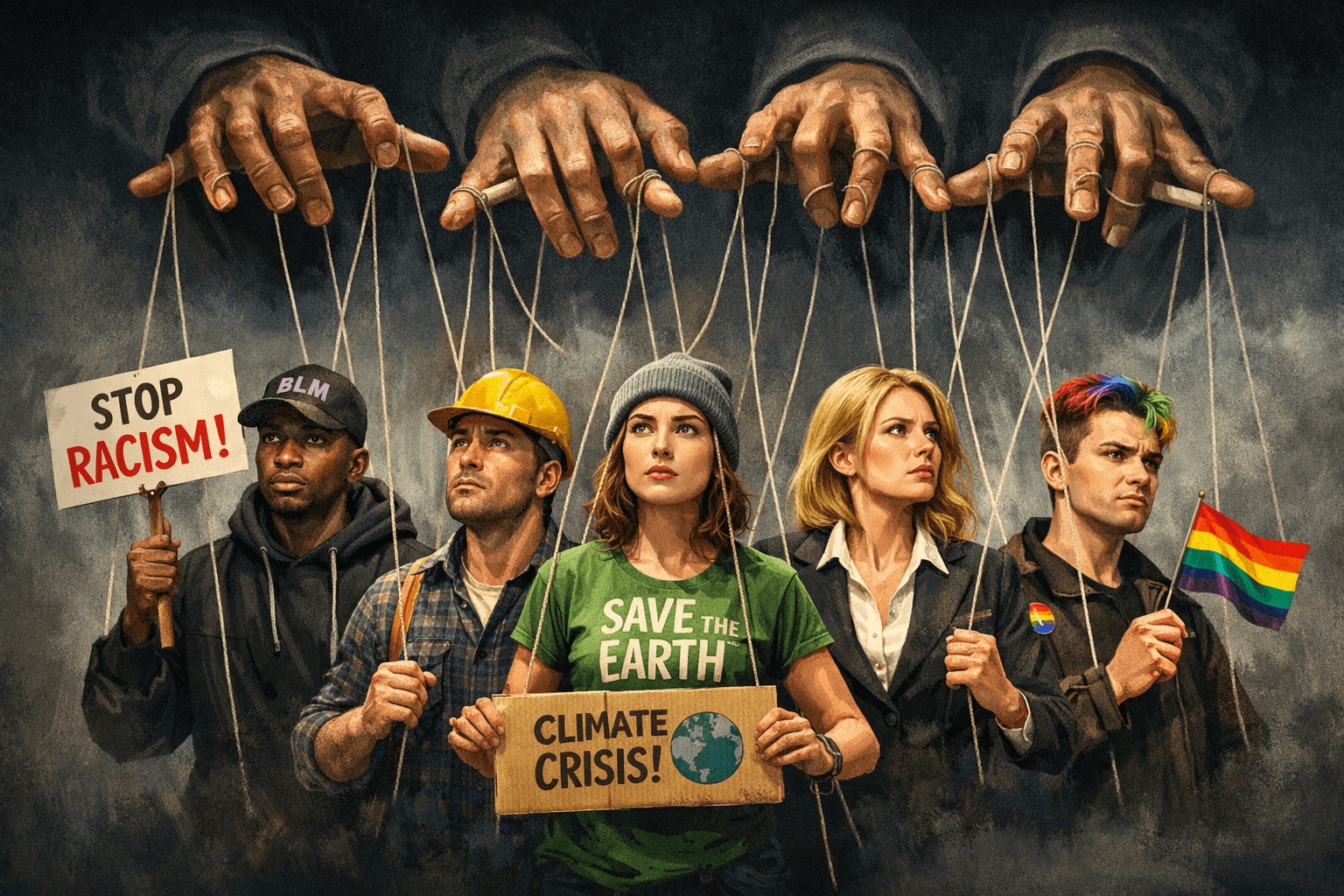
“Fear is one of the most powerful forces in politics. A voter who believes disaster is coming will rarely take risks at the ballot box.”
Look at the modern Democrat coalition for a moment.
It includes Black voters, immigrant communities, feminists, LGBT activists, environmental activists, and large numbers of younger voters. On the surface, these groups appear to have very different priorities. Their economic interests are not identical. Their cultural concerns are not identical. Many of them live in different parts of the country and face very different daily problems.
Yet they vote overwhelmingly for the same political party.
In the 2024 presidential election, Edison Research exit polls showed roughly 87 percent of Black voters supported the Democrat candidate. Hispanic voters leaned Democrat nationally by about 60 percent. Voters under age 30 supported the Democrat ticket by roughly 62 percent. Surveys of LGBT voters regularly show support for Democrats exceeding 70 percent. Women overall still tilt toward Democrats nationally.
This raises an obvious question.
What holds such different groups together politically?
The answer is not shared economic interests. It is not a common cultural background. It is not even agreement on most policy questions.
The answer is fear.
The modern Democrat Party has learned something very useful. Different groups fear different things. A party that understands those fears can build a very stable political coalition.
Once people believe their safety, identity, or future is under threat, they tend to vote for whoever promises protection.
Fear Is the Political Glue
Political coalitions usually form around shared interests.
Farmers want farm policy. Business owners care about taxes and regulation. Workers worry about wages and job security.
But the Democrat coalition works somewhat differently. Many of its groups have very little in common economically or culturally. What they share is the belief that something dangerous is looming over their future.
Black voters are warned about systemic racism.
Immigrant communities hear constant warnings about deportation.
Women are told their rights are under attack.
Young voters are warned that the planet itself may soon face environmental collapse.
LGBT voters are told their very identity is under threat.
The message changes depending on the audience.
The method does not.
Fear creates loyalty.
The Script Changes With the Audience
One of the clearest signs that fear is the glue holding this coalition together is how easily Democrat politicians change their message depending on the audience in front of them.
Good ideas usually resonate with most audiences regardless of race, gender, or political affiliation. Fear-based messaging works differently.
They do not speak the same way to every group because they are not appealing to the same hope in every room. They are appealing to a different fear.
When they speak to Black audiences, the message is usually some version of racism is everywhere, and Republicans are one election away from bringing it all back.
When they speak to gay audiences, the warning becomes that the other side wants to force them back into the closet and erase the gains of the last few decades.
When they speak to Hispanic audiences, the message often shifts to immigration. Deportation is portrayed as looming around the corner, even though most Hispanics living in the United States are here legally and would have no reason to fear removal. But that tells you something about how the audience is being viewed politically.
When they speak to younger voters, the message shifts again. Now the fear is climate collapse. The planet is dying. Time is running out. Your future is slipping away.
And when they speak to White women, especially college-educated suburban voters, the message becomes that the country is sliding backward. Rights are under attack. The clock is being turned back to the 1950s.
The audience changes. The script changes.
But the method remains the same.
Find the fear. Feed the fear. Convert the fear into votes.
The Message Sent to Black Voters
Consider the political messaging directed toward Black Americans.
For decades, the dominant narrative has emphasized that racism remains the defining force shaping American life. In some cases, racism certainly exists. No serious person denies that. But the political messaging often goes far beyond the available evidence.
Black voters are frequently told that voting rights are under constant threat and that the police represent a systemic danger.
Yet the country in 2026 looks very different from the country of 1965.
Black voter participation has often equaled or exceeded White voter turnout in modern elections. According to the U.S. Census Bureau, Black voter turnout surpassed White turnout nationally in the 2012 election. Black Americans today serve at every level of government. There have been Black governors, cabinet secretaries, Supreme Court justices, and a two-term Black president.
Police violence is another area where perception and reality often diverge.
According to the Washington Post police shooting database, police shot and killed about 1,160 people in the United States in 2023. Roughly 225 of those individuals were Black. Those deaths deserve scrutiny and accountability. But they occur in a country of roughly 340 million people, and millions of police encounters every year.
Yet the political message often suggests a far larger and more pervasive threat.
Fear fills the gap between perception and context.
The Message Sent to Immigrant Communities
Immigrant communities receive a different version of the same strategy.
Political messaging frequently suggests that Republicans are preparing mass deportations or broad crackdowns on immigrants.
Immigration enforcement does exist. It has existed under every modern administration.
Between 2009 and 2016, the Obama administration recorded more than 3 million removals through the Department of Homeland Security. That remains the largest deportation total of any administration in American history.
Yet immigrant voters are often told that enforcement policies represent a uniquely extreme threat under Republican leadership.
Fear encourages political loyalty.
The Message Sent to Women
Messaging directed toward women has changed over time but follows the same pattern.
For decades, feminist activism focused on economic opportunity and workplace equality. In recent years, political messaging has centered heavily on abortion rights.
After the Supreme Court’s 2022 decision in Dobbs v. Jackson Women’s Health Organization overturned Roe v. Wade, the issue became a central campaign message. Democrats repeatedly warned that Republican victories could eliminate abortion rights nationwide.
The legal reality is more complicated. The Dobbs ruling returned authority over abortion law to individual states. As of early 2026, abortion policy varies widely across the country. Some states maintain broad access while others impose significant restrictions.
But nuance rarely mobilizes voters.
Fear does.
The Message Sent to Young Voters
Young voters are mobilized through a different form of fear.
Climate catastrophe.
Climate change is a real scientific issue. But political messaging often presents it in apocalyptic terms. Younger Americans hear constant warnings that the planet may become unlivable within their lifetime.
Surveys reflect the impact of that messaging. A 2023 Lancet study of young people across multiple countries found that 59 percent reported feeling very worried about climate change. Nearly half said those fears affected their daily lives.
When voters believe the planet itself faces imminent collapse, their political choices narrow quickly.
Fear channels political behavior.
The Message Sent to LGBT Voters
The messaging directed toward LGBT voters follows a similar pattern.
Policy disagreements over school curriculum, gender identity rules, or medical treatment for minors are often described using extremely dramatic language.
Terms such as oppression, eradication, and even genocide appear frequently in activist rhetoric.
Those words bear little resemblance to the policy debates actually taking place in legislatures across the country. But emotionally powerful language creates urgency.
When people believe their identity itself is under attack, political loyalty becomes almost automatic.
Why Fear Works
None of this should surprise us.
Fear has influenced political behavior for centuries.
The Roman historian Tacitus wrote that people under threat tend to rally behind authority. Modern political research shows similar patterns in democratic societies. When voters believe danger is approaching, they prioritize security over experimentation.
Fear discourages curiosity.
A voter who believes his identity or safety is under threat will rarely take risks at the ballot box. He will vote for whoever promises protection.
This becomes especially powerful when the perceived threat involves identity.
Race. Gender. Immigration status. Sexual orientation. The future of the planet.
These issues trigger powerful emotions.
Political movements throughout history have understood this.
Why the Crisis Never Ends
This leads to a more uncomfortable question.
What happens if the fears holding the coalition together disappear?
If racial panic fades.
If immigration stabilizes.
If climate predictions moderate.
If cultural tensions cool.
Political loyalty might weaken.
That creates a powerful incentive within political systems.
A coalition built on fear requires a steady supply of crisis.
That does not mean every concern raised by activists is imaginary. Real problems exist in every society. But the difference between a problem and a permanent emergency often comes down to political framing.
If the sense of crisis disappears, the political glue holding the coalition together may weaken.
The Incentive Behind the Fear
Political power does not always depend on solving problems.
Sometimes it depends on defining them.
A party that convinces millions of voters they are under constant threat does not need to deliver extraordinary results. It only needs to remain the alleged protector.
Fear lowers expectations.
Voters who believe danger is everywhere are less likely to judge political leaders by economic growth, public safety, or policy competence.
Protection becomes the central promise.
And that promise can be renewed every election cycle.
What Keeps Them Together
Fear has always played a role in politics.
Monarchies once warned their subjects that chaos would follow without the king. Revolutionary movements warned that tyranny would return without the revolution. Modern political parties are no different.
A voter who believes disaster is coming will overlook many things.
Poor policy.
Weak results.
Even obvious contradictions.
All he needs is someone who claims to stand between him and the threat.
Fear does not require results. It only requires a convincing threat.
In modern American politics, that promise has become the glue holding the Democrat coalition together.
Help Keep Independent Arguments Alive
The modern information system runs on narratives.
Many of those narratives are carefully constructed, emotionally charged, and repeated until they feel like reality. The goal is not always to inform. Often, the goal is to shape how people think and what they fear.
This publication exists to do something different.
The purpose here is to examine political arguments carefully, question widely repeated claims, and present ideas that many large media outlets would rather ignore.
That kind of work only exists because readers support it.
If you believe more independent voices are needed in public debate, there are several ways to help keep this project going.
Become a Paid Subscriber
Paid subscribers make the work possible.
Your support allows this publication to continue researching, writing, and publishing essays that challenge the dominant narratives shaping American politics.
Even a small monthly contribution helps keep the work independent and consistent.
If you value thoughtful political analysis that is not filtered through corporate media or institutional pressure, becoming a paid subscriber is the best way to support it.
Make a One-Time Gift
Some readers prefer to support the work occasionally rather than through a subscription.
One-time contributions help cover the costs of research, writing time, and publishing.
Every contribution helps keep the work moving forward.
Join The Resistance Core
The Resistance Core is the top supporter tier for readers who want to help sustain the project at a deeper level.
Members of this group play an important role in keeping the publication independent and growing.
Their support helps fund day-to-day operations and the long-term development of this platform.
If you believe this kind of work needs to exist, joining the Resistance Core is one of the most meaningful ways to help.
What Your Support Builds Right Now
Support from readers is helping expand the scope of the work in several ways:
• deeper investigative essays on political narratives
• historical analysis of major political myths
• research projects examining media influence and institutional power
• long-form pieces that take time to investigate and write properly
The goal is simple.
Produce work that helps readers understand what is actually happening in politics rather than what they are told is happening.
If You Cannot Give
Not everyone can contribute financially.
That is completely understood.
You can still help this work reach more readers by sharing essays, posting them on social media, or sending them to friends who enjoy serious political analysis.
Word of mouth remains one of the most powerful ways independent writing spreads.
Nation of fear indeed
Excellent article Chris.