


A system that can ignore public will without consequence is not self-government. It is management, maintained by institutions designed to outlast elections.
dems ex ma·chi·na
noun
A political condition in which the Democrat Party’s influence persists regardless of election outcomes, exercised through permanent institutions such as the bureaucracy, media, academia, and administrative agencies rather than through direct voter mandate.
A modern form of deus ex machina in which outcomes are determined not by democratic choice, but by unseen institutional mechanisms that intervene to preserve ideological continuity and nullify electoral disruption.
Usage:
“After the election changed leadership but nothing else, it became clear the system was operating under a dems ex machina.”
Etymology:
From Democrat + Latin ex machina (“from the machine”), referring to power imposed by an external mechanism rather than organic resolution.
Every few years, Americans go to the polls believing they’re selecting a new direction for the country. Campaigns promise sharp turns; lower prices, stronger borders, safer streets, and more freedom. Yet after the confetti settles and the signs come down, the same costs rise, the same institutions expand, and the same frustrations linger. The faces change, but the results remain the same.
That pattern isn’t random. It reflects the structure of power in modern America and how asymmetrically it operates. The Democrat Party thrives because it sits atop the commanding heights of culture and bureaucracy, shaping the terms of national argument. The Republican Party survives because it must constantly react to those shifts, hoping to slow what it cannot reverse. Democrats govern the system itself; Republicans only borrow it for short intervals.
When Democrats control Washington, they move as if the bureaucracy were a natural extension of their campaign. Legislation passes quickly, agencies enforce their will automatically, and the media cheers as though activism and governance were the same thing. When Republicans hold office, they inherit an entrenched apparatus that resists them at every level: a civil service stocked with career leftists, a media complex hostile to dissent, and academic institutions that churn out loyal reinforcements for both. They can issue executive orders and trim tax rates, but every step forward meets sandbags of resistance.
The illusion of competition keeps voters engaged, but real power doesn’t rotate. It migrates slightly, from cultural influence to regulatory enforcement, from narrative control to crisis management. Below, the same Marxist ideology continues to shape policy language, enforce social orthodoxy, and train the next generation of administrators. That’s why America’s long-term direction has remained nearly identical since the late 1960s: more federal oversight, looser borders, higher spending, broader surveillance, and ever-expanding cultural micromanagement masquerading as progress.
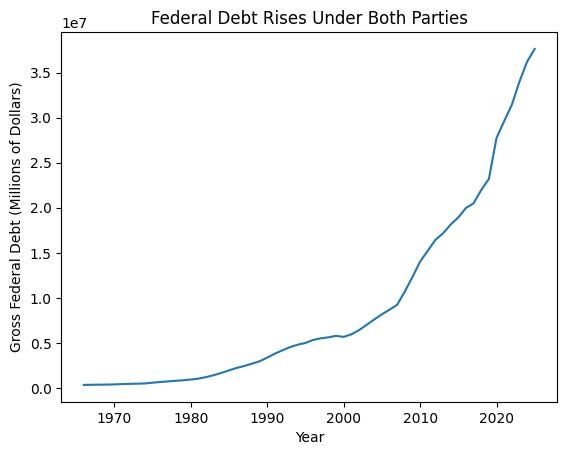
Consider a few examples. The national debt has risen in every decade since 1957, regardless of which party held the White House. Real wages, adjusted for inflation, have been virtually flat since 1973. Family formation, once an emblem of social stability, has reached its lowest recorded rate. Birth rates are 20 percent below replacement. Every administration vows to “restore opportunity,” yet the share of Americans dependent on government transfers continues to climb, up from 17 percent in the early 1980s to over 30 percent by 2025. These aren’t partisan swings; they’re structural outcomes.
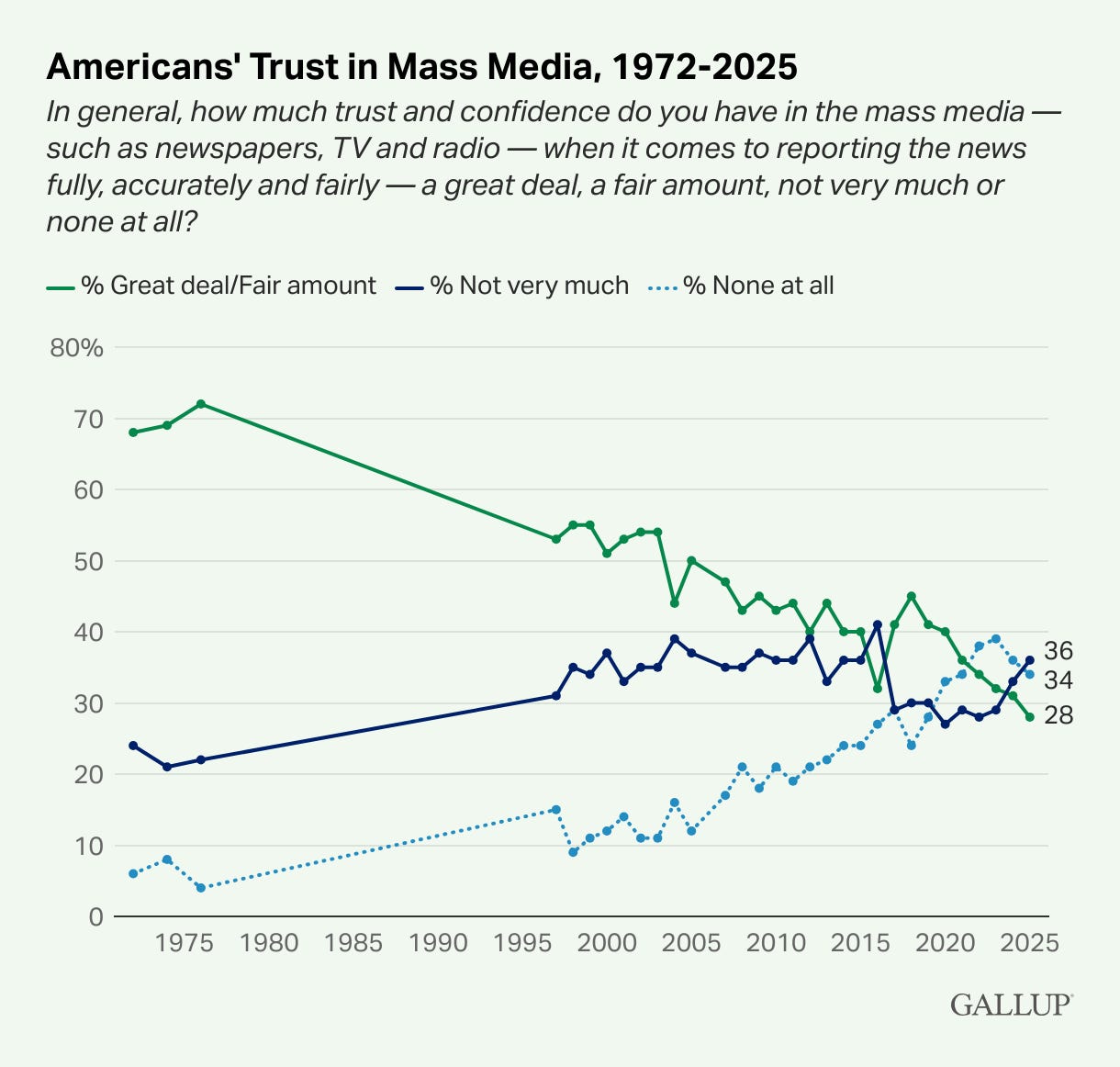
Cultural measures follow the same pattern. Public trust in media, once near 70 percent in the 1970s, hovers around 28 percent. College costs have quadrupled since 1990, while literacy and math competence among high‑school graduates have fallen steadily for twenty years. The nation’s schools added administrators more rapidly than teachers, yet student performance declined. Government assistance rises; public competence falls. Throughout, the bureaucracy grows richer and more secure.
That’s not a coincidence. When a ruling class captures information, regulation, and distribution, political rotation becomes a sideshow. The party aligned with academia, entertainment, and civil service effectively controls the culture’s software. The other party only adjusts the speed of decline; it cannot rewrite the code.
In that light, the debate between the left and the right appears more like a negotiation within a single direction. The Democrat Party expands programs and power; the Republican Party trims their edges to slow the damage. One builds the maze, the other promises to help you run through it. Despite the noise about ideology, the shared outcome is permanent government growth and short‑lived citizen relief.
This pattern didn’t arise overnight. Over decades, the machinery of the state extended its reach through legislation, unelected agencies, and cultural indoctrination. The central innovation of the modern Democrat strategy lies in understanding that governing America no longer requires majority consent; it requires institutional control. And over time, they built that control into nearly every structure that shapes public perception.
The Toolboxes of Power
Both parties campaign as if they possess equal means to shape the country. They do not. The Democrat Party and the Republican Party operate with entirely different equipment. One controls the levers of culture and administration. The other depends largely on elections, public goodwill, and the hope of temporary momentum before the system recovers from the shock.
The Democratic Party’s power lies within institutions that operate regardless of voter participation. Universities, federal agencies, media outlets, entertainment platforms, publishing houses, and most major corporations operate from the same worldview. That alignment creates a soft network that enforces compliance without explicit direction. Even when a Democrat loses an election, bureaucrats loyal to the same ideology remain in place. The policies pause, but the personnel do not.
This advantage is older than most realize. During the second half of the twentieth century, the establishment created a communications monopoly under the banner of fairness. The Fairness Doctrine, introduced in the late 1940s, required radio and television license holders to present “balanced” coverage of controversial issues. In theory, it was about equal access. In practice, it was a convenient way to suppress conservative viewpoints by forcing stations to give “equal time” to rebuttals that never applied to the overwhelmingly liberal news anchors who shaped nightly broadcasts. The rule was enforced with near‑religious devotion whenever a station dared criticize the political left.
When President Reagan repealed the Fairness Doctrine in 1987, the press reaction was hysterical. Liberal commentators claimed he had silenced the truth itself. In reality, he had opened the airwaves for the first time. Within a few years, conservative talk radio exploded across the country. Millions of Americans who had never heard their own frustrations reflected back to them found voices that made sense of the chaos. The response from the media establishment was panic. The same people who insisted on “balance” suddenly demanded restrictions, complaining that talk radio was turning voters against “responsible journalism.”
The same pattern repeated when Fox News launched in 1996. For decades, CNN, NBC, CBS, ABC, and the papers of record all carried the same ideological slant, pretending to represent neutrality. Then one network dared to provide an alternative. The outrage was instantaneous. Critics called Fox propaganda, even while every other national outlet leaned openly and comfortably to the left. The lesson for the public was clear. “Fairness” only meant control.
These institutions still define what Americans see, hear, and believe. They decide what counts as news and which perspectives are dismissed as dangerous or fringe. Through repetition and selective coverage, they shape public memory itself. Most voters cannot name a senior policy adviser, but they know the celebrity who echoes the party line on their favorite streaming platform. That is the result of cultural engineering sustained for generations.
The bureaucracy provides the second major tool in the Democrat kit. Career officials within the federal government outlast elections by design. They write the rules, interpret them, and enforce them with the precision of a hidden legislature. Surveys continue to show that more than 80 percent of federal employees vote for the Democrat Party. This near‑total imbalance in political orientation gives the party a standing army that never faces re‑election. Regulations that favor unions, green projects, or social programs advance seamlessly. Directives that encourage energy independence or school choice encounter obstacles and delays until the next turnover in Washington.
The education system reinforces all of it. Classrooms in once‑neutral subjects like history or civics now teach identity and grievance as moral imperatives. Students come away believing that skepticism toward the federal apparatus is ignorance and that centralized control is synonymous with compassion. By the time they reach adulthood, many carry that worldview into government jobs, corporate human resources offices, and media organizations. The cycle replenishes itself every decade, producing a new generation of ideological workers who already agree on “the right side of history.”
The Republican toolbox looks nothing like this. It resides largely in the public rather than within the governing class. Its strength comes from voters who still believe that policy and accountability matter, from small business owners, churchgoers, parents, and rural communities who live outside the cultural centers that shape elite opinion. The GOP’s structural advantage lies in moments of rebellion, not permanence.
Republicans can lower taxes, deregulate industries, or appoint judges who interpret the law rather than invent it. Those are meaningful moves, yet they last only as long as the institutions around them tolerate them. The cultural machinery that leans left can outwait any administration. When the next Democrat takes office, those same judges face public vilification, regulatory agencies reverse decisions, and new mandates erase years of incremental progress.
Even in the media, conservatives operate at a constant disadvantage. Radio audiences remain strong, podcasts thrive, and independent outlets fill gaps left by declining newspapers, but they exist in a parallel economy. They influence conversation but not the corporate advertisers or entertainment editors who control mass exposure. Social‑media platforms police speech so selectively that any challenge to prevailing orthodoxy is labeled “misinformation.” The effect is slow censorship by reputation.
For Republicans, every victory feels temporary because the framework they work within belongs to someone else. That imbalance explains why so many conservative administrations spend the better part of their term undoing what Democrats did before them, instead of advancing new agendas of their own. They govern reactively. The difference in resources determines the difference in results.
Across generations, the Democrat Party learned to build its machine inside the permanent fixtures of American life: the university, the bureaucracy, and the media. The Republican Party still relies on elections, temporary enthusiasm, and the belief that moral clarity can overcome institutional weight. History keeps proving which model is better at retaining power.
When Democrats Hold Power
The pattern of Democrat governance has become predictable. When the party controls Washington, it treats victory as a mandate for rapid transformation rather than careful management. The momentum of the bureaucracy, the loyalty of major media, and the moral posture of academia move in perfect coordination. Together, they convert electoral wins into sweeping social and economic overhauls, many of which carry long-term consequences for working Americans.
During the Biden years, inflation reached levels unseen in four decades. Between 2021 and 2024, consumer prices rose more than 18 percent, while average wages barely kept pace with half of that increase. Housing costs climbed even faster. The price of owning a home, adjusted for income, was higher in 2024 than at any time since federal tracking began. Declaring war on fossil fuels was packaged as climate policy, but the immediate effect was higher costs for transport, heating, and manufacturing. By early 2026, even after the change in administration, families continued to pay lingering energy premiums created by earlier restrictions on domestic production.
Democrat control tends to produce expansion disguised as reform. Every crisis becomes an opportunity for government growth. Health care reform becomes a permanent form of surveillance of personal data. Energy reform means centralized control over who produces, transports, or refines fuel. Education reform is a transfer of power from parents to bureaucrats with ideological agendas. These changes survive long after the voters who opposed them leave the booth.
The social pattern works the same way. While claiming to champion equality, Democrat policies construct hierarchies based on group identity. Citizens are sorted by race, gender, or sexual orientation on the premise that classification promotes fairness. In truth, it entrenches resentment. Government agencies distribute grants and contracts based on demographic categories. Universities design admissions and hiring policies that elevate appearance over competence. Diversity, Equity, and Inclusion offices multiply while academic standards fall. The irony is striking. The party that constantly accuses others of racism sustains a bureaucratic framework built upon it.
When Republicans briefly regain power, those program structures stay in place. Funding may slow, but the departments remain staffed with the same directors, analysts, and consultants who drafted the rules initially. They simply wait for the next election to expand again.
Culturally, left-wing control of media ensures that dissent costs status and livelihood. During the COVID-19 pandemic, questioning the government's line on lockdowns or mandates led to censorship across virtually every major platform. When the failures of those policies became apparent, the same outlets that had once demanded obedience quietly moved on without admitting error. The lesson for bureaucrats was simple: loyalty to narrative carries no penalty; only skepticism does.
The same principle governs environmental regulation. The ongoing PFAS “forever chemical” crisis illustrates this hypocrisy perfectly. These synthetic compounds contaminate water supplies across most of the country. Federal testing data show that by 2025, nearly 80 percent of congressional districts had measurable PFAS pollution in their tap water. More than 150 million Americans were potentially exposed to these compounds. Decades of Democrat environmental leadership had promised the opposite. Most of this contamination occurred under regulatory periods dominated by the same agencies that now warn about it. The Environmental Protection Agency spent years funding research, commissioning studies, and issuing press statements, even as contamination spread through industrial processes it had already approved.
The deeper problem is cultural capture. Environmentalism, public health, and social policy alike are driven more by moral branding than by measurable results. A new law or regulation becomes a symbol of compassion, even when it produces harm. The 2021 expansion of federal benefits was celebrated as relief for working families, but inflation absorbed the entire gain within a year. Rent subsidies and student loan moratoriums rewarded debtors while straining the actual producers who keep communities functioning. The result was greater resentment and reduced productivity, precisely the conditions under which bureaucratic power grows.
For all its rhetoric of progress, Democrat governance consistently weakens self-sufficiency. Every major social indicator reflects it. Marriage rates have fallen by half since 1970. The share of men aged twenty-five to fifty-four without work in any capacity has tripled. Government transfer payments now account for nearly a third of all household income. Each of these trends feeds the next generation of dependency and ensures a permanent political clientele for the party that created it.
When Democrats rule, the entire governing ecosystem works in alignment to advance their goals. Their allies in the press normalize failure as compassion. Bureaucrats reinterpret the law to protect loyal causes. Universities produce scholarships to justify every new program. Together, they turn political ideology into administrative law. The moment anything goes wrong, the same network points outward in blame, portraying inflation, dependency, or social division as the fault of lingering conservatism.
These results are not the result of an accident or incompetence. They are the logical outcome of treating the state as the primary instrument of moral virtue. When power becomes the substance of morality, failure only increases the appetite for more control. Under Democrat leadership, that control grows relentlessly until even ordinary life, where parents live, what energy they use, what their children learn, becomes subject to political permission.
When Democrats Lose Power
When the Democrat Party loses control of the government, it simply changes tactics. The tone shifts from authority to resistance, but the machinery remains the same. The party’s strength lies in the overlap between its political network and the institutions that shape the reality most Americans encounter. A Republican president may sit in the Oval Office, yet the agencies that issue regulations, the media that explain them, and the universities that justify them are still guided by Democrat ideology.
In practice, this creates two governments. The visible one responds to elections and is accountable when things go wrong, and the unseen one answers to itself. Bureaucrats within the executive branch, particularly in the Department of Justice, the Environmental Protection Agency, and the national security agencies, operate with quiet autonomy. They can frustrate, delay, or quietly rewrite orders to preserve policies aligned with their worldview. For ordinary citizens, it means that many campaign promises die behind closed doors. The law itself becomes relative to the agency that enforces it.
History offers clear examples. When President Reagan cut taxes and spending, permanent officials at the Office of Management and Budget used procedural tools to maintain funding for domestic programs. When President Trump attempted to scale back environmental regulations and foreign interventions, unelected officials leaked internal discussions to sympathetic reporters. Major newspapers published classified information with little fear of reprisal because the leaks served the larger narrative that those reforms were reckless. Administrative sabotage had become a form of political activism.
This is not a new phenomenon, but in the wake of the 2024 election, the mask of 'neutrality' has finally been discarded entirely.
The media acts as the public face of this resistance. News coverage shifts tone overnight. Stories that downplayed mismanagement under Democrat control suddenly become moral emergencies. During Republican administrations, the daily rhythm of headlines becomes a running commentary on dysfunction. Policy disagreements are labelled “crises.” Routine cabinet disputes are “chaos.” The repetition builds the impression that conservative leadership itself is illegitimate.
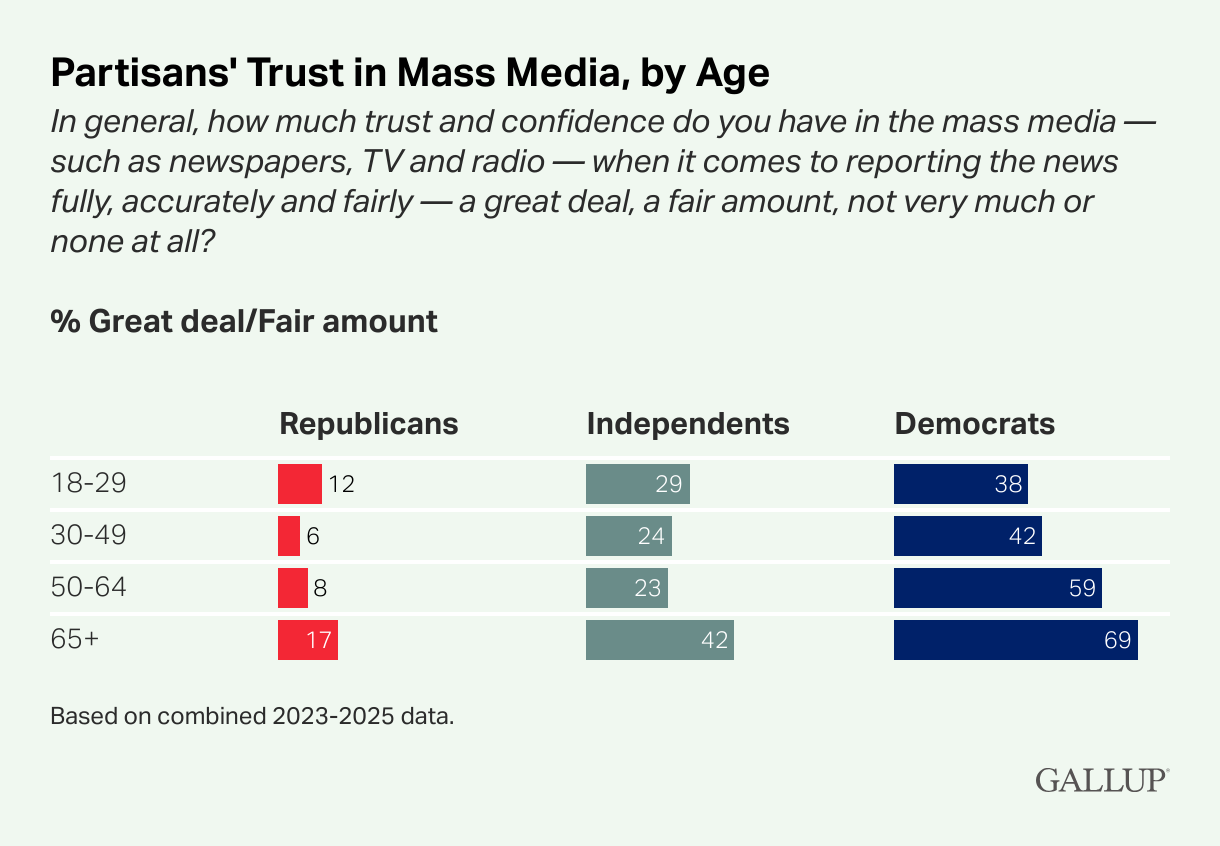
Educational and cultural institutions amplify this perception. Professors, celebrities, and writers engage in coordinated outrage, claiming democracy is under threat whenever political control deviates from their preferences. Campus speakers who support the new administration are shouted down or canceled outright. Popular entertainment rewrites political commentary into scripts and comedy routines, creating a cultural loop that reinforces the idea that resistance is virtue and governance by anyone else is tyranny.
The result is paralysis. Republican officials face obstacles that their predecessors never encountered. Appointees are denied confirmation, regulations are tied up in court, and even simple agency directives become subject to multi‑year reviews. The administrative state behaves like a political immune system, isolating the infection of accountability until the old ideological DNA reasserts itself.
The years following the 2024 election provide another example. Republicans regained the presidency with promises to reverse inflation, restore energy independence, and expose corruption within federal agencies. Yet almost immediately, those same agencies began to slow compliance schedules, reinterpret statutes, and reopen enforcement actions that had been dormant for years. The Department of Justice and the Environmental Protection Agency both expanded legal activism under the label of “review.” Congressional inquiries into bureaucratic misconduct were met with pages of redactions or procedural defiance. By early 2026, key reforms in education, environmental oversight, and immigration were tied up in paperwork that seemed designed to expire with the next election cycle.
The press framed these delays not as obstruction but as prudence. Commentators praised career officials for “holding the line” against political zeal. Editorial boards warned that unrestrained efficiency could undermine democracy. In reality, they were applauding bureaucrats who had nullified the election results. The same culture that cheered “resistance” in 2017 did so again, demonstrating that opposition is not about principle but about protecting a monopoly of moral authority.
Even financial systems behave differently under Republican leadership. Bureaucratic agencies can indirectly pressure markets through selective enforcement and credit frameworks. When the Federal Reserve and Treasury show hesitation to cooperate, political allies in the media begin to predict recession, which depresses investment and consumer confidence before any policy is implemented. The cycle ensures that prosperity under conservatives must outperform narrative sabotage just to break even.
Culturally, this permanent opposition operates on emotion rather than logic. Republican leadership is portrayed as angry, xenophobic, and backward. Democrat opposition is portrayed as intellectual, compassionate, and virtuous. The double standard is the point. It reminds bureaucrats, journalists, and educators which side represents cultural legitimacy and which side risks professional isolation.
The result is stability for the controlling ideology, not for the nation. Institutional resistance ensures that the country's overall direction never changes; only its pace does. During Republican years, expansion slows. During Democrat years, it accelerates. Either way, the size and influence of the federal structure continue to grow.
For ordinary citizens, this dynamic feels like being governed by a machine that recognizes only one command: more control. Every election offers hope that a new team will dismantle it. Each term ends with the machinery more entrenched than before. The portion of American life managed from Washington increases steadily while the space for self‑government shrinks. Republicans inherit a government designed not to obey them, and Democrats inherit one ready to serve.
This divide defines modern politics more than party platforms or partisan language. The government that was meant to be the servant of the people has become the guardian of its own worldview. Under this arrangement, losing an election no longer threatens the Democrat Party’s agenda. It merely postpones its next expansion.
The Permanent Cancer
No single policy dispute reveals the depth of institutional decay more clearly than immigration. Donald Trump ran in 2024 on a platform to restore control over the border and re-establish the principle that a nation decides who enters it. The public mandate was unmistakable. According to exit polls, border security ranked within the top three issues for voters in thirty‑eight states. More than two‑thirds of Americans said that immigration was either “out of control” or “manipulated for political gain.”
Once in office, the administration treated immigration reform as an early test of authority. The goal was twofold: to stop illegal entry at the border and to restore the enforcement of existing law within the country. This had been done by previous administrations, Democrat and Republican. Within months, the results at the southern border were dramatic. The number of detentions of those crossing illegally declined by more than 90%. A combination of physical barriers, streamlined processing, and increased penalties for repeat offenders restored some deterrence that had long been absent from policy. For the first time in a generation, the federal government seemed serious about sovereignty.
But progress at the border only raised a larger question. Could Washington enforce the laws already on the books within the country when many states and cities refused to cooperate? That question produced the conflict now unfolding in the Midwest and on the West Coast. When the Department of Homeland Security launched Operation Metro Surge late in 2025, the largest immigration enforcement effort ever conducted in the upper Midwest, it targeted networks engaged in identity fraud and welfare abuse uncovered in earlier federal investigations. Within days, Democrat officials in Minnesota declared the operation illegitimate. The state attorney general sued the federal government, claiming federal officers had “invaded” Minnesota. Media outlets repeated that word uncritically. City councils called emergency sessions demanding that federal officers withdraw. Protests followed, some violent. Two deaths occurred during confrontations provoked not by federal agents, but by the chaos surrounding the demonstrations themselves.
On the other side of the country, California Democrats introduced bills to let state residents personally sue federal agents for alleged constitutional violations. The point was not justice but intimidation. California, already a sanctuary state, had long refused to detain or hand over criminal aliens to Immigration and Customs Enforcement. The new legislation sought to increase the overall cost of performing the job. Even as federal operations removed hardened felons from Los Angeles County jails, local politicians treated those removals as acts of aggression.
At the national level, federal agencies reinforced this resistance through delay and dilution. The same bureaucracy that had once expanded rules beyond Congress’s intent now claimed paralysis when asked to apply the law literally. Funding allocated for enforcement was diverted into “review” programs and civil‑rights audits. The largest appropriations bill in recent history, HR 1, which allocated roughly $170 billion to border security and immigration enforcement, advanced with minimal institutional accountability. Most of the money flowed not to field enforcement but to the administrative layers that oversee it, leaving the permanent class wealthier and more entrenched than before.
The deeper problem is cultural. Over decades, a moral narrative has replaced legal authority. To the permanent ruling class, border enforcement itself has become immoral. Bureaucrats, editors, and professors talk about “humanitarian policy” as if protecting citizens were cruelty and lawbreaking were compassion. They use emotion as a veto on statute. The people enforcing laws written by Congress are portrayed as villains; those breaking them are portrayed as victims.
That inversion of morality demonstrates how the cancer spreads. Immigration is only the most visible symptom. When the state replaces law with sentiment, it gains license to define virtue by obedience. The same pattern appears in environmental regulation, education policy, and pandemic management: failure expands jurisdiction. Every new crisis, real or invented, strengthens the belief that more federal supervision is both inevitable and righteous.
The battle over immigration reform shows how far that mindset has advanced. Even a president elected specifically to secure the nation finds himself fighting not an opposing party, but an ecosystem that regards public will as negotiable. Agencies ignore orders. State governments defy cooperation. Media repeat every accusation as truth. The voters’ decision becomes one more input the system filters rather than one it obeys.
The essence of the permanent cancer is continuity without consent. The names atop agencies change, but the ideology beneath them remains the same. Each controversy, PFAS contamination, border enforcement, and financial inflation ends with the same result: more authority concentrated in the bureaucracy and less in the citizen. America still holds elections, yet the outcome most consistent across decades is the growth of a state that answers primarily to itself.
Reclaiming Self‑Government
The pattern of decline is no longer difficult to see. The question is not whether it reminds us of earlier moments in history, but whether Americans are willing to recognize what it means. Every society reaches a point at which power accumulates faster than accountability. When that happens, citizens begin to sense that participation no longer produces control. America has reached that point. Rules are written by people no one elected. Speech is filtered by institutions that answer to no voter. Permission replaces consent so gradually that many barely notice the exchange.
What has been lost is not simply trust in government, but clarity about where self-government actually resides. Elections still matter, but they no longer carry the weight they once did. Voting now changes the occupants of offices without reliably changing the behavior of the system itself. The machinery continues to operate according to incentives that lie beyond the reach of the ballot box. That is why frustration persists even after decisive electoral victories. The public senses that something fundamental has shifted, even if it lacks the language to describe it.
Self-government does not begin in Washington, and it never has. It begins in places the administrative state cannot easily reach. It begins in households that accept responsibility rather than outsource it. In communities that solve problems locally before appealing upward. In institutions that teach discipline, skill, and judgment instead of grievance and dependency. These are not sentimental ideals. They are the practical foundations that once limited how much power any centralized authority could accumulate.
The most damaging lie of modern politics is the promise that the next election will restore what has been structurally removed. It will not. Systems designed to outlast elections do exactly that. A people who believe freedom can be delegated indefinitely will eventually discover that it has been reassigned. The decline of self-government is not dramatic. It is administrative. It arrives wrapped in language about safety, fairness, and compassion, and it leaves behind citizens who feel governed but no longer represented.
If self-government is to return, it will not be announced by a program or delivered by a slogan. It will emerge when enough Americans stop confusing political participation with political control, and begin rebuilding lives that are less dependent on institutions that do not answer to them. The permanent machinery of power can tolerate elections. What it cannot tolerate indefinitely is a population that governs itself.
Help Keep This Work Alive
This essay wasn’t written to go viral. It was written to explain something most people feel but can’t quite name: that elections still happen, but self-government keeps slipping away.
Writing like this takes time. Research takes time. Saying what institutions don’t want said comes with costs that don’t show up on a balance sheet but absolutely show up in real life.
Right now, the only thing that sustains this work is readers who decide it matters enough to support it.
If you’ve read this far, you already know this isn’t disposable content. It’s not recycled outrage or algorithm bait. It’s an attempt to document how power actually works, while there’s still time to talk about it honestly.
If you’re able, here are three ways to support the work:
Become a Paid Subscriber
https://mrchr.is/help
Make a One-Time Contribution
https://mrchr.is/give
If you can step up at the highest level right now:
Join The Resistance Core
This tier defaults to $1,200, but you can give any amount that’s comfortable for you.
https://mrchr.is/resist
Paid subscribers don’t just unlock posts. They keep this entire project alive. They make it possible to keep writing without diluting the work, chasing clicks, or pretending the truth is something softer than it is.
If you believe independent voices matter more than institutional ones, this is one of the few places you can act on that belief directly.
If you can’t support financially right now, sharing this piece still helps more than you might think. So does simply staying engaged.
Either way, thank you for reading — and thank you for caring whether self-government survives as something real rather than symbolic.
Indeed, this is what we've been seeing, meet the new boss, same as the old boss. Personally, I believe that the government the founders created died in the civil war. They've created a shadow government that can't be voted out, basically. This shadow government supports the very visible parallel government network of democrat governors, mayors, DAs and assistant DAs, judges, et al, that work together to thwart any attempt to make life better for the country. This situation cannot be changed peaceably, because the mechanisms for peaceful change given to us by the founders no longer work. The really awful thing about this is that where human effort fails, God steps in, and divine retribution is always much worse than the human kind. Just ask Sodom and Gomorrah. Unlike with human "justice," where sentences can be changed or deals made, once God decides you're done, you're done. And if is because of this that God appears to delay His judgement, and He addresses this, saying that He gives them every possible opportunity to repent and change their ways, but eventually there comes a point where that ends, and it's time for judgement, and then there's no way out. That's what's coming to the United States.
Tax revolt. Take away the means of production, in this case funding with our money the shadow government, deep state, what you’ve described that keeps us ever tethered to the grindstone. A full scale tax revolt will pit the producers against the moochers. It can only go one way. The moochers won’t, can’t win. God helps those who help themselves.