

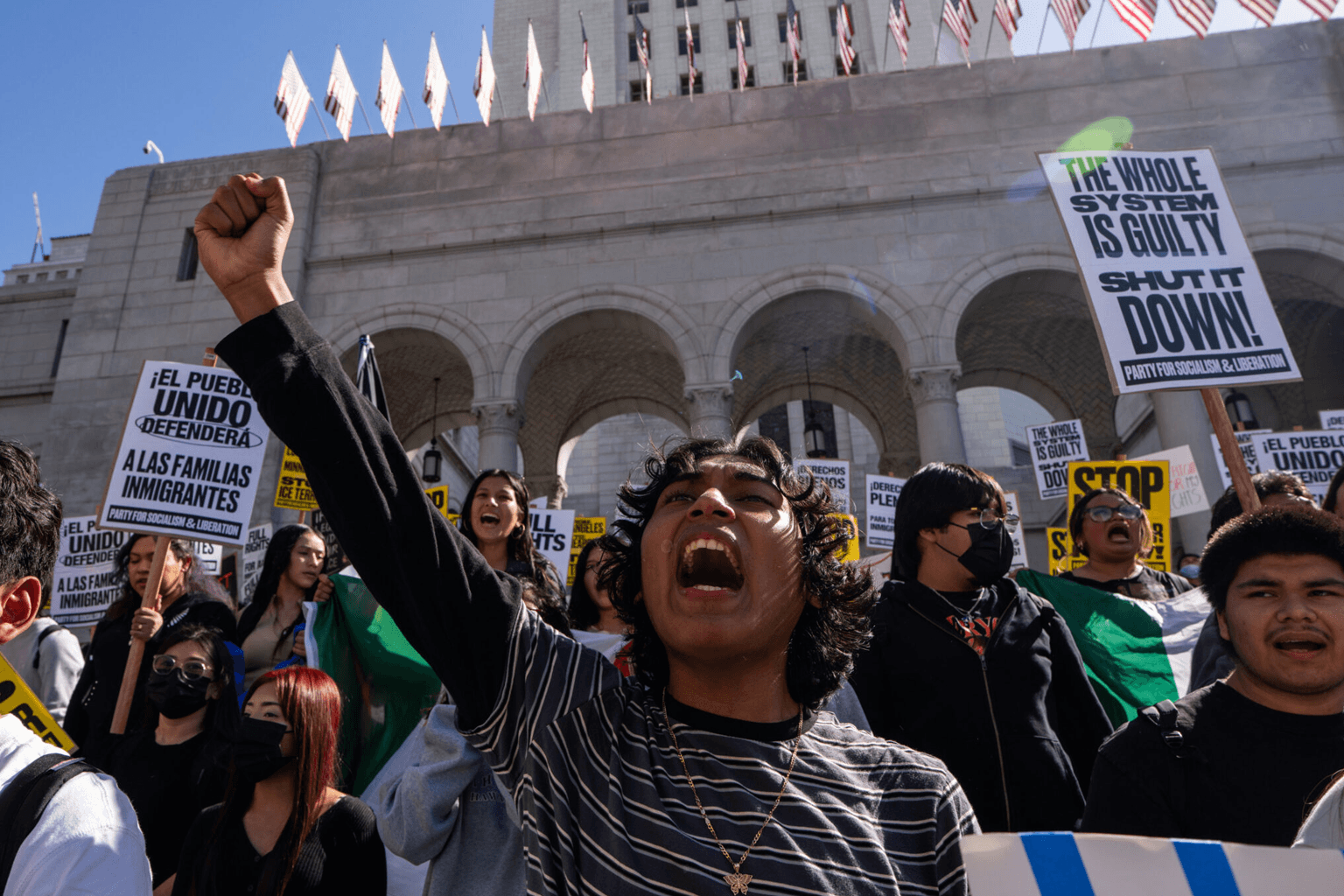
“When events are followed by organized reactions within hours, the question is not simply why people are upset, but how so many people in different places arrive at the same response so quickly.”
A major news event breaks. Within minutes, a narrative begins to take shape. Before most people have had time to verify basic facts, a simplified version of what happened is already circulating across social media. Within an hour, certain phrases begin to repeat. A hashtag appears. By the end of the day, protest locations are announced, not only in one city, but in several.
By the next day, crowds are already gathering in multiple locations.
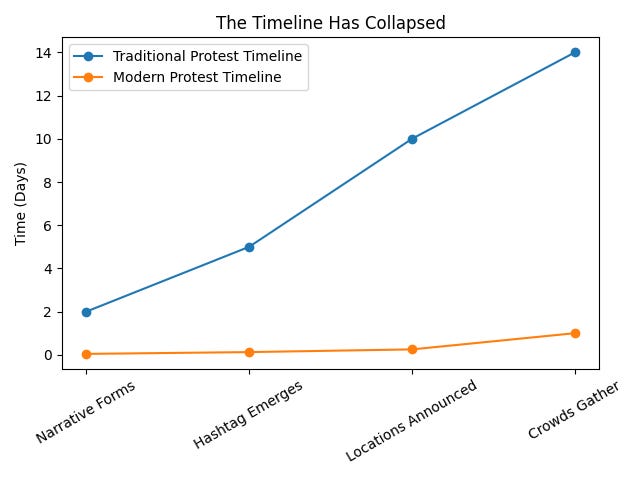
That sequence has become familiar enough that most people no longer question it. They focus on the event itself and assume the reaction simply reflects public sentiment. But in most areas of life, coordination of that scale takes time. Even a local rally usually requires days or weeks of planning, from securing permits to organizing communication and turnout.
Yet modern protest activity often unfolds within twenty-four hours.
That alone should raise questions.
Faster Than Normal Organization
When something is truly forming from scratch, it tends to be uneven. Messages conflict. Plans change. Participation builds gradually. Early efforts often look disorganized because they are.
What we often see instead is something far more structured from the beginning. The messaging is consistent across platforms. The slogans are already refined. Demonstrations in different cities use similar language and follow similar formats.
This contrast is difficult to ignore. Organic reactions tend to be uneven. Structured responses tend to appear coherent from the outset.
The first three parts of this series examined how such systems are built. Activists are trained, funding networks sustain organizations, and a professional class of organizers exists to coordinate campaigns. Once those elements are in place, the time required to respond to an event changes dramatically. The system does not need to be assembled. It only needs to be set in motion.
The First Few Hours
The most important work happens early, often before the public is fully aware of it. In those first hours, the event is translated into a narrative that can travel. Complex details are distilled into a clear storyline that is easy to repeat. This is not necessarily because people are being deceptive. It is because simplified messages move faster than complicated ones.
At the same time, communication networks begin to operate. Messages move through email lists, text alerts, internal platforms, and coalition networks that connect organizations across multiple cities. Local organizers receive information about where to gather and what message to emphasize.
None of this requires secrecy. It requires preparation.
When systems already exist, they do not need time to organize. They respond almost immediately.
Replication Across Cities
One of the clearest indicators of this process is how quickly demonstrations appear in places that have no direct connection to the original event. An incident in one city can prompt protests in dozens of others within a short period. The participants are local, but the messaging often is not.
The same phrases appear on signs. The same demands are repeated. The same structure is followed from city to city.
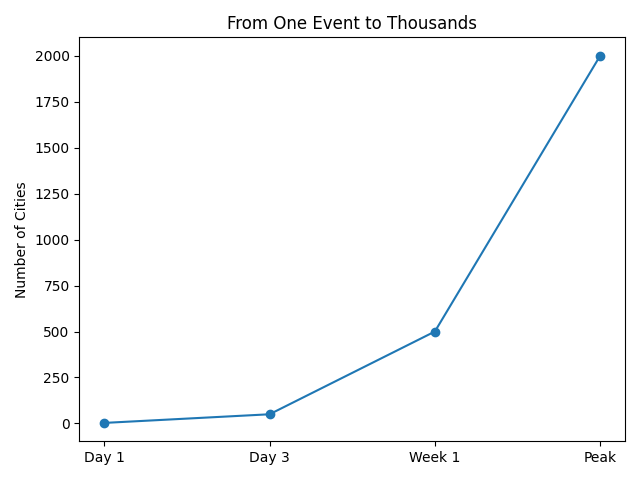
This pattern has been visible in several recent events. During the protests that followed the death of George Floyd in 2020, demonstrations occurred in more than two thousand cities and towns across the United States, according to data compiled by the Armed Conflict Location and Event Data Project. Many of those locations had no direct connection to Minneapolis, yet the messaging and structure were strikingly similar.
A similar pattern appeared during campus protests related to the Israel-Hamas conflict in 2024 and 2025. Encampments spread across universities in different states, often using nearly identical language, tactics, and demands. The locations were different, but the presentation followed a recognizable template.
Independent reactions rarely produce identical results at the same time.
Why Speed Feels Like Proof
Speed influences perception. When something appears quickly, it feels authentic. When it appears in many places at once, it feels widely supported. Many people interpret rapid spread as evidence that a large portion of the public has reached the same conclusion independently.
Sometimes that is true. Public reaction can be genuine and widespread.
But speed can also be the result of preparation. In other contexts, people recognize this immediately. A product launch happens quickly because it was developed in advance. Emergency systems respond quickly because they were already built.
The same principle applies here. A protest that appears overnight may reflect real emotion, but the scale and uniformity that follow often reflect the presence of systems designed to move quickly.
The Incentives Behind the Motion
Organizations that operate within advocacy networks rely on attention. Attention brings visibility, and visibility often brings funding. Protests generate both. They produce media coverage, social media engagement, and a sense of urgency that keeps organizations relevant.
This does not mean that the issues involved are imaginary. It does mean that institutions built around activism have incentives to remain active. Once an organization exists to mobilize people and maintain public pressure, inactivity becomes difficult to justify.
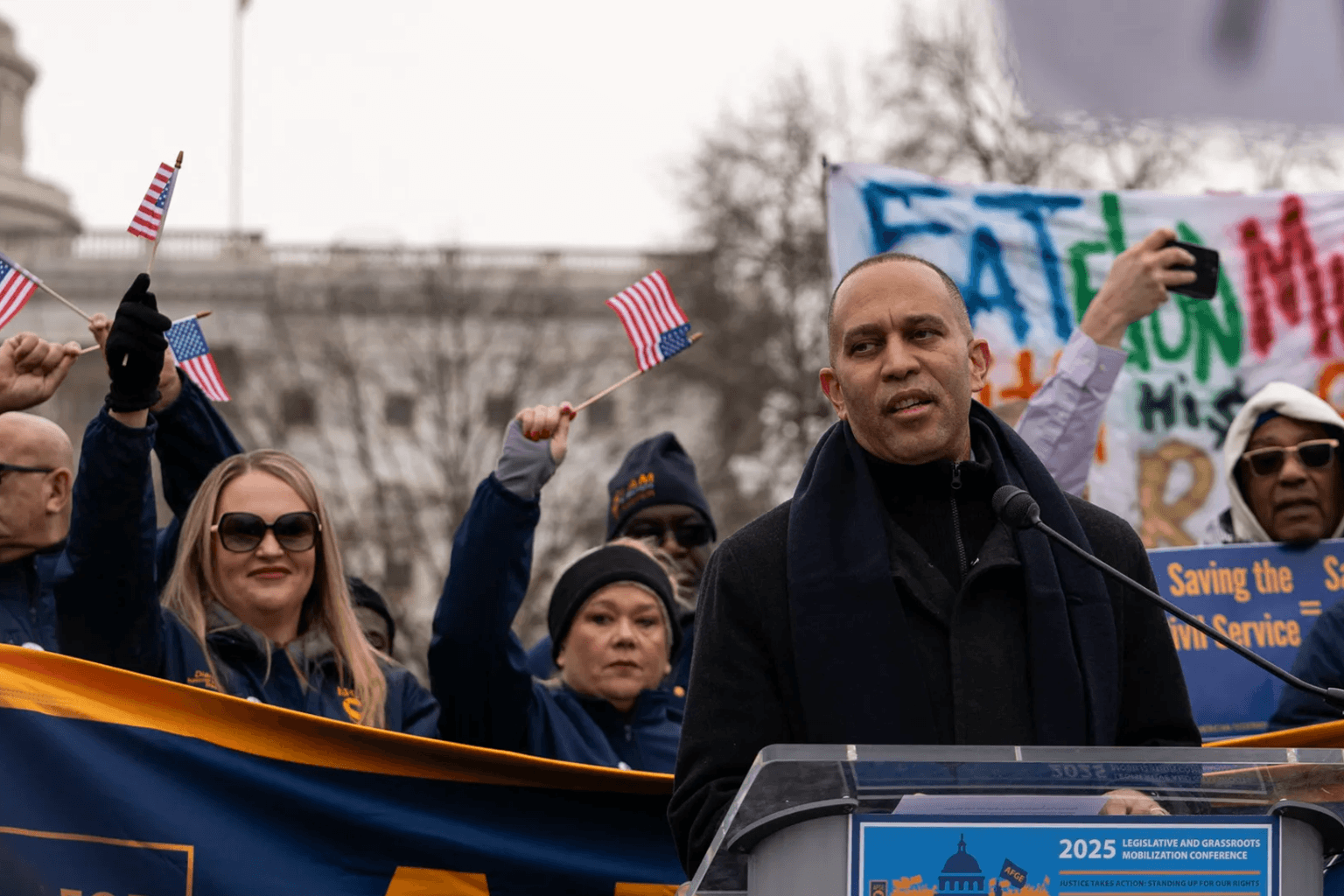
Many of these networks also align with policy priorities of the Democrat Party. Immigration activism, climate campaigns, and racial equity initiatives frequently move through overlapping circles of nonprofit organizations, donors, advocacy groups, and media outlets. That alignment does not require direct coordination in every case, but it does create an environment where messaging, priorities, and timing often reinforce one another.
What to Watch Next Time
The next time a major event is followed by immediate protest activity, it is worth paying attention to the sequence rather than only the outcome. Notice how quickly the narrative settles into a few repeating phrases. Observe how fast multiple cities adopt similar messaging. Notice if the signs in the first twelve hours are hand-drawn on scrap cardboard or professionally printed on weather-resistant coroplast. Spontaneity rarely has a printing budget.
These details help distinguish between something that is forming and something that is being activated.
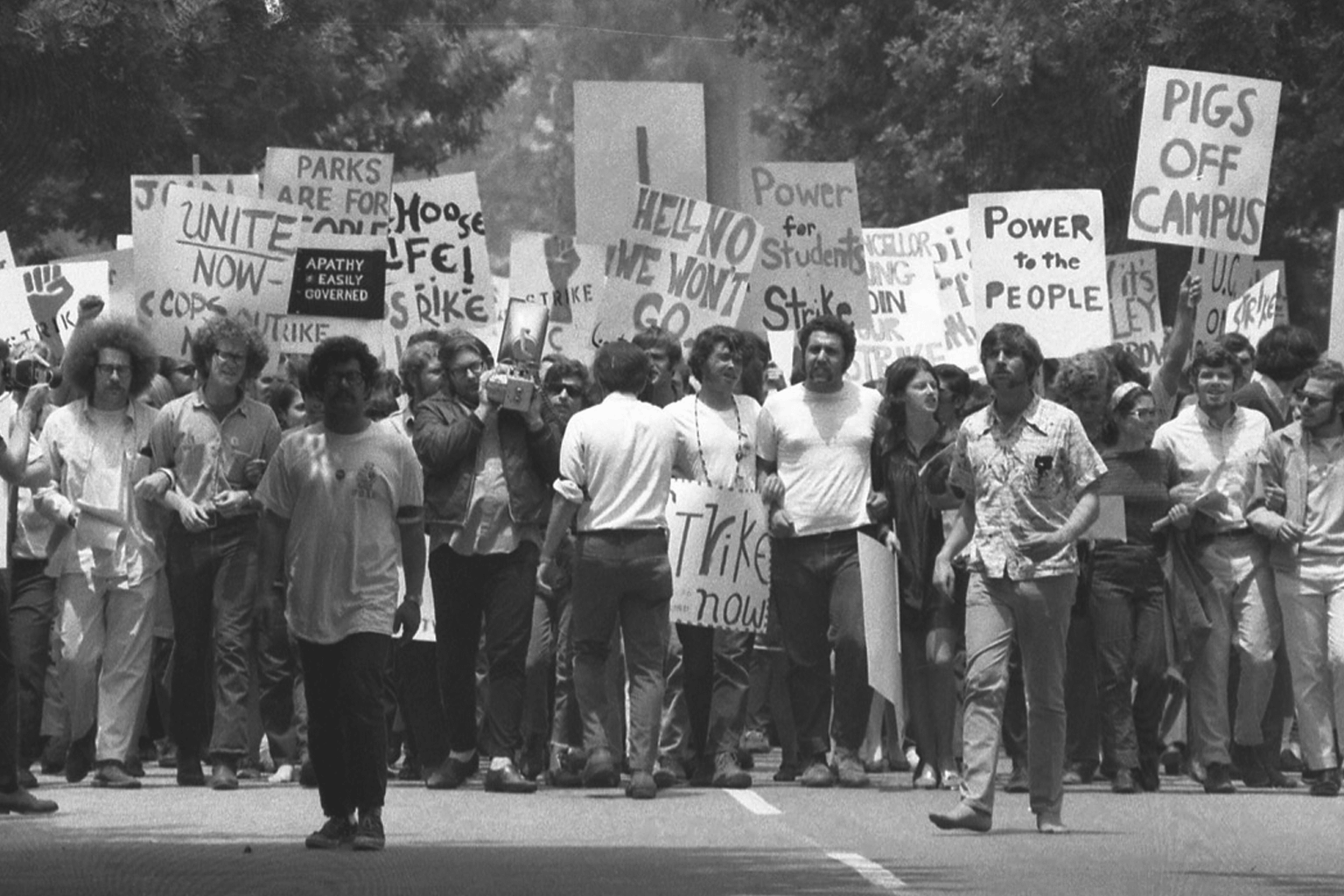
All the World’s a Stage
By the time a protest becomes visible, most of the underlying work has already been done. The people involved know where to go. The messaging is already established. The networks are already connected.
What the public sees is not the beginning. It is the final stage.
Protest U showed where activists are trained. Cla$h App showed how the system is financed. Protest Inc. showed who operates it. This final part shows how it moves.
What appears to be spontaneous is often structured, prepared, and deployed at speed. The crowd is visible. The system behind it is not.
But once seen, it becomes difficult to miss.
That is not coincidence.
That is the protest machine.
Help Expose the System Before You Become System
You’ve just read the final part of The Protest Machine.
This series did not rely on headlines or surface-level reactions. It followed the structure behind modern protest movements step by step—how activists are trained, how organizations are funded, how careers are built, and how demonstrations are deployed at speed.
Most people will never see this system clearly.
Not because the information is unavailable, but because it is rarely put together in one place.
That is what independent writing makes possible.
Become a Paid Subscriber
Paid subscribers make this work possible.
There are no corporate sponsors behind this publication. No institutional funding. No editorial board shaping what can and cannot be said.
There is only the work, and the people who decide it is worth supporting.
If you want more investigations like this—clear, direct, and independent—become a paid subscriber:
https://mrchr.is/help
Make a One-Time Contribution
If a subscription is not the right fit, you can still support the work directly.
One-time contributions help cover research time, data access, and the hours required to connect information that is usually scattered across institutions.
https://mrchr.is/give
Join The Resistance Core
Some readers choose to go further.
The Resistance Core is the group helping build something larger than a single article or series—a long-term platform for independent research, analysis, and documentation.
Their support provides stability. It allows this work to continue without outside pressure and without having to dilute the message.
https://mrchr.is/resist
What Your Support Builds Right Now
Support is not abstract. It translates directly into:
More investigative series like The Protest Machine
Deeper analysis backed by data, not headlines
A permanent archive of how these systems actually operate
Independent work that is not filtered through institutions
This is how you turn insight into something that lasts.
If You Cannot Give
You can still make a difference.
Share this series. Send it to someone who has never thought about how modern protest movements operate. Post it where others can see it.
Independent writing grows when readers carry it forward.
Most people will continue to see protests as spontaneous.
You now know better.
The question is what you do with that.
The "protests" also serve to give the impression that more people are against something than actually are.