

Narrative governance begins with persuasion. It ends with consequences.
In Part I, trust eroded. In Part II, the bills arrived.
When Words Carry Consequences
In Part I, we mapped the pattern. Confident promises arrived first. Friendly amplification followed. Quiet revisions came later, after the headlines faded and the news cycle moved on. Health insurance would not change. The laptop was disinformation. The border was secure. The narrative arrived first. The correction came later, if it came at all.
Part II moves beyond rhetorical damage and into material cost. In Part I, trust eroded. In Part II, bills arrived. Here, we are no longer talking about trust ratings or fact-checks. We are talking about grocery bills that did not come back down. Military withdrawals that altered global deterrence. Mandates that reshaped careers and institutions. Immigration surges that strained city budgets. Classification rules applied unevenly. The first stage of narrative governance is persuasion. The second stage is consequence.
When a political party learns that reassurance can substitute for precision, it eventually governs as if words can override arithmetic, virology, geopolitics, and law. That illusion holds only as long as reality remains patient. It never does. The following cases show what happens when messaging outruns fact and when confidence replaces caution. The language was familiar. The results were not.
6. “Inflation Is Transitory.”
Joe Biden, Janet Yellen, Jerome Powell, and the Price Shock
In early 2021, Americans began noticing something simple. Groceries cost more. Gas cost more. Lumber, cars, rent, utilities, everything was climbing. The Democrat Party response was nearly unanimous. Inflation was transitory. Treasury Secretary Janet Yellen said it. Federal Reserve Chair Jerome Powell said it. President Joe Biden said it. The word appeared so frequently that it felt rehearsed. Transitory means temporary, short-lived, self-correcting.
The numbers told a different story. In January 2021, annual inflation was 1.4 percent. By June 2022, the Consumer Price Index had climbed above 9 percent year over year, the highest rate since 1981. Food prices rose sharply. Energy prices surged. Used car prices spiked. Rent increased across major metropolitan areas. Mortgage rates later doubled as the Federal Reserve scrambled to contain the damage. Between 2021 and 2024, cumulative price increases across broad consumer categories approached 20 percent. Even after inflation slowed in 2023 and 2024, prices did not return to pre-2021 levels. They stabilized at permanently higher ground.
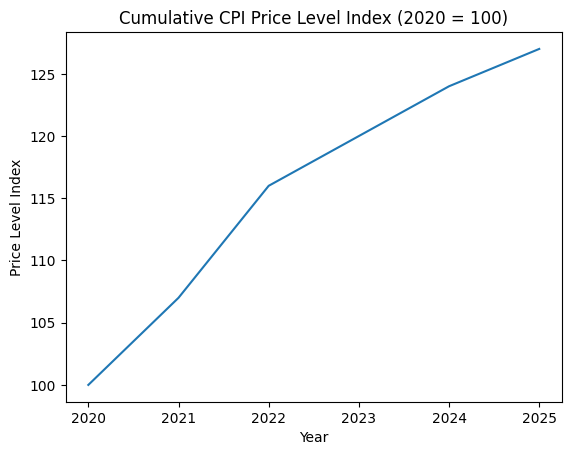
The median household did not need an economist to explain this. The bill at the grocery store did that work. Analysts estimated that by 2024 the average household was spending thousands more annually for the same basket of goods compared to 2020. Some estimates placed the cumulative purchasing power loss near $9,000 per household. Why did this happen? Between 2020 and 2021, Congress authorized several massive spending bills in response to COVID. Some were signed by President Trump. The Biden administration added the $1.9 trillion American Rescue Plan in March 2021. That stimulus hit an economy already reopening and already facing supply chain bottlenecks.
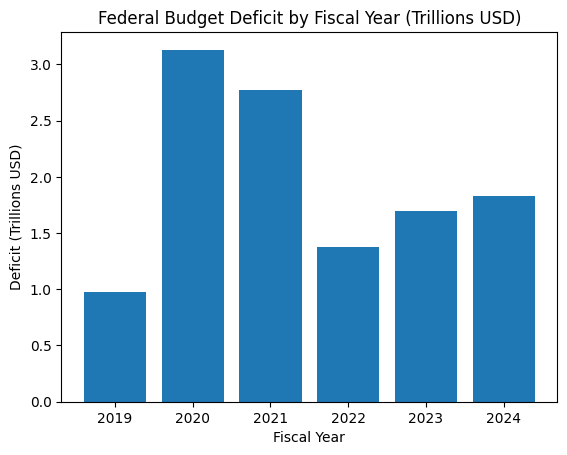
Basic economics teaches that when you inject trillions into a constrained supply environment, prices rise. Monetary policy compounded the problem. The Federal Reserve kept interest rates near zero deep into 2021, even as inflation data accelerated. Yet the public message was calm. Temporary. Transitory. In June 2022, Janet Yellen admitted she had been wrong about inflation’s path. Jerome Powell abandoned the word. The Federal Reserve raised rates at the fastest pace in decades. Borrowing costs climbed. Housing affordability dropped. Small business credit tightened. Regional banks faltered under pressure from interest rates in 2023. The cure was painful because the disease had been denied for too long.
By February 2026, inflation had cooled substantially compared to its 2022 peak. But the cumulative price level remains far above where it stood when President Biden took office. The grocery bill never reversed. The rent never reset. The word transitory bought political time. It softened headlines heading into the 2022 midterms. It delayed accountability. Inflation is arithmetic. When arithmetic is treated as messaging, the bill does not disappear. It compounds.
7. “You Won’t Get COVID If You’re Vaccinated.”
Joe Biden, the CDC, and the Mandate Story
In July 2021, President Joe Biden said, “You’re not going to get COVID if you have these vaccinations.” It was clear. It was confident. It proved unsustainable. Early vaccine trials showed strong efficacy against symptomatic infection. For a short period, real-world data suggested vaccinated individuals were significantly less likely to contract and transmit the virus. But viruses mutate. By mid-2021, the Delta variant spread globally. Breakthrough infections rose. In August 2021, CDC Director Rochelle Walensky acknowledged that vaccinated individuals infected with Delta could carry similar viral loads and potentially transmit the virus.
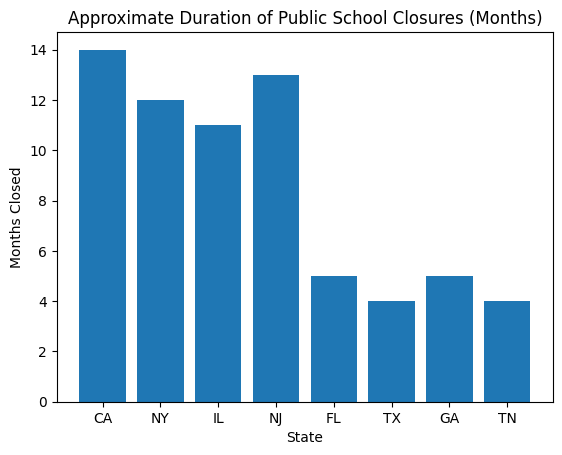
The framing shifted. Vaccination was reframed primarily as protection against severe illness and death rather than transmission prevention. But by then, mandates were already in motion. Federal employees, military personnel, and contractors faced vaccine requirements. OSHA attempted to impose mandates on large employers before the Supreme Court blocked that rule. Colleges required proof of vaccination. Healthcare workers lost jobs if they declined. The moral argument behind many of these mandates rested on the idea of transmission. If vaccination prevented spread, refusal endangered others. When it became clear that vaccinated individuals could still contract and transmit COVID, the certainty of the original claim weakened. The mandates often did not.
Trust declined. Gallup and Pew data from 2021 through 2024 show a decline in confidence in public health institutions across party lines. Even many Democrats reported reduced trust in agencies like the CDC compared to pre-pandemic levels. At the same time, internal communications later released to Congress showed federal officials communicating with social media platforms about posts considered misinformation. Supporters called it responsible coordination. Critics saw pressure to suppress dissent. By February 2026, federal mandates have been rescinded. Some discharged service members have been reinstated. The debate has shifted from emergency response to retrospective accountability.
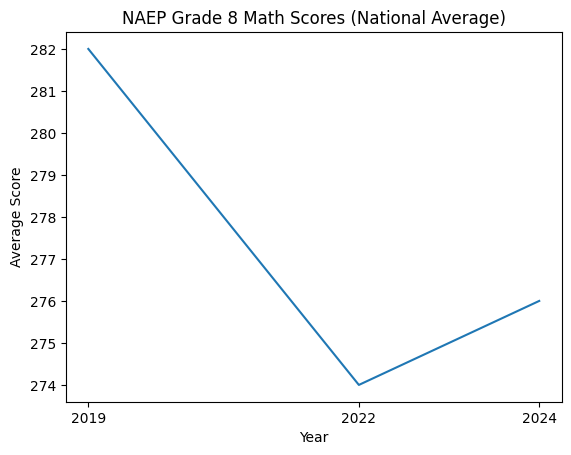
The problem is not that science evolves. Science often does. The issue is categorical assurance delivered as fact, not as hypothesis. When leaders promise certainty in a complex, evolving situation, credibility collapses with it. Public health requires trust. Trust requires candor. Overstatement in the name of urgency undermines both.
8. “We Got Everyone Out.”
Joe Biden, Kabul, and the Withdrawal Narrative
On August 31, 2021, President Biden declared the Afghanistan withdrawal an extraordinary success and said, “We got everyone out who wanted to get out.” Again, the sentence was simple. Reality was more complicated. On August 26, 2021, a suicide bomber at Abbey Gate killed 13 American service members and more than 150 Afghan civilians. The evacuation continued, but the image of Marines guarding the final aircraft as Kabul collapsed reshaped global perception overnight. Operation Allies Refuge evacuated approximately 124,000 people. That number is historically large. But it does not tell the whole story. At the time of the final departure, U.S. officials acknowledged roughly 800 American citizens had not been evacuated. The administration later stated many had chosen to remain. That distinction does not erase the chaos that left them behind during the critical days when Kabul fell.
For Afghan allies, the situation was worse. Tens of thousands of Special Immigrant Visa applicants remained in Afghanistan or neighboring countries awaiting processing as of late 2021. As of February 2026, the SIV backlog remains in the tens of thousands. Many former interpreters continue living in hiding. Defense Department reporting confirmed that Afghan security forces collapsed far faster than public briefings had implied. Significant quantities of U.S.-supplied equipment remained in Taliban hands after the takeover, including vehicles, small arms, and aircraft. Taliban fighters were photographed operating American hardware within weeks, images that circulated globally and became symbolic of strategic collapse.
Allies noticed. Regional governments recalibrated expectations about U.S. reliability. Adversaries recalibrated as well. The Trump administration’s second term has devoted diplomatic effort to rebuilding deterrence credibility in the Middle East and South Asia. The withdrawal itself was not the sole problem. Wars end. The problem was the confident declaration of completion when the evacuation was demonstrably incomplete. Optics were controlled for a news cycle. Consequences remain years later.
9. “Children in Cages.”
Barack Obama, Donald Trump, and the Weaponization of Empathy
In 2018 and 2019, images of migrant children behind chain-link partitions circulated widely. Democrat politicians denounced the facilities as uniquely cruel creations of the Trump administration. The infrastructure itself dated back to 2014, when the Obama administration constructed temporary processing facilities during a surge of unaccompanied minors. Some of the most viral photographs in 2018 were from that earlier period. Others were current images of similar facilities. The Trump administration’s zero-tolerance policy did increase family separations in certain circumstances. That policy was controversial and later modified. But the physical facilities described as cages were not new inventions. Public perception, however, was shaped as if they were.
Under President Biden, border encounters rose to historic levels. Customs and Border Protection recorded roughly 1.7 million encounters in fiscal year 2021, 2.4 million in 2022, nearly 2.8 million in 2023, and about 2.3 million in 2024. Those figures far exceeded early 2010s totals. Temporary facilities filled again. Major cities declared emergencies as migrants were transported north. New York City projected billions in long-term costs related to housing and services. The fences were still there. The outrage was muted. By early 2025 and into 2026, under renewed enforcement priorities in the Trump administration, monthly encounter numbers declined sharply from their 2023 and 2024 peaks. Public language shifted accordingly. The moral vocabulary shifted not with conditions but with control of the White House. The outrage was never about infrastructure. It was about narrative leverage.
10. “There’s No There There.”
Joe Biden, Robert Hur, and Two Standards of Enforcement
In January 2023, classified documents from Joe Biden’s vice-presidential years were discovered at the Penn Biden Center and later at his Wilmington home. Some materials carried Top Secret and Sensitive Compartmented Information markings. Attorney General Merrick Garland appointed Special Counsel Robert Hur. In early 2024, Hur concluded that classified materials had been improperly retained but declined prosecution, citing insufficient evidence of willful intent.
The legal distinctions between this case and former President Trump’s classified document case are complex. The Trump case involved allegations of obstruction and refusal to comply with subpoenas, which prosecutors argued demonstrated willful retention. The Biden case did not include that same element. The public perception, however, is simpler. In one instance, federal agents executed a high-profile search and prosecutors pursued charges. In the other, prosecution was declined with language emphasizing forgetfulness and lack of intent. The University of Pennsylvania, host of the Penn Biden Center, had received significant foreign donations during the relevant period, including tens of millions from Chinese sources. No formal finding established a link between those donations and document storage. Nonetheless, the optics raised additional questions. For citizens, the core question is consistency. Equal protection under law depends not only on legal nuance but on visible fairness. When enforcement appears asymmetrical, confidence declines.
The Pattern
Across inflation, COVID mandates, Afghanistan, border policy, and classified documents, the sequence was familiar: assurance, contradiction, reframing, and then quiet continuation. This does not require conspiracy theories. It requires memory. From 2021 through 2024, the Democrat Party governed through reassurance. The reassurance protected power. The consequences did not. Inflation was temporary. Vaccines stopped transmission. The withdrawal was complete. The border was secure.
Young Americans who came of age during this period watched official statements repeatedly soften, shift, or collapse under evidence. Trust in federal institutions and media reached historic lows. Trust does not collapse in a single scandal. It erodes incrementally. When leaders treat language as insulation rather than information, consequences compound. They may win the next news cycle. They do not escape arithmetic, biology, or geopolitics. By February 2026, Americans are living with the accumulated results of those assurances. Reality always collects. And it charges interest.
When Lies Become Policy, Someone Pays
Everyone says they want honesty in public life.
Very few are willing to support it when it costs something.
Part II is not about gaffes or word games. It is about consequences. When the Democrat Party governs by narrative, the bill lands on ordinary people. Higher prices. Lost years. Broken trust. And no accountability in sight.
This publication has no corporate sponsors. No institutional backers. No foundation grants. It runs on readers who want reality to matter again, even when it is unpopular.
Paid subscriptions make long-form work like this possible.
There are more than 2,400 readers here. Only a fraction are paid.
Substack’s visibility rankings are driven directly by paid subscribers. Support is not symbolic. It determines whether independent voices rise or disappear.
If even a modest percentage decides this is worth eight dollars a month, this work becomes durable and harder to bury.
If you want Part III to go deeper, and if you want this voice to stay independent, now is the moment to act.
Become a Paid Subscriber:
https://mrchr.is/help
If you prefer a one-time contribution to support the work:
Make a One-Time Gift:
https://mrchr.is/give
If you want to strengthen this platform at the highest level:
Join The Resistance Core:
https://mrchr.is/resist
Truth does not sustain itself. It survives when people choose to sustain it.
Chris Arnell is producing extremely well written, well researched and compelling news articles. Absolutely worth eight dollars a month and I encourage readers to subscribe!