

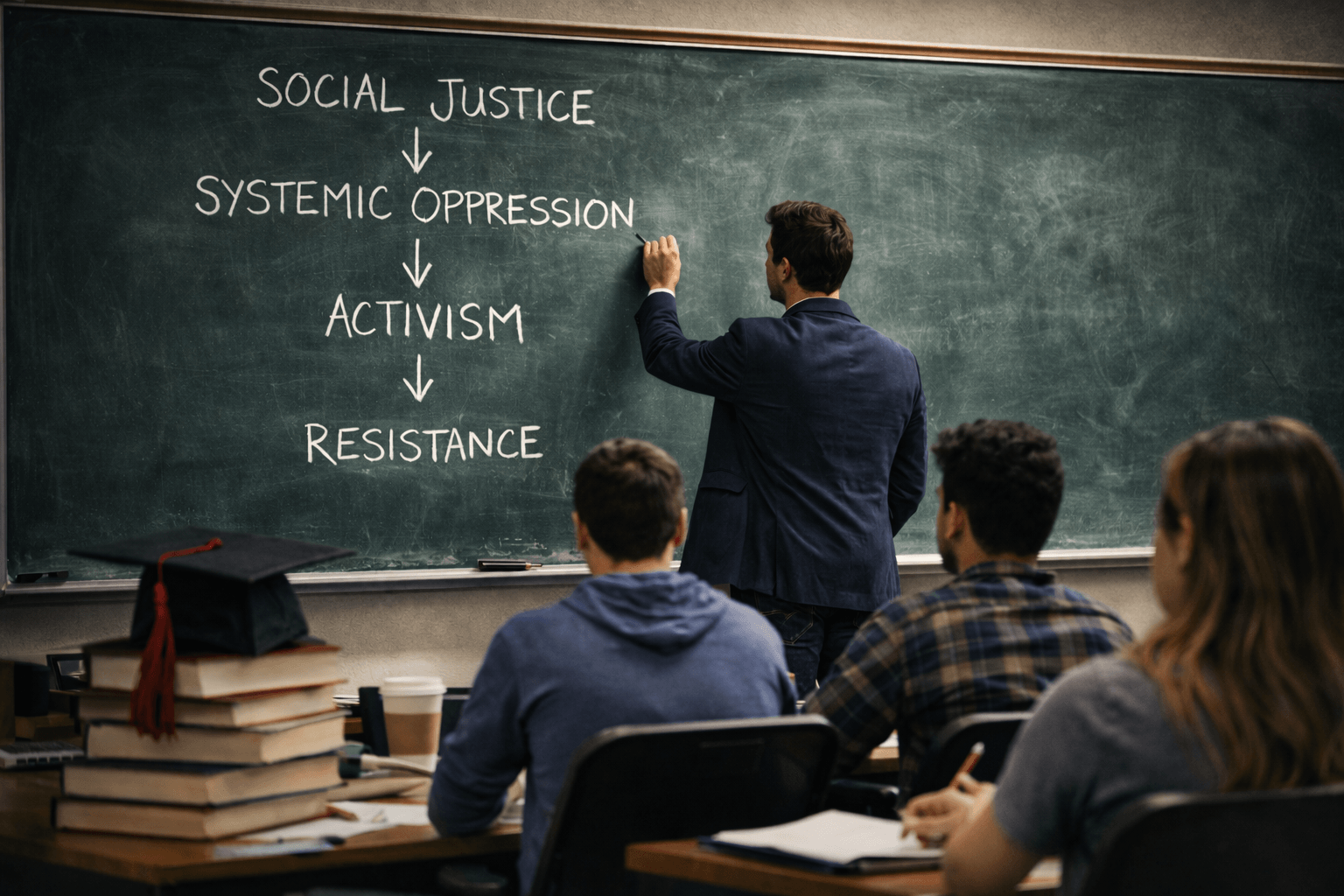
This essay is the first installment in a four-part series examining the infrastructure behind modern protest movements in the United States.
Many protests appear spontaneous to the public. Crowds form quickly, slogans spread rapidly, and demonstrations appear in multiple cities at nearly the same time. To many observers, this looks like a sudden eruption of public anger.
Large protest movements rarely develop that way.
Behind the visible demonstrations, there is usually an infrastructure that trains activists, finances organizations, provides career paths, and mobilizes demonstrations when political pressure is needed.
This series examines that system step by step.
Part I: Protest U
How universities train activists instead of educating citizens.
Part II: Cla$h App
How foundations and nonprofit organizations finance modern protest movements.
Part III: Protest Inc.
How activism becomes a career path inside NGOs, advocacy groups, and political organizations.
Part IV: Insta-Agitator
How this infrastructure can rapidly generate protests that appear spontaneous but are often carefully organized.
Part I: Protest U
“When universities reward activism more than inquiry, they should not be surprised when they graduate activists instead of thinkers.”
Universities once had a fairly straightforward purpose. They existed to educate students and expose them to competing ideas about history, economics, science, and human behavior. A serious university was supposed to challenge assumptions and force students to think carefully about complicated questions.
In 1967 the University of Chicago issued what became known as the Kalven Report, a statement on the proper role of the university in political life. The report argued that universities should maintain institutional neutrality on political and social issues so that students and faculty could debate ideas freely without pressure from the institution itself. According to the report, a university should be a forum for ideas rather than a political actor. That principle once guided many universities, but it has weakened considerably as institutions increasingly adopt official positions on political questions and encourage activism among students.
That traditional model assumed that universities were places where intellectual disagreement was not only tolerated but encouraged.
Over the last several decades, the environment has changed significantly on many campuses. Large parts of the modern university now operate less as institutions devoted to intellectual inquiry and more as institutions that encourage political activism. Students are no longer simply studying society. Many are being encouraged to confront it.
This transformation did not happen overnight. It emerged gradually through changes in academic departments, campus culture, and the incentives that govern university life.
The result is what might reasonably be called Protest U.
The Expansion of Ideological Academic Programs
The modern shift toward campus activism began during the political upheavals of the late 1960s. Student protests during that period pushed universities to create new academic programs centered on race, identity, and political activism.
Programs in ethnic studies first appeared in 1968 after protests at San Francisco State College and the University of California, Berkeley. Over time, those programs expanded across American universities. Similar developments followed with women’s studies, gender studies, and a range of fields built around critical theory.
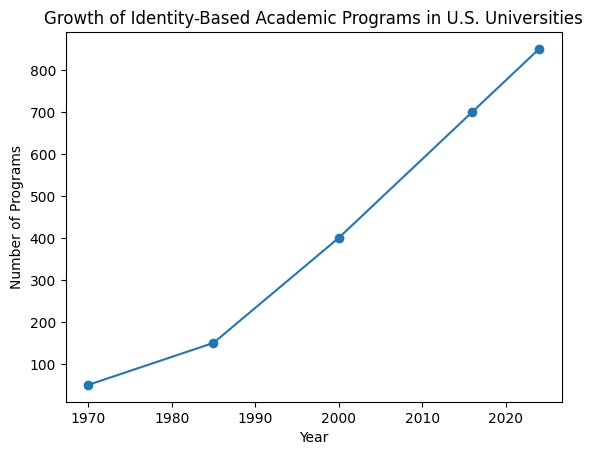
By the 2010s, hundreds of universities had established departments focused primarily on identity-based political frameworks. A 2016 report by the National Association of Scholars estimated that more than seven hundred ethnic studies and related programs existed across American colleges and universities.
These fields often approach society through a specific interpretive lens. Social institutions are frequently described primarily in terms of power, oppression, and systemic injustice.
When students are taught that their society is fundamentally unjust, activism becomes a logical response. If the system itself is viewed as oppressive, then confronting the system becomes a moral obligation.
At that point, education begins to blend into political formation.
The Growth of Campus Protest Culture
Universities today provide extensive infrastructure that supports political activism. Student organizations recruit members, faculty advisors help guide campaigns, and outside advocacy groups frequently collaborate with campus activists.
Universities increasingly reward activism as a form of civic engagement. Some campuses now offer academic credit for participation in community organizing programs, protest movements, or advocacy campaigns. Others award formal recognition for what they call “social justice leadership.” Students can graduate with honors for activism that often have little connection to traditional scholarship. These programs are usually described as civic engagement, but they reinforce a campus culture where organizing demonstrations or advocacy campaigns can bring more recognition than mastering difficult academic subjects.
Workshops on organizing demonstrations, coordinating media messaging, and applying institutional pressure have become common features of campus political life. These skills closely resemble the training used by professional political organizers.
In recent years, campus protests have appeared with remarkable frequency. Demonstrations connected to climate activism, racial politics, and Middle East conflicts have spread across dozens of universities at the same time.
The campus demonstrations connected to the Israel-Hamas war during 2024 and 2025 offer a clear example. Protest encampments appeared across major universities including Columbia, UCLA, Harvard, and the University of Texas. Many of those demonstrations involved coordinated messaging, identical slogans, and similar protest tactics.
Large protests of that kind rarely materialize without organization and planning. They require communication networks, logistical coordination, and leadership structures that already exist before the first crowd gathers.
Universities increasingly provide the environment where those networks form.
Incentives Shape Institutional Behavior
Institutions tend to produce the behavior they reward. This principle applies to universities as much as it applies to corporations or political parties.
Students who organize protests often receive recognition, media attention, and social influence within the campus community. Faculty members who align themselves with activist causes may receive funding, publicity, and academic prestige within ideological fields.
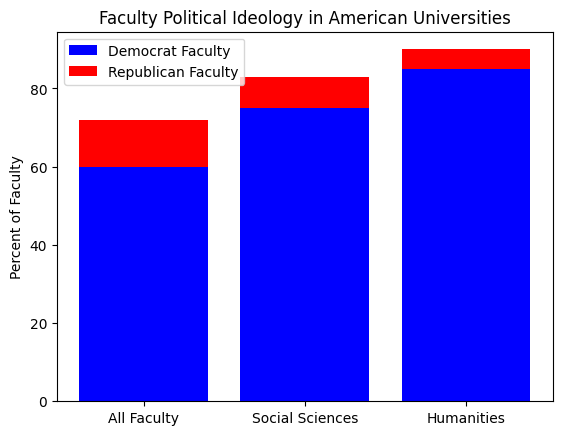
Over time, these incentives shape campus culture.
Students quickly learn which viewpoints receive approval and which invite criticism. The safest path in such an environment often leads toward conformity with the dominant political culture of the institution.
Evidence of this pressure appears in national surveys of student attitudes. A 2023 survey by the Foundation for Individual Rights and Expression found that 63 percent of American college students reported feeling uncomfortable expressing certain political views on campus. When students hesitate to speak openly about controversial topics, intellectual diversity declines.
An institution originally designed to foster debate gradually becomes one that rewards ideological alignment.
From Student Activism to Professional Organizing
Campus activism does not typically end at graduation. Many students who spend their university years organizing demonstrations continue working in political advocacy afterward.
Nonprofit organizations, political campaigns, and advocacy groups frequently recruit graduates who already have experience organizing protests or managing activist networks. Skills developed during campus demonstrations translate easily into professional organizing.
This process creates a pipeline that begins inside universities and continues into the broader political world. Former student activists move into roles within nonprofit advocacy groups, political campaigns, media organizations, and policy institutes.
The relationship between campus activism and the broader networks associated with the Democrat Party is not difficult to observe. Many of the same issues promoted through university activism appear later in national political campaigns and advocacy organizations.
This does not mean that every university graduate becomes an activist. Most students still pursue careers in engineering, medicine, business, law, and science.
But the institutional pathway for political activism now exists in a way that would have been far less common several generations ago.
What Protest U Produces
Universities shape the intellectual habits of the people who pass through them. Students spend some of the most formative years of their lives inside those institutions.
If universities emphasize intellectual curiosity and debate, students leave with the tools needed to analyze complex problems and evaluate competing arguments.
If universities emphasize ideological activism, students leave with the tools needed to organize demonstrations and mobilize political pressure.
The difference is significant.
A culture that trains students primarily for activism encourages a political environment defined by confrontation and moral conflict. Every disagreement becomes a struggle between justice and oppression. Every policy debate becomes a moral emergency.
That mindset rarely develops by accident. It emerges from the ideas and incentives that dominate the institutions responsible for education.
Universities once saw their mission as cultivating understanding.
In many places, that mission has been replaced by something else.
The training of activists.
Support Independent Writing
If you value essays like this one, consider supporting the work.
This publication has no corporate sponsors, no institutional funding, and no newsroom behind it. Every article is researched and written independently. The work continues because readers decide it matters.
Become a Paid Subscriber
Paid subscribers make this publication possible. Your support allows investigations like The Protest Machine series to continue.
Become a paid subscriber:
https://mrchr.is/help
Join The Resistance Core
Some readers choose to go further by joining The Resistance Core, the group helping build a long-term independent platform for investigative writing and civic analysis.
Their support provides the stability that allows this work to continue without corporate sponsors, institutional funding, or political pressure.
Join The Resistance Core:
https://mrchr.is/resist
Make a One-Time Gift
If a subscription is not the right fit, you can still support the work with a one-time contribution.
One-time gifts help cover research time, data sources, and the hours required to produce essays like this one.
Support with a one-time gift:
https://mrchr.is/give
If You Cannot Give
You can still help by sharing the article. Independent writing grows when readers pass it along.
Mr. Arnell's description of what's going on in our universities is eerily reminiscent of my early experience with schooling in the Soviet Union. In that world, you could only get ahead academically if you were a "good young communist", professing allegiance to the official ideology and participating in "volunteer" activities sanctioned by the Communist Party.
Young communists got scholarships and awards.
Jews got admission quotas.
Chris, almost all social indicators, if not all, staring in the sixties, indicated a society in a 75 year decline. If you put all of your graphs together, the deterioration would be striking and irrefutable. Bad trends up, goods trends down. Crime, racial conflicts, out-of-wedlock births rise while , marriage, quality of education at all levels, happiness levels, religious affiliations, marriage, pride in country, and much more, are down. Therefore, the vital question to be answered is what happened back then? What triggered these trends? Why did the universities go so dramaturgically left? The answers to these questions would require a book. Your essays are part of the answers. Keep up the great work!