

“The organizations behind modern protest movements have staff, funding, and infrastructure. Independent investigations rely on readers.”
Over the past few days I’ve been publishing a series examining what I call “the protest machine.” The goal is simple: to trace how modern protest movements are organized, financed, and deployed.
Most people see protests when they happen in the streets. What they rarely see is the infrastructure behind them. The training, the funding, the professional organizations, and the networks that allow these movements to appear almost instantly.
That is what this investigation sets out to examine.
The series unfolds in four parts. Each part exposes a different layer of the modern protest infrastructure.
Part I – Protest U
How universities train activists instead of educating citizens.
Part II – Cla$h App
How foundations and nonprofit organizations finance modern protest movements.
Part III – Protest Inc.
How activism becomes a career path inside NGOs, advocacy groups, and political organizations.
Part IV – Insta-Agitator
How this infrastructure can rapidly generate protests that appear spontaneous but are often carefully organized.
Part II, Cla$h App, went out this morning.
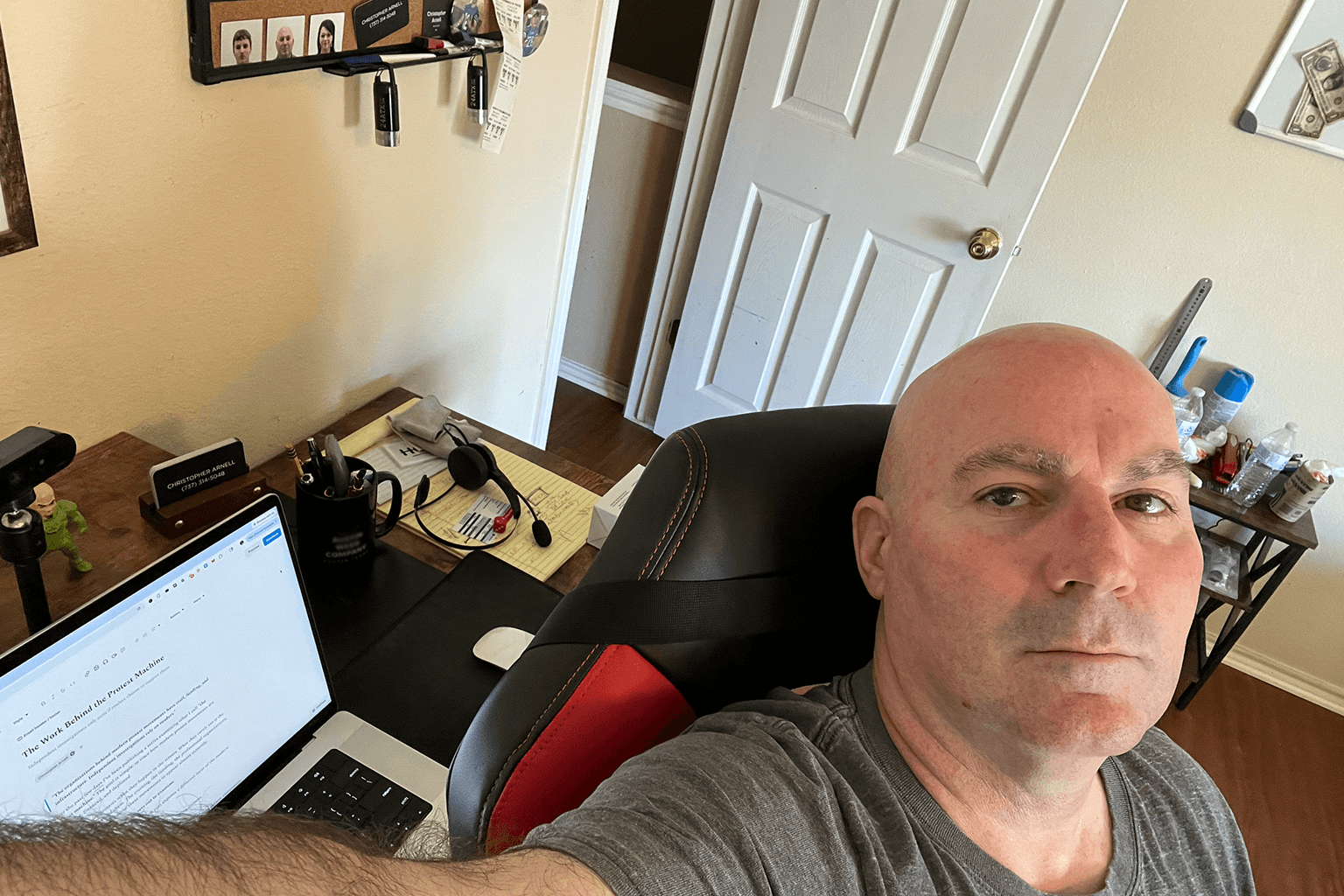
Last night was a good example of what independent writing often looks like behind the scenes. I was up until about 3:00 AM finishing that article so it could go out this morning. Earlier in the night, around 1:30 AM, I also recorded, edited, and cleaned up a video breaking down the “Parties Switched” myth, which I published as well. Then I was back up at 8:30 AM continuing work on Parts III and IV.
This is the rhythm of independent work. Research late into the night. Publish in the morning. Start the next piece the same day.
Investigations like this do not appear out of thin air. They require hours of reading reports, tracking funding networks, reviewing historical examples, and connecting dots that are often scattered across dozens of sources. Much of that work happens quietly before a single word ever appears on the page.
The irony is hard to miss.
Many of the organizations discussed in this series operate with large institutional funding, professional staffs, and full-time communications teams.
Independent writers do not have that infrastructure.
What we have instead is readers.
That is why support from paid subscribers matters more than people often realize.
Paid subscriptions do more than help cover the time required to produce this work. They also influence Substack’s internal rankings. When more readers become paid subscribers, the publication rises on lists like Substack’s Top 100 in U.S. Politics. That increased visibility helps new readers discover the work.
That matters because this is not an even playing field.
Substack may sometimes feel conservative depending on who you follow, but the broader political space is still dominated by liberals, many of whom arrive with major institutional advantages. They come in with donor lists, television audiences, media contacts, and massive email databases ready to import. Some begin with hundreds of thousands of built-in subscribers before they have even really started writing on the platform.
If even a fraction of those imported subscribers convert to paid, those publications immediately gain more momentum, more visibility, and more status inside the platform.
I built this publication differently.
I built it from the ground up, one subscriber at a time. I wrote for months before I got my first subscriber, and at the six-month mark I had only one paid subscriber.
That is why your support matters so much.
It does not just sustain the work. It helps this publication compete and grow on the strength of readers who actually chose to be here.
If you value investigations like this and want to see more of them, there are several ways to help.
This work exists because readers decide it should exist.
Become a Paid Subscriber
Paid subscribers make it possible for me to dedicate the time required for deeper investigations like this series.
Become a paid subscriber:
https://mrchr.is/help
Become a Resistance Core (Founding Member) Subscriber
If you are in the position to do more, join The Resistance Core, the group helping build a long-term independent platform for investigative writing and civic analysis.
Join The Resistance Core:
https://mrchr.is/resist
Make a One-Time Contribution
Some readers prefer to support the work with a one-time contribution rather than a recurring subscription. Those contributions are always appreciated and help support ongoing research.
Support with a one-time gift:
https://mrchr.is/give
Share the Work
If subscribing is not possible right now, sharing the articles with friends or on social media helps the work reach people who might otherwise never see it.
Independent research survives because readers decide it should.
And I want to thank those of you who already support this work.
Part III of the investigation, “Protest Inc.,” will be published shortly.
And it may be the most revealing part of the investigation yet.