

“Substack gave independent writers a place to publish. But just like the mainstream media, you’ll never know what you’re not seeing.”
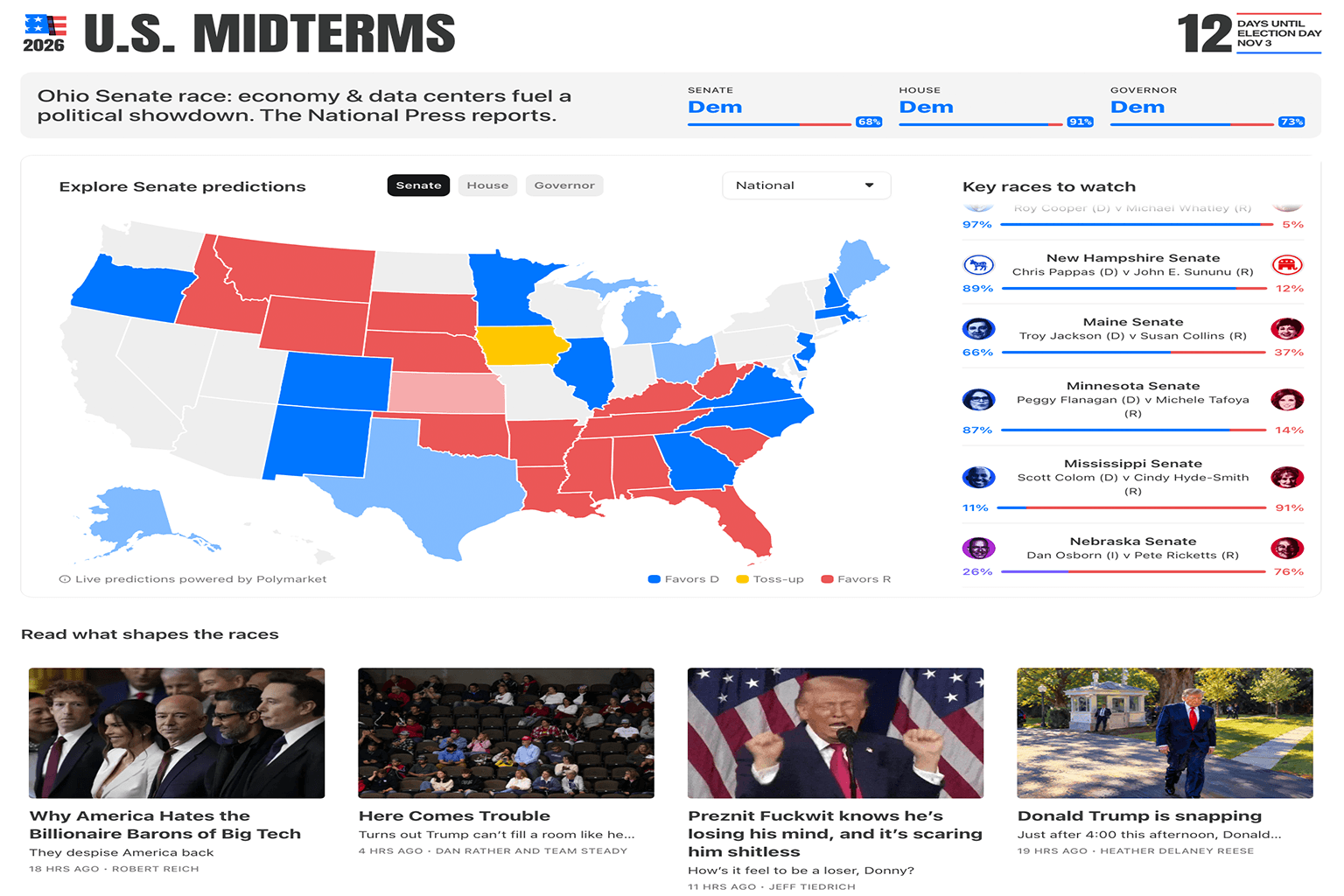
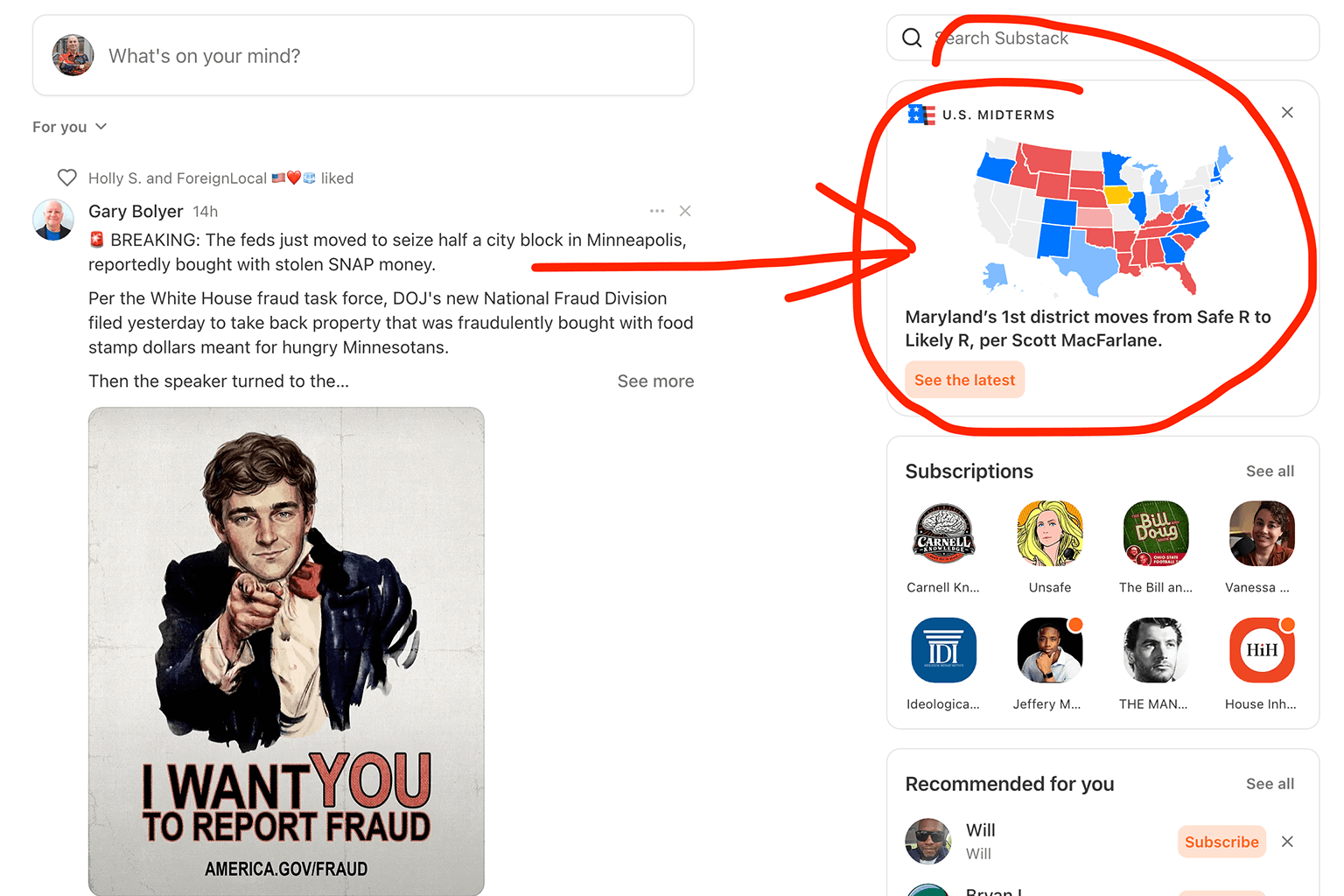
Substack is prominently promoting its 2026 Midterms page. Click through, and beneath the election predictions are four featured articles.
1. Why America Hates the Billionaire Barons of Big Tech
They despise America back
Robert Reich
2. Here Comes Trouble
Turns out Trump can’t fill a room like he used to
Dan Rather and Team Steady
3. Preznit Fuckwit knows he’s losing his mind, and it’s scaring him shitless
How’s it feel to be a loser, Donny?
Jeff Tiedrich
4. Donald Trump is snapping
Heather Delaney Reese
Four articles. Not one offering a favorable conservative perspective.
I checked again the following day. Different articles, same familiar slant. Dan Rather, Jeff Tiedrich, and Joyce Vance were featured criticizing or mocking Trump, while the “Most Popular” section offered more of the same. For a platform widely regarded as a refuge for independent and conservative writers, its midterm coverage looks an awful lot like the political commentary you'd find on CNN's homepage.
This is Substack, the platform that helped independent writers escape the political gatekeeping of traditional media.
Apparently, we can’t even have Substack. LOL.
Now, I can’t tell you whether those particular recommendations were selected by editors, an algorithm, or based on my reading habits. But I can tell you what appeared on the election page Substack presented to me. And it raises a question about who gets promoted, even on a platform built around independent publishing.
Substack gives writers a place to publish. But having a place to publish isn’t the same as having a platform that helps people discover your work. Anyone can start a publication, but the company still controls its recommendation systems, featured content, and much of the infrastructure that connects writers with readers.
You can be an independent writer without having an independent distribution system.
Traditional media organizations have editors, advertisers, corporate owners, and executives who influence what gets published and promoted. Independent writers can escape much of that structure, but they often exchange one kind of dependence for another. A change in an algorithm, a distribution policy, or a platform’s priorities can affect their ability to reach readers they’ve spent years attracting.
That’s why I don’t believe independent media should depend entirely on any one platform, including Substack. But building alternatives takes money.
A writer can chase advertising revenue, tailor content to please algorithms, spend most of his time working another job, or ask readers who value the work to help support it. Reader support allows a publication to answer more directly to its audience rather than advertisers or the people controlling distribution.
Which brings me to something I’ve received plenty of criticism for: asking readers to support mine.
Some of the feedback has been pretty harsh.
“Get a job.”
“Stop begging.”
“You’re pathetic.”
“I’m so sick of hearing your pitch.”
“There’s always something with you!”
Trust me, I’ve heard worse.
I realize I’ve asked for support more often than I’d like. Some readers are understandably tired of hearing it. So am I. In fact, I’m a lot more tired of living through the financial struggles that make those requests necessary.
But there’s something about me that longtime readers should understand. When I say I’m going to be honest, I don’t mean only about politics.
I’ve attached my real name and face to hundreds of essays addressing subjects that many people won’t touch. Race, crime, welfare, immigration, politics, and the destructive aspects of ghetto culture. I’ve criticized ideas, institutions, and behaviors that attract considerable hostility when a white man discusses them publicly.
I know what that can cost me. I write about them anyway because I believe the facts matter more than my comfort.
That same openness extends to my personal life. I’ve talked about driving Uber, losing clients, financial struggles, family problems, and the accident that took away my ability to earn money behind the wheel. I don’t share those things because I enjoy displaying my problems to the world and looking like a loser. Believe me, there are easier ways to spend an afternoon. I share them because they’re part of the reality behind the work.
I’m not asking people to finance some lavish lifestyle or just support a meager existence. I’m trying to build a sustainable independent media business, and like any business, that takes time, resources, and stability.
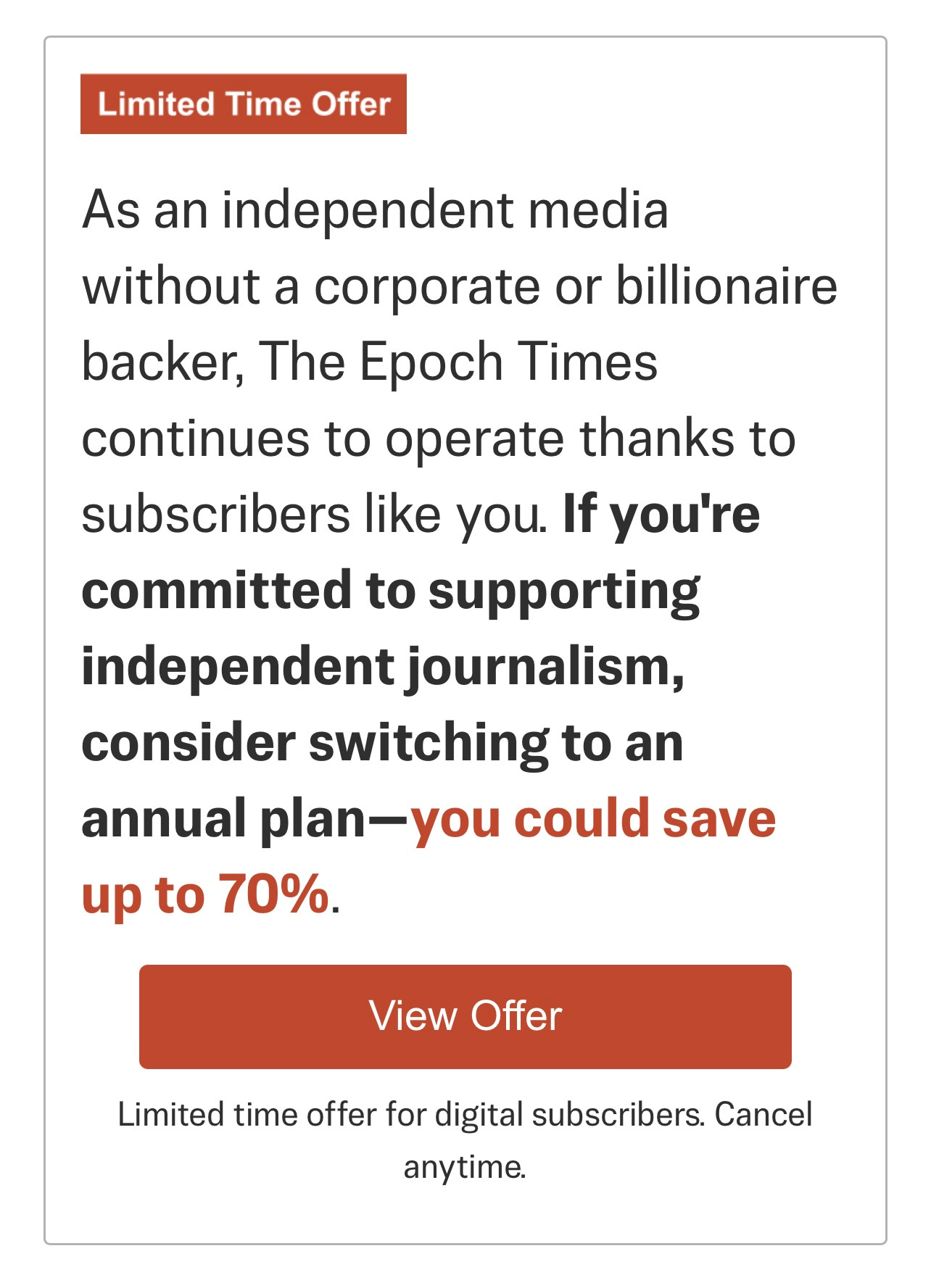
I recently saw a subscription pitch from The Epoch Times explaining that, as an independent outlet without a corporate or billionaire backer, it relies on subscribers to keep going.
Fair enough. I get it.
But I had to laugh a little. I’m over here eating ham sandwiches five or six days a week trying to build my own independent media operation.
Apparently, we’re both in independent media. Their version just has a slightly better grocery budget. LOL.
There are four stages to what I’m trying to accomplish.
First, my stability. I need to get out of the perpetual cycle of financial emergencies. It’s nearly impossible to concentrate on research, writing, and creating when you’re constantly wondering how you’re going to survive the next week.
Second, the brand’s stability. I want my publications to become reliable operations with enough financial breathing room to keep producing quality work, even when life throws another problem my way. My readers shouldn’t have to wonder whether the next emergency will bring everything to a halt.
Third, the brand’s growth. I’ve written hundreds of essays, but I want to do much more. I’ve already launched carnellknowledge.com, a second Substack publication that takes several of my longer, related essays and distills them into shorter, easier-to-digest articles. Not everyone has the time to read a 5,000-word essay, much less four of them. Carnell Knowledge gives those readers another way to benefit from the research I’ve already done.
I also briefly experimented with video, and I enjoyed it. There’s plenty of room for improvement, but that comes with practice, something that’s difficult to find time for when you’re constantly trying to stay afloat. I’d like to return to it and reach people who would rather watch a ten-minute video than read a lengthy essay.
Fourth, building related ventures. I want these projects to work together without depending on a single platform. My own websites, email distribution, writing, video, research, commentary, and educational material can reach different audiences while supporting the same larger operation.
Substack can remain part of that operation. I have no intention of abandoning a platform that’s helped me reach so many people. But I don’t want everything I’ve built to depend on one company’s decisions about what deserves attention.
You can’t build the fourth floor when you’re still struggling to keep the foundation from collapsing.
Reader support helps me get there. It gives me more time to research, improve my work, experiment with new formats, and develop a business that doesn’t fall apart every time life throws another problem at me.
I don’t expect everyone to contribute. I don’t even expect everyone to agree with me. My work is free to read, and I intend to keep it that way.
I won’t pretend that producing independent media costs nothing simply because asking for financial support makes some people uncomfortable.
Look at that Substack election page again. The articles may change, but the political perspectives being prominently featured haven't changed much in what I've seen.
Whatever determined those selections, it’s a reminder that being allowed to publish isn’t the same thing as being promoted. Writers who want greater independence need ways to reach readers beyond whatever a platform chooses to feature.
These things need to get done.
Clearly.
I’m trying to do my part. If you believe in what I’m building, your support helps me move beyond surviving long enough to publish the next essay and toward creating something much bigger.
That’s not begging. That’s building.
Help Me Build What’s Next
If you value my work and want to help me expand into more writing, video, and independent platforms, please consider supporting it.
Every paid subscription, contribution, and share helps move this operation forward.
Thank you to everyone who’s already helping make this possible.
Substack's 2026 Midterms page pulls its election predictions from Polymarket, which I consider dubious enough as a measure of electoral reality.
Next to those predictions, Substack features a section called "Read what shapes the races."
And what does it showcase? One anti-Trump hit piece after another. Dan Rather, Jeff Tiedrich, Joyce Vance, and more of the same.
Those articles don't appear there by accident. Substack's own selection system determines what gets featured, and the results I've seen are overwhelmingly one-sided.
You can publish anything on Substack. Apparently, getting promoted is another story.
Sound familiar? It should. It's the same gatekeeping problem I've complained about for years.