

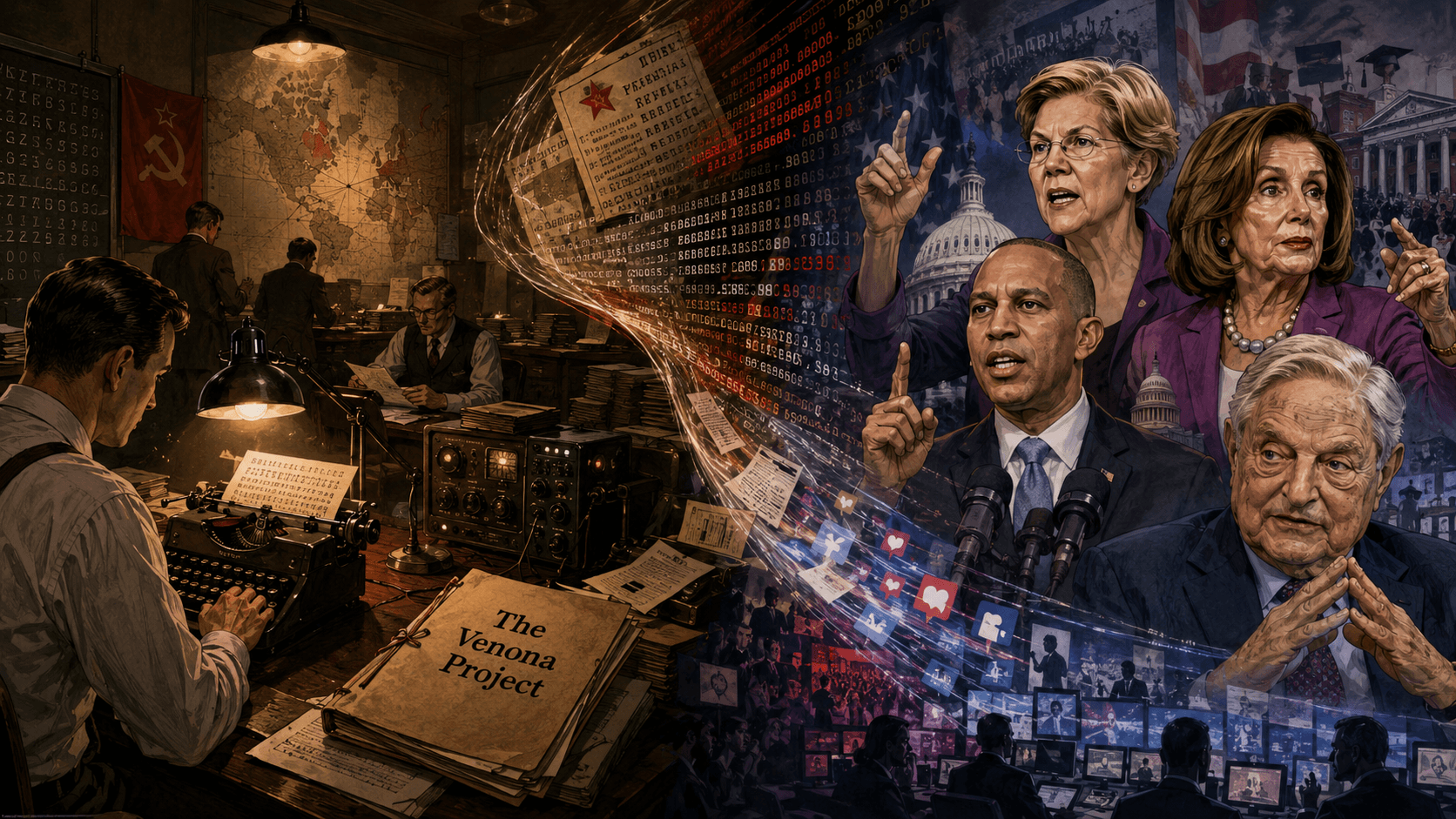
“Once, America decoded hostile ideologies when they came hidden in secret cables. Now we decode slogans, campaigns, classroom indoctrination, and congressional double-speak from a ruling class that calls sabotage public service.”
Most Americans have heard of Watergate. They have heard of Iran-Contra. Maybe they have heard of the Pentagon Papers. And they have definitely heard more about January 6 than they ever wanted to know.
Far fewer have heard of the Venona Project.
That is odd, because Venona may have been one of the most important intelligence operations in American history. It helped prove that Soviet espionage inside the United States was not a paranoid fantasy, not a fever dream, and not merely the result of some drunken senator waving papers in front of cameras. It was real.
Soviet agents and informants had penetrated American institutions. They reached into government, science, diplomacy, finance, and the atomic program. They had friends in respectable places. They had credentials. They had government jobs. They had code names. They had handlers. They had people willing to betray the country while enjoying all the benefits of living in it.
The original Venona Project decoded Soviet messages. This essay begins there because modern America cannot understand its present self-sabotage until it remembers that hostile ideologies once had to sneak into the country. They came under false names. They used couriers. They used encrypted communications. They hid inside institutions that polite society did not want questioned.
Today, much of the hostility no longer hides. It runs for office. It gets faculty tenure. It writes policy memos. It joins activist nonprofits. It appears on cable news. It is called “representation,” “equity,” “liberation,” “decolonization,” or “progress.”
In intelligence language, a “cable” was not cable television. It was a written message sent through diplomatic or intelligence channels. Think of it as the old-world version of a classified email or secure text message, except it traveled by telegram systems and was protected by codes.
Venona was built around these Soviet cables. American codebreakers collected them, studied them, and slowly broke into parts of them. They did not read everything. They did not crack every Soviet message. But they read enough to discover something the left spent decades trying to dismiss.
The enemy was not imaginary.
What Venona Was
The Venona Project began in February 1943, during World War II, inside the U.S. Army’s Signal Intelligence Service. That was the world before the National Security Agency. The mission was to study encrypted Soviet communications.
This point alone surprises many people. The Soviet Union was technically an American ally during World War II. American boys were fighting Hitler. Stalin was fighting Hitler too, at enormous human cost. But being a temporary ally against one enemy did not make Stalin’s Soviet Union a friend of American liberty.
The Soviets were not simply another country with a different economic theory. They were an ideological empire. Communism was not just a domestic policy preference about tax rates or welfare programs. It was a revolutionary system that sought power. It operated through parties, front groups, agents, sympathizers, labor networks, journalists, academics, and spies. It did not always announce itself as treason. It often appeared as idealism.
That was part of its charm. Young fools could tell themselves they were fighting poverty. Credentialed fools could tell themselves they were on the right side of history. Hardened operatives could use both.
The Soviets used encryption systems that were supposed to be secure. In theory, a properly used one-time pad is nearly unbreakable. The problem was human error. Some Soviet encryption material was reused or mishandled. Those mistakes gave American cryptanalysts an opening.
This was not movie codebreaking, where a genius stares at a page and solves the mystery before lunch. Venona was slow, patient, and frustrating. It involved fragments. Names were often hidden behind cover names. Messages were partial. Some identities became obvious only after years of FBI investigation. The work required linguists, mathematicians, analysts, and investigators piecing together scraps from a hostile state’s communications.
The program remained secret for decades. Venona was not publicly declassified until 1995. That means Americans argued for half a century about communist espionage without seeing some of the strongest evidence. That fact shaped the political memory of the Cold War.
The left got to say “witch hunt” while evidence sat in classified files. The government knew more than it could say. The propagandists could say more than they knew. That is not a small detail. It is the hinge of the whole story.
The People Who Did the Decoding
Venona was not folklore. It was not barroom anti-communism. It was analysts, linguists, agents, files, translations, intercepts, code names, and years of work.
One of the names worth knowing is Gene Grabeel. She is often associated with the beginning of the Soviet-message project in 1943. It was small at first, like many important things in government before they become famous. A few people, some files, a hard problem, and no public applause.
Then there was Meredith Gardner, one of the central figures in the story. Gardner was a brilliant linguist and codebreaker. His work helped break into the Soviet messages and connect fragments that later helped identify real Soviet espionage networks.
Cecil Phillips was another important cryptanalyst connected to the Venona work. Like Gardner, he belongs to that neglected class of Americans who did important work without becoming household names. We remember politicians who lied on television. We forget the people who quietly protected the country.
On the FBI side, one of the key figures was Robert Lamphere. He became one of the Bureau’s major Venona investigators. His job was not simply to read decrypts. It was to help turn fragments into investigative leads. A code name in a cable is not the same as a courtroom identity. Someone had to compare clues, travel patterns, job titles, personal histories, access to secrets, and relationships.
Then there was J. Edgar Hoover.
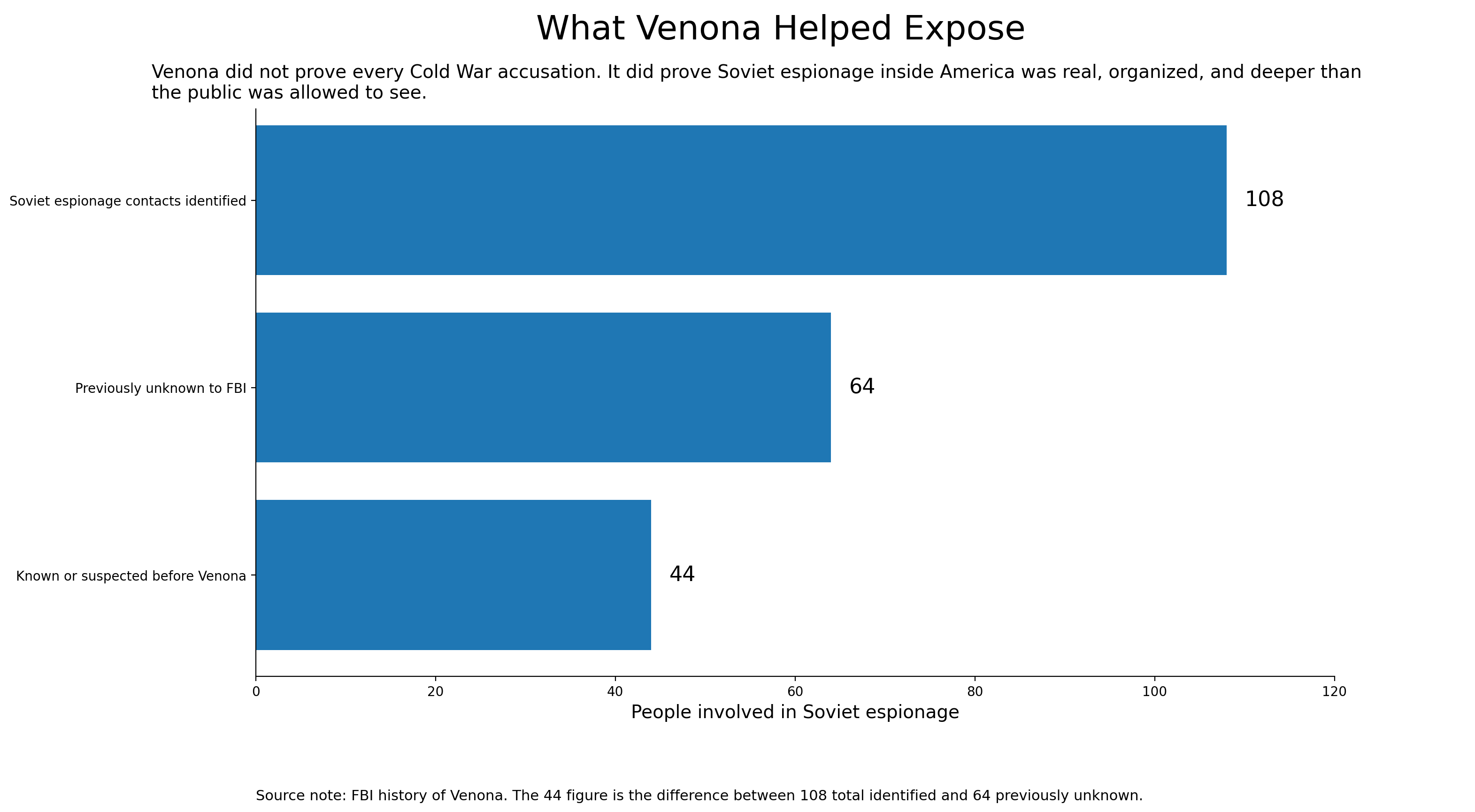
Hoover is a complicated figure. There is no need to turn him into a saint. Government power can be abused, and Hoover’s FBI had more than its share of abuses. But historical complexity does not change the central fact: the FBI’s Venona work helped expose real Soviet espionage. The Bureau later said Venona helped identify 108 people involved in Soviet espionage, including 64 previously unknown to the FBI.
That number matters. Sixty-four unknown people is not paranoia. It is penetration.
This is where many Americans were taught a cartoon version of history. They were taught that anti-communism was hysterical, crude, and dangerous. Sometimes it was. But they were not taught, with equal force, that Soviet espionage was real, organized, and dangerous.
The cartoon left out the spies.
The Enemy Was Not Imaginary
Venona revealed traffic involving Soviet intelligence services, including the NKVD and GRU. The NKVD was a Soviet security and intelligence organ, part of the brutal machinery of Stalin’s state. The GRU was Soviet military intelligence. Later, Americans became more familiar with the KGB, the Soviet state security service that grew out of this world of spies, informants, and ideological warfare.
This was not a handful of misguided idealists passing pamphlets in a basement. Soviet intelligence targeted American institutions because it wanted secrets, influence, and access to science, weapons, diplomacy, policy, and strategy.
Venona showed that Soviet intelligence had cover names for American targets. The Manhattan Project, the program that built the atomic bomb, was known in Soviet traffic as “Enormoz.” The U.S. War Department was “Arsenal.” The State Department was “The Bank.” These were not metaphors created by right-wing talk radio. These were code names used by a hostile power.
Think about what that means. America was spending billions, mobilizing industry, drafting young men, fighting a world war, and building the most powerful weapon ever created. Meanwhile, Soviet intelligence was working to steal the secrets of that weapon from inside the American system.
The spies were not all rough men from dark alleys. Some were scientists. Some were officials. Some were couriers. Some were ideological believers. Some were useful fools. Some were simply traitors.
Venona did not prove every accusation made during the anti-communist era. It did not mean every accused person was guilty. It did not make every anti-communist wise, fair, or restrained. But it did prove the central thing the left spent decades mocking: Soviet penetration of American institutions was real.
That should have changed the way Americans remembered the Cold War. Instead, much of the cultural class kept teaching the same moral lesson: the great danger was not communism, but anti-communism.
That is how a civilization loses the ability to defend itself.
Name Names
History becomes easier to ignore when the people inside it are kept vague. “Espionage networks” sounds abstract. Names make it harder to dodge.
Start with Julius Rosenberg.
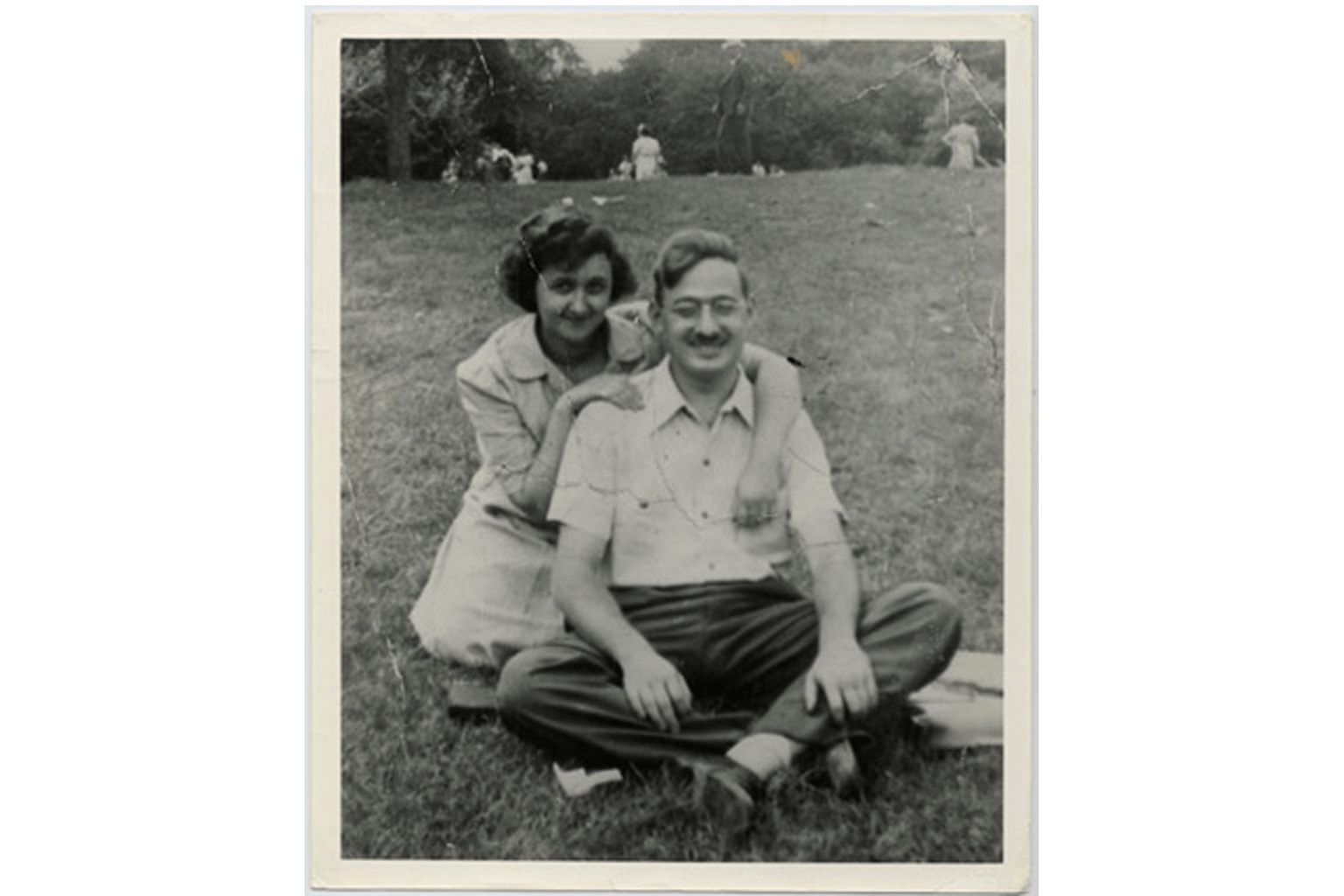
Julius Rosenberg was an electrical engineer. In Soviet communications, he used the code names “Antenna” and later “Liberal.” He was involved in a real Soviet espionage network. The Department of Energy’s history of the Manhattan Project identifies him as David Greenglass’s handler. PBS notes that 21 deciphered KGB cables from 1944 and 1945 discussed Julius Rosenberg under those cover names.
Julius was not framed. He was not an innocent victim of anti-communist hysteria. He was a Soviet spy.
That sentence offends people who have spent decades treating the Rosenbergs as martyrs. It offends them because the martyr story requires innocence. It cannot survive the truth.
Ethel Rosenberg is more complicated, which is why she should not be treated as if her case were identical to Julius’s. Her defenders often present her as an innocent, passive housewife murdered by a panicked state. The truth is less useful to slogans. Venona and later disclosures show she knew about Julius’s work and lived inside the political world that made his betrayal possible. But the strongest Venona evidence points to Julius as the active Soviet agent, while Ethel’s operational role remains disputed.
That distinction does not save the martyr myth. It makes the truth less tidy than either side wanted. Julius was the cleaner case. Ethel was the more complicated one. The propaganda needed both of them to be entirely innocent. Venona made that impossible.
Then there was David Greenglass, Ethel’s brother. He was a machinist at Los Alamos, where the Manhattan Project did its secret atomic work. Greenglass passed information and later testified in the Rosenberg case. He was not some imaginary figure created by prosecutors to spice up a courtroom drama. He was part of the network.
Harry Gold was a courier. Spy rings need couriers because treason has logistics. Secrets do not move themselves. Somebody has to carry information, connect sources, handle contact, and keep the machine running. Gold was one of those people.
Klaus Fuchs was one of the most damaging atomic spies. He was a German-born British physicist who worked on the Manhattan Project. He passed atomic secrets to the Soviet Union. His espionage helped Stalin’s regime understand what America had built and shortened the Soviet path to the bomb.
Theodore Hall was another Los Alamos physicist who passed information to the Soviets. He was young, brilliant, and dangerous. Venona identified him under the code name “Mlad,” which means “youngster” in Russian. The nickname fit. He was only 19 when he began his work as a spy.
Then there was Alger Hiss.
Hiss had one of those resumes that respectable people find reassuring. He was a former State Department official. He later became president of the Carnegie Endowment for International Peace. He moved in elite circles. He had the polish that often causes naive people to mistake manners for loyalty. Hiss was convicted of perjury in 1950, not espionage, because the statute of limitations had run. Venona and later evidence strengthened the case that he had been connected to Soviet intelligence.
Respectable titles do not make a man loyal. Sometimes they simply give betrayal a better office.
Harry Dexter White may be even more disturbing. White was a senior Treasury Department official. He played a major role in shaping the postwar financial order. He was the first U.S. executive director of the International Monetary Fund. Venona and related evidence have long implicated him in assisting Soviet intelligence.
Read that again. This was not a marginal crank waving a red flag at a rally. This was a senior official inside the American financial state at a world-historical moment.
Lauchlin Currie was a White House aide to Franklin Roosevelt. He too was implicated in Soviet intelligence contacts. That does not mean Roosevelt was a communist. It means Soviet intelligence understood something many modern Americans still refuse to understand: if you want power, you do not just recruit the powerless. You look near the powerful.
Kim Philby shows that the problem was not only American. Philby was a British intelligence officer and a Soviet mole, part of the infamous Cambridge spy ring. He had access to Anglo-American intelligence cooperation and passed information to Moscow. Soviet penetration reached into allied intelligence too.
The pattern is not hard to see. The difficulty lies in admitting what it means.
This was not one spy. It was a network. It touched science, diplomacy, finance, military secrets, foreign policy, and intelligence cooperation. It had engineers, physicists, couriers, officials, and sympathizers. It relied on ideology, access, and the blindness of polite society.
The old American establishment had many flaws. But at least some part of it still understood that hostile ideologies were not debating-society curiosities. They were instruments of power.
Why the Rosenberg Myth Survived
The Rosenberg case became one of the left’s favorite morality plays.
The story went like this: Julius and Ethel Rosenberg were framed. They were victims of hysteria. America, drunk on anti-communist panic, murdered two innocent people to satisfy the mob.
It was a useful story. It turned anti-communism into the real villain. It made communists and their fellow travelers look like victims. It allowed the left to pretend that concern about Soviet espionage was just bigotry in a fedora.
The problem is that the story was not true.
The deeper question is why it survived so long, and the answer is Venona. The government had evidence from Venona, but it could not simply walk into court and say, “We know Julius Rosenberg is a Soviet agent because we are reading Soviet communications.” That might have made one trial easier, but it would have made the Cold War much harder. Moscow would have known that American codebreakers had broken into parts of its communications system.
So the strongest evidence remained secret.
The Department of Energy’s history of the Manhattan Project puts the issue plainly: the Venona secret was considered too valuable to reveal as evidence in an open court proceeding. That meant prosecutors had to build cases through witnesses, confessions, corroboration, and investigative leads while the most explosive material stayed locked away.
That created a strange political advantage for the defenders of Soviet espionage. The government knew more than it could say. The propagandists could say more than they knew.
That is how Julius Rosenberg became a martyr instead of what Venona later confirmed he was: a Soviet spy.
The frame-up story did not survive because the evidence was weak. It survived because the strongest evidence was secret. The left filled the silence with mythology. That is one of the great ironies of Venona. The United States had proof that would have destroyed much of the propaganda, but using that proof would have warned the Soviets that their messages were being read.
So the lie got decades of oxygen.
Even after Venona was declassified, the Rosenberg myth did not disappear. It merely changed shape. The claim was no longer always that Julius had done nothing. That became harder to maintain. The new defense was that the case was exaggerated, the trial was unfair, Ethel was a victim, the punishment was excessive, and anti-communism remained the real scandal. That is how political myths survive. When the facts become inconvenient, the argument moves.
This should make us more cautious about official secrecy, not less. Government power can hide wrongdoing. But it should also make us more cautious about fashionable innocence narratives. Not every person called a victim is innocent. Not every person called paranoid is wrong. Not every warning is hysteria.
Sometimes the witch hunt finds witches.
What Venona Proved
Venona did not justify every excess of the Red Scare. It did not prove every accused person guilty. It did not make every anti-communist noble. History is rarely that tidy.
But Venona did prove several things that many people still prefer not to know. It proved that hostile ideologies can penetrate free societies. It proved that educated people can betray the country that educated them. It proved that elite institutions can become hiding places for radical loyalties. It proved that denial by respectable people does not make a threat imaginary.
It also proved that language can be a weapon.
The communists and fellow travelers did not usually introduce themselves by saying, “Hello, I would like to help a murderous foreign dictatorship steal American secrets.” They spoke in the language of justice, equality, peace, workers, anti-fascism, and progress. Some knew exactly what they were doing. Others were too vain to realize they were being used.
This is where Thomas Sowell’s old warning about intellectuals comes to mind. The educated class is often very good at producing reasons why obvious things are not obvious. A man in a factory can usually tell when something does not work. A professor can explain why the failure proves the theory has not been tried properly.
Communism murdered, starved, imprisoned, censored, and enslaved. Yet generations of Western intellectuals found ways to romanticize it. The problem was never lack of evidence. The problem was moral vanity.
Venona cut through the vanity. It showed that communism was not merely an idea debated in seminars. It was a political religion with spies.
The lesson many Americans were taught was that anti-communism was the scandal. Venona showed that communist infiltration was the scandal. That distinction is not academic. It tells us whether a country can still recognize its enemies.
When Hostile Ideology Stopped Hiding
The old problem was secret infiltration. The modern problem is open institutional capture.
No, today is not exactly the same as the Soviet espionage networks of the 1940s. Rash slogans are not the same thing as encrypted cables. A socialist campaign speech is not the same thing as handing atomic secrets to Stalin. Serious people should not flatten every distinction just to win an argument.
But distinctions are not excuses.
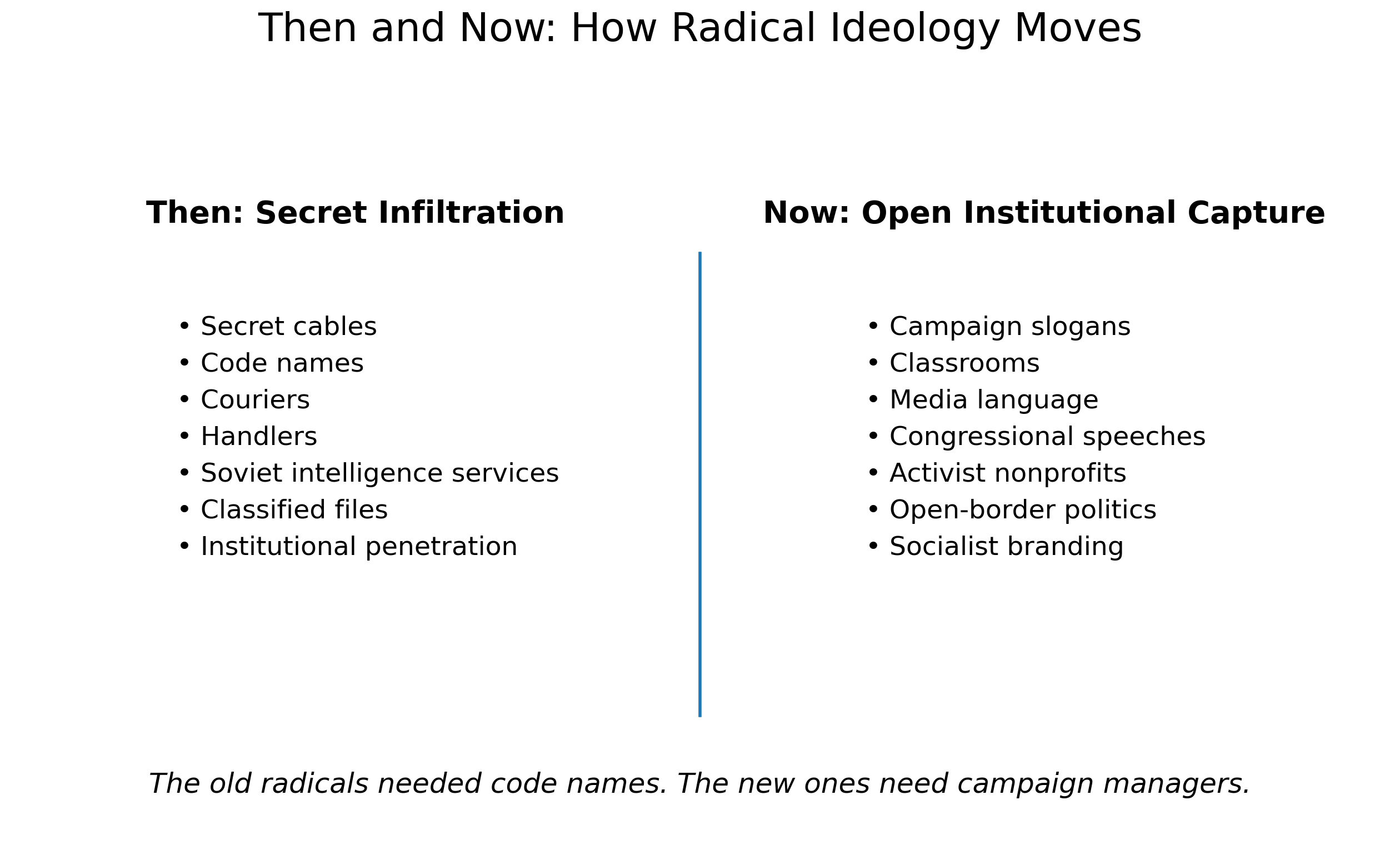
The old Venona decoded messages from Moscow. The new Venona has to decode messages from universities, Congress, newsrooms, prosecutors’ offices, NGOs, school boards, and federal agencies.
The old world had code names, handlers, couriers, dead drops, party networks, and secret cables. The new world has diversity offices, open-border nonprofits, campus departments, prosecutor platforms, media euphemisms, and congressional speeches about dismantling American systems.
America once fought radical ideology as a threat. Now parts of America import it, fund it, elect it, credentialize it, excuse it, and call the result progress.
That does not mean every progressive is a communist. It does not mean every immigrant is suspect. It does not mean every critic of America is a spy. That would be lazy and false. The better question is how a country that once understood the danger of radical foreign ideologies became so eager to mainstream them.
The answer begins with our native-born establishment. Radical, foreign-derived political systems did not force their way through a breach in the perimeter. They were imported, unpacked, and distributed by a domestic intellectual class that had grown tired of American principles. Our own elites became the consumers and distributors of hostile ideas, repackaging them for the home market.
Bernie Sanders helped make democratic socialism respectable inside the Democrat coalition. He is not foreign-born, and he is not a Soviet agent. That is not the claim. The point is that socialism, once understood by many Americans as a dangerous ideology with a catastrophic historical record, was repackaged as compassion with better branding.
Alexandria Ocasio-Cortez turned that politics into youth culture. Her appeal was not built on Soviet code names. It was built on Instagram, student debt, climate panic, resentment toward capitalism, and the language of moral urgency. The Democratic Socialists of America backed her, later fought over her, and treated her as one of the most valuable symbols of the movement.
Rashida Tlaib is an even cleaner example of open socialist politics in Congress. DSA itself called her a member and representative of the Democratic Socialists of America. She did not need a handler in a trench coat. She had a congressional office.
Ilhan Omar gives the argument a different shape. She is foreign-born, but that is not the issue by itself. The issue is the brand of politics: anti-border, grievance-driven, hostile toward American power, and deeply embedded in the progressive wing of the Democrat Party. She is listed as deputy chair of the Congressional Progressive Caucus.
Greg Casar, from Texas, now chairs that caucus. The caucus describes itself as having nearly 100 progressive members in the House and Senate. That means the movement is not a fringe pamphlet table outside a campus dining hall. It has institutional reach.
By June 18, 2026, the trend had moved beyond the familiar Squad names. In major urban races, democratic socialist candidates and allied progressives were running or winning on platforms tied to abolishing ICE, weakening traditional law enforcement, taxing the rich, and opposing long-standing American geopolitical alliances.
This is not hidden. That is the point.
The old radicals needed code names. The new ones need campaign managers.
The Problem Is Not Foreign Birth. It Is Foreign Hostility.
This is where the argument needs discipline.
The issue is not foreign birth. Some of the best Americans were born somewhere else. Many immigrants understand America better than native-born radicals because they have seen socialism, communism, religious tyranny, tribal politics, corruption, and state violence up close.
A Cuban refugee who hates communism is not the problem. A Vietnamese family that fled communism is not the problem. A Polish immigrant who remembers Soviet domination is not the problem. An Iranian dissident who understands theocracy is not the problem. A legal immigrant who wants to become American is not the problem.
In many cases, those people are more American in spirit than the college-educated radical who was born here and learned to despise the country in a seminar room.
The question is not where someone was born. The question is whether America assimilated them, or whether they imported the politics of the place they left.
That is the line many politicians refuse to draw, because drawing it would require admitting that culture matters, ideology matters, and citizenship is supposed to mean something more than residence.
Pew reported that at least 19 lawmakers in the 119th Congress were foreign-born, about 4 percent of Congress. That number by itself tells us almost nothing morally. The foreign-born category includes people across backgrounds, parties, and beliefs. It would be foolish to treat foreign birth as guilt.
But it would be just as foolish to pretend foreign ideology is never imported through people, institutions, networks, activism, and political coalitions.
America’s old immigration model had an expectation built into it: you came here to become American. You did not come here to recreate the politics, hatreds, tribalism, socialism, corruption, or religious extremism of the country you left. You left there for a reason.
That expectation has weakened.
Now assimilation is treated as suspicious. Borders are treated as cruel. Citizenship is treated as paperwork. National loyalty is treated as bigotry. “Diversity” often means importing political conflicts Americans never voted to inherit.
A country that refuses to assimilate newcomers should not be surprised when newcomers, or their children, assimilate the country instead.
This is not only an immigrant problem. Native-born Americans have done plenty of damage on their own. Some of the loudest socialist voices were born here. Some of the most anti-American professors are as American as apple pie and student loans. The disease is ideological, not ethnic.
That is why Venona is such a useful historical mirror. The original Venona showed that hostile ideology can operate through respectable institutions. The modern version asks what happens when the hostility no longer bothers to hide.
Why “The Venona Project” Is the Right Name
The original Venona Project decoded secret Soviet communications.
This Venona decodes public language.
That is the difference between then and now. The old cables were encrypted. The new cables are slogans.
“Equity” often means unequal standards.
“Restorative justice” often means the victim absorbs the cost of the offender’s dysfunction.
“Disinformation” often means inconvenient information released before the authorities have prepared their explanation.
“Democracy” often means the ruling class gets its way.
“Compassion” often means refusing to enforce consequences.
“Comprehensive immigration reform” often means legalizing yesterday’s violation and incentivizing tomorrow’s.
“Decolonization” often means teaching people who live in the freest countries on earth to sympathize with the least free.
“Public safety reform” often means making life more dangerous for the public.
The code is no longer hidden in Soviet traffic. It is hidden in headlines, policy memos, court decisions, school curricula, nonprofit language, immigration rhetoric, crime statistics, congressional speeches, and all the soft little words powerful people use when they want citizens to stop asking hard questions.
The old Venona exposed enemies hiding under false names. The new Venona exposes ideas hiding under false virtues.
That is why the name works. It is not a conspiracy theory. It is a method. Take the message. Strip away the slogan. Decode the real meaning. Compare the promise to the result.
Communism once promised equality and delivered prison camps. Modern socialism promises fairness and delivers dependency, inflation, bureaucracy, resentment, and state power. Open borders promise compassion and deliver wage pressure, school strain, hospital strain, housing strain, cartel enrichment, and the slow cheapening of citizenship. Soft-on-crime policy promises justice and delivers more victims. Race politics promises healing and delivers permanent grievance.
The pattern is not complicated. It is only protected by language.
The Cables Are Public Now
The original Venona Project revealed that America’s enemies did not always come ashore with rifles. Sometimes they came with theories, credentials, party cards, code names, and friends in respectable places.
That was an uncomfortable truth. It still is.
It was more comforting to believe that communist infiltration was a right-wing fantasy. It was more flattering to believe that respectable institutions could not be penetrated by hostile ideas. It was easier to laugh at the anti-communists than to ask why so many communists were near power.
Venona made that laughter look foolish.
Today, much of the hostility no longer bothers with code names. It uses slogans. It uses congressional language. It uses academic language. It uses compassion language. It uses immigrant-rights language. It uses democracy language.
The old codebreakers sat in secrecy, slowly piecing together fragments of messages from a hostile power. We do not have that excuse.
The messages are everywhere now. They are not hidden. They are not subtle. They are spoken into microphones, printed in platforms, taught in classrooms, defended in newspapers, and funded by taxpayers.
The problem is not lack of evidence. The problem is lack of courage to decode it.
The original Venona Project decoded Soviet cables. This one decodes the public language of American self-sabotage.
The cables are public now.
The job is to read them.
Help Keep This Work Independent
The easiest thing in America is to pretend not to notice.
Pretend the radicals are merely idealists. Pretend socialism is just compassion with better branding. Pretend anti-American rhetoric is not really anti-American if it comes wrapped in the language of equity, liberation, democracy, or justice.
That is how bad ideas survive. People see the damage, but learn to speak around it. They know something is wrong, but they are trained to call it complicated, sensitive, divisive, or dangerous to say out loud.
This work exists for the people who are done pretending.
Become a Paid Subscriber
Your support keeps this work free for people who need to read it, helps these essays reach readers outside the approved channels, and gives plain truths the distribution they need before the respectable voices bury them.
Subscribe here:
https://mrchr.is/help
Make a One-Time Gift
If you do not want another subscription but still want to help, a one-time gift gives me more room to research, write, source, publish, and keep building this platform without asking permission from the institutions I criticize.
Make a one-time gift here:
https://mrchr.is/give
Join The Resistance Core
The Resistance Core helps fund the longer investigations, data-heavy essays, charts, videos, and source work that do not survive inside polite institutional spaces.
Join here:
https://mrchr.is/resist
Venmo
Venmo is also available if you prefer a direct one-time option without starting a subscription or using the gift page.
Venmo here:
https://account.venmo.com/u/mrchrisarnell
If You Cannot Give
Read it. Share it. Restack it. Send it to the person who knows this is true but has never seen it said this plainly.