

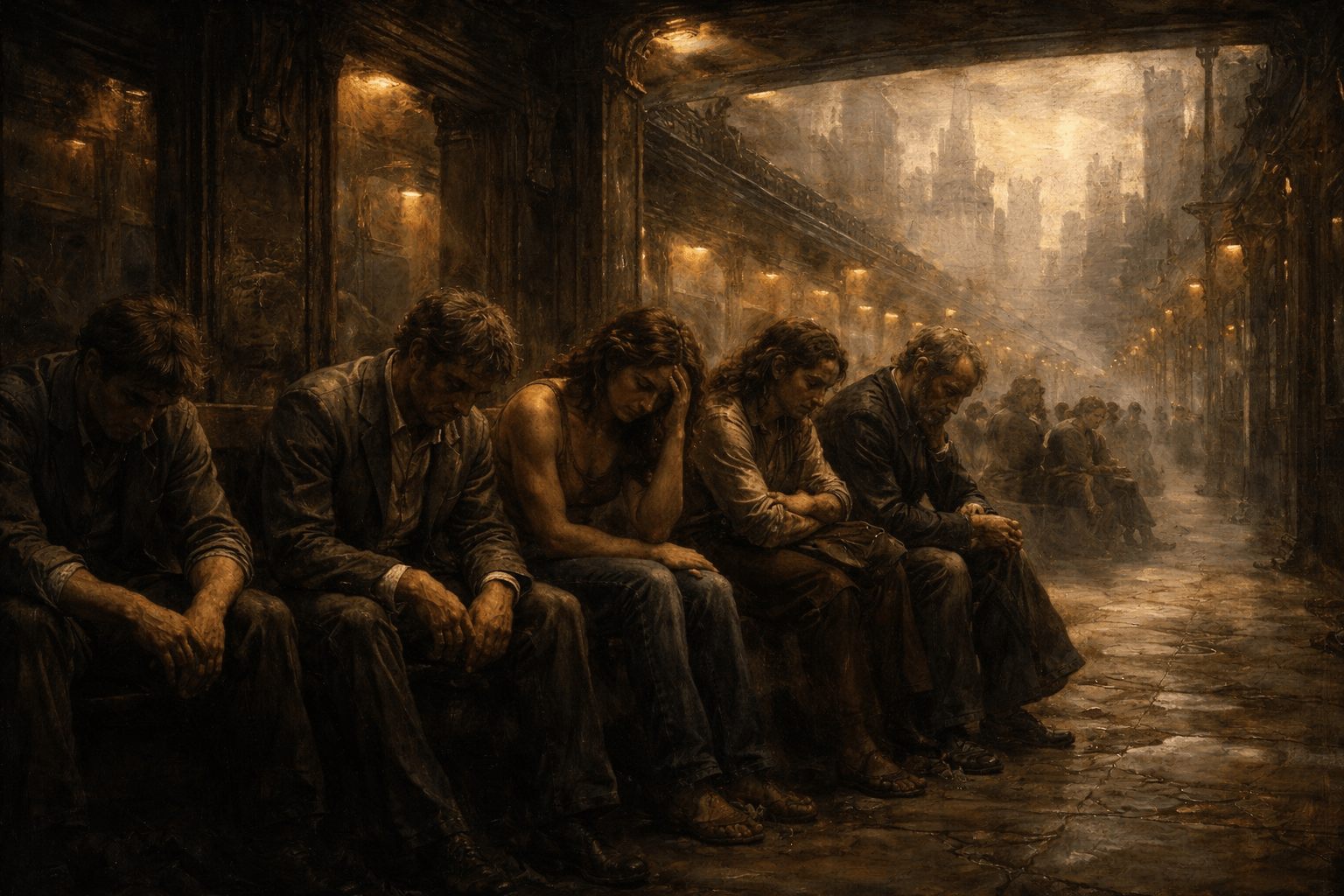
“A society does not break all at once. It breaks when the things that held it together stop being expected.”
When shared expectations weaken, the effects do not remain confined to one area. They spread across institutions and show up in ways that are easy to recognize, even if people describe them differently. The pattern is not dramatic at first. It builds through small changes that accumulate over time.
One of the first places this becomes visible is in public order. When fewer people feel bound by common standards of behavior, more conduct falls outside what others consider acceptable. That does not mean every space becomes disorderly, but it does mean that maintaining order requires more effort than it once did. Public transit systems deal with more disruptions. Retail environments see more theft and require additional security. Neighborhoods that once relied on informal expectations increasingly rely on formal enforcement.
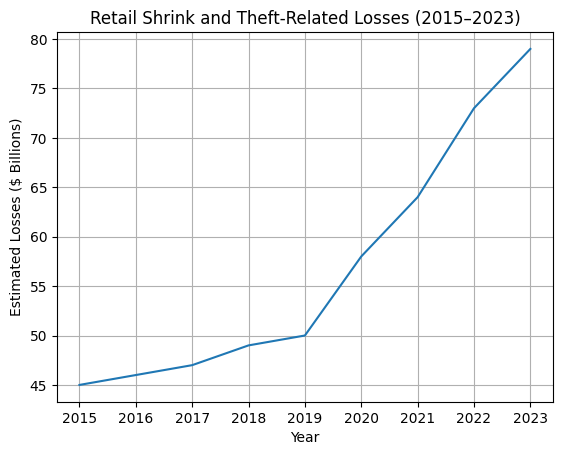
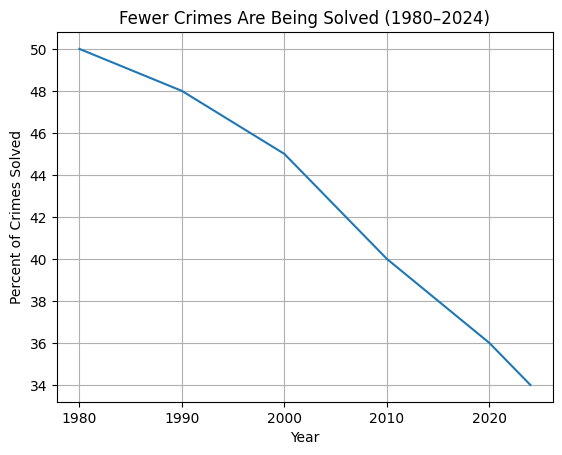
The numbers reflect part of this shift. The spike in violent crime in many American cities beginning in 2020 was widely documented, even though rates have since declined in some areas. According to data from the Federal Bureau of Investigation, homicides increased sharply in 2020 and 2021 before leveling off. That change did not occur in isolation. It followed a period of reduced enforcement, strained relationships between communities and police, and broader disruptions in social norms. Even where crime has fallen, surveys show that many residents continue to feel less safe than they did a decade ago.
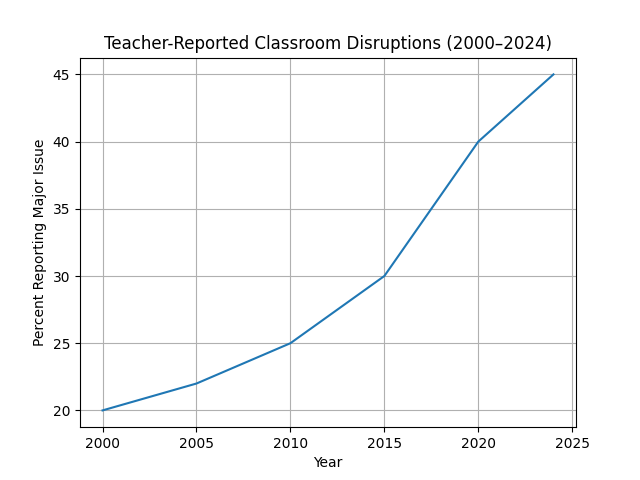
Public safety is only one part of the picture. Education shows a similar pattern. When shared expectations about behavior weaken, classrooms become harder to manage. Teachers report spending more time addressing disruptions and less time on instruction. This does not affect every school equally, but it is widespread enough to shape how education is delivered.
Workplaces reflect comparable changes. When expectations about effort and responsibility become less consistent, employers respond by increasing oversight and formalizing processes that once relied on trust. Gallup surveys have shown that a large share of workers report being disengaged from their jobs, which affects productivity and workplace culture. Businesses adapt by implementing more monitoring, more structured performance systems, and more layers of management.
These responses are rational. They are attempts to compensate for the weakening of informal norms. But they come with costs. More oversight raises costs, while additional rules reduce flexibility and increase tension.
The legal system also absorbs some of this burden. When informal resolution becomes less reliable, disputes are more likely to move into formal channels. That can be seen in the volume of litigation and the complexity of regulatory frameworks. As more situations require formal resolution, the system becomes slower and more expensive, and outcomes become less predictable.
Trust plays a central role in all of this. When people believe that others are likely to act in predictable ways, they are more willing to cooperate. When that belief weakens, they become more cautious. Surveys from organizations like the Pew Research Center show that a smaller share of Americans now say that most people can be trusted compared to previous decades. That decline affects everything from business transactions to civic engagement.
The effects extend beyond institutions into daily life. People adjust their behavior in response to uncertainty. They avoid situations that might lead to conflict. They rely more on formal safeguards. They become less willing to extend trust to strangers. These adjustments are individually rational, but collectively they reduce the level of cooperation that makes society function smoothly.
This is how a culture weakens without a single defining moment. There is no clear point at which people can say that the change has occurred. Instead, the baseline shifts. What was once unusual becomes more common. What was once expected becomes less certain. People adapt to the new environment, and in doing so, they reinforce it.
When expectations weaken, uncertainty becomes the norm, and institutions cannot fully replace the role once played by families, communities, and shared standards. Schools cannot replace the role of families in shaping behavior. Police cannot create the level of order that exists when most people choose to follow basic norms. Businesses cannot operate efficiently when they must assume a higher level of risk in every transaction.
That is why efforts to solve these problems through policy alone often fall short. Policies operate within a cultural framework. When that framework changes, the same policies produce different results. Expanding programs, increasing funding, or tightening regulations may address specific issues, but they do not restore the shared expectations that once reduced the need for those measures.
This is not a question of returning to an idealized past. It is a question of understanding how societies function. A system built on shared norms operates differently from one built primarily on enforcement. The former relies on habits and expectations. The latter relies on rules and penalties.
The difference is not only philosophical. It shows up in everyday life.
A society that depends heavily on enforcement becomes more complex, more expensive, and more prone to conflict. A society that maintains a strong culture of shared expectations reduces those burdens and allows its institutions to focus on their primary functions.
When that culture weakens, the effects are felt across the entire system.
Historical Pressure Points
History does not repeat itself in exact form, but it does show patterns. One of the most consistent is what happens when a society loses the shared culture that once held it together. Differences that were manageable within a common framework become harder to manage when that framework weakens. Institutions that once relied on informal cooperation are forced to rely more heavily on authority. Over time, the strain becomes visible.
This is not a claim that every diverse society collapses or that cultural change always leads to conflict. It is an observation about how stability depends on more than laws and economic output. It depends on whether people see themselves as part of a common system, with enough shared expectations to make cooperation workable.
The experience of the Fall of the Roman Empire illustrates part of this pattern. At its height, Rome governed a vast territory that included people from many regions, languages, and traditions. For a long time, that system functioned because there was a strong sense of what it meant to be Roman, reinforced by institutions, military service, and a shared legal framework.
As the empire expanded, that sense of common identity became more diffuse. Citizenship was extended more broadly, and local loyalties often remained stronger than loyalty to the central authority. Economic pressures, military challenges, and political instability all played a role in Rome’s decline, but they interacted with a weakening sense of shared identity. As that identity weakened, the cohesion that had allowed such a large and diverse system to function became harder to maintain. The result was not a single moment of collapse, but a gradual fragmentation in which different regions began to operate more independently.
A different version of this pattern can be seen in the Yugoslav Wars. Yugoslavia was a multi-ethnic state that included groups with distinct languages, religions, and historical experiences. For decades, it was held together by a centralized political structure that limited open conflict. When that structure weakened in the late twentieth century, the underlying divisions did not disappear. They became more pronounced.
Without a strong unifying identity, political competition began to align more closely with ethnic and cultural lines. Trust between groups declined, and cooperation became more difficult. The result was a series of conflicts that were not inevitable, but were made more likely by the absence of a shared framework strong enough to manage those differences.
The Lebanese Civil War shows a similar dynamic in a different context. Lebanon’s political system was designed to balance power among religious groups, each with its own institutions and leadership. For a time, that balance allowed the country to function despite significant internal differences. Over time, demographic changes and external pressures disrupted that balance.
As trust between groups declined, the system became less stable. Political disagreements increasingly reflected deeper divisions, and the mechanisms that had once managed those divisions became less effective. The country descended into a prolonged conflict that reflected not only political disagreements, but the absence of a shared identity strong enough to keep those disagreements within peaceful bounds.
These examples differ in important ways. Rome was an empire facing external and internal pressures. Yugoslavia was a twentieth-century state dealing with the collapse of a centralized system. Lebanon’s conflict involved regional dynamics as well as internal divisions. They should not be treated as identical cases.
What they share is a common pattern. Stability depended in part on a framework that allowed different groups to operate within a shared system. When that framework weakened, differences became more central to political and social life. Institutions that had once managed those differences lost effectiveness, and conflict became more likely.
The modern United States is not on the verge of civil war, and drawing direct comparisons would be misleading. The scale, institutions, and historical context are different. That said, some of the underlying dynamics are closer than many people are willing to acknowledge.
Public trust has declined. Surveys from the Pew Research Center show that fewer Americans believe others can be trusted than in previous decades. Political divisions have become more closely aligned with cultural and social differences. In many areas of life, there is less agreement on basic expectations of behavior.
These changes have not yet produced sustained, nationwide conflict on the scale of the historical examples above, but they have already produced a level of riots, targeted attacks, protest violence, political intimidation, and open hostility that public commentary often understates. Tension has increased, and the informal cooperation that allows institutions to function without constant strain has weakened. As in the earlier examples, the issue is not simply diversity. It is the strength of the shared framework that allows different groups to operate within a common system.
When that framework is strong, differences can exist without dominating every interaction. When it weakens, those differences take on greater importance, and the burden on institutions increases.
History does not provide a simple blueprint for the future, but it does offer perspective. Societies do not need perfect unity to function, but they do need enough common ground to keep differences from becoming the defining feature of public life. When that common ground erodes, the effects appear gradually at first, and then more clearly as institutions struggle to manage problems that once required less formal intervention.
That pattern is worth understanding because it highlights a constraint that applies across time and place. A society can sustain a wide range of differences, but only if there is a shared culture strong enough to hold those differences together.
Intentions and Outcomes
Much of the change described so far has been driven by ideas that were presented as improvements. Expanding opportunity, reducing inequality, and giving individuals more freedom to define their own lives are goals that many people would agree are worthwhile. The difficulty is that good intentions do not determine results. Outcomes depend on how policies and cultural shifts interact with human behavior, incentives, and existing institutions.
This is a point that is often overlooked in public debate. Discussions tend to focus on what a policy is designed to achieve rather than what it actually produces over time. When results fall short, the assumption is often that the policy was not applied strongly enough, or that additional resources are needed. Sometimes that is true. In many cases, the problem is that the policy changed incentives in ways that were not fully considered.
You can see this dynamic in education. Efforts to make schools more equitable have led to changes in grading standards, disciplinary policies, and expectations for performance in some districts. The intention is to ensure that students are not unfairly penalized or left behind. In practice, lowering or softening standards can reduce the incentive for students to meet those standards. Teachers report that when consequences for disruptive behavior are reduced, disruptions tend to increase.
A similar pattern appears in the labor market. Policies and workplace practices designed to increase flexibility and reduce stress can provide short-term benefits, but they can also weaken expectations about performance and responsibility if not balanced carefully. Surveys from Gallup have shown that a large share of workers report being disengaged from their jobs. That disengagement has multiple causes, but it reflects a broader shift in how work is understood. When effort is treated as optional or secondary, productivity and reliability tend to suffer.
Public policy in other areas shows the same tension between intention and outcome. Efforts to reduce crime by limiting enforcement or changing prosecution practices have been justified as ways to address inequities in the justice system. In some places, these changes have coincided with increases in certain types of crime, particularly when enforcement becomes less consistent. The relationship is not always simple, and many factors influence crime rates, but the pattern illustrates how changes in expectations can affect behavior.
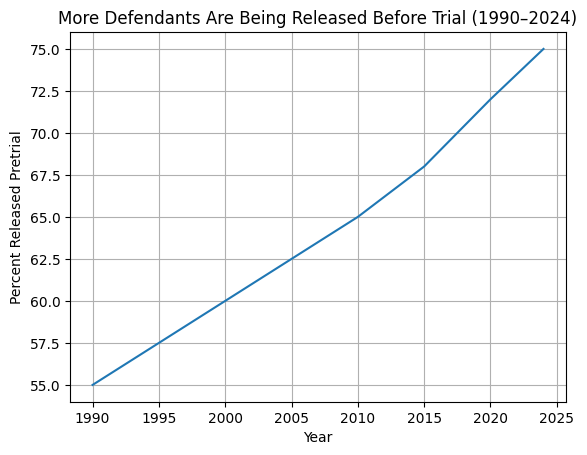
The underlying issue is not whether these goals are legitimate. It is whether the methods used to pursue them take into account how people respond to incentives. When expectations are lowered or enforcement becomes inconsistent, behavior adjusts. That adjustment is not a moral judgment. It is a predictable response to the environment.
This is why focusing only on intentions can be misleading. A policy that aims to help one group may produce side effects that affect others. A cultural shift that emphasizes personal freedom may reduce the informal pressures that once encouraged responsible behavior. Over time, these effects accumulate.
The role of the Democrat Party in this context reflects a broader pattern. By emphasizing inclusion, equity, and flexibility, the party has supported changes that reduce rigid expectations in a number of areas. These changes are often framed in positive terms, and in some cases they address real problems. At the same time, they can weaken the shared standards that make institutions function effectively.
This does not mean that every policy associated with the Democrat Party produces negative results, or that alternative approaches are without flaws. It does mean that the cumulative effect of reducing expectations and shifting responsibility away from individuals can alter how a society operates.
The distinction between intentions and outcomes helps explain why problems persist even when there is widespread agreement about the goals. Most people want safer communities, better schools, and greater opportunity. When policies aimed at achieving those goals produce mixed or negative results, the explanation is often sought in external factors rather than in the design of the policies themselves.
A more useful approach is to examine how changes in expectations affect behavior. When standards are clear and consistently applied, people have a stronger incentive to meet them. When standards are unclear or unevenly enforced, behavior becomes more variable. That variability increases the burden on institutions and reduces the effectiveness of policies that depend on cooperation.
Over time, the gap between intention and outcome can grow. Policies that were meant to solve problems can contribute to new ones if they weaken the underlying norms that support responsible behavior. Cultural shifts that expand individual choice can reduce the shared expectations that make collective systems work.
This is not an argument against reform or against efforts to address real inequalities. It is an argument for recognizing that outcomes matter more than intentions, and that incentives play a central role in shaping those outcomes. A society that ignores this relationship risks repeating the same mistakes, even as it pursues different goals.
Understanding that distinction is essential for evaluating both policy and culture. Without it, it becomes difficult to explain why well-intended changes sometimes produce results that move in the opposite direction.
Can It Be Rebuilt
If a shared culture weakens over time, the obvious question is whether it can be rebuilt. The answer depends less on policy than on expectations. Laws can reinforce behavior at the margins, but they cannot restore habits that are no longer widely practiced. Rebuilding culture requires that certain standards are not only stated, but expected and applied with enough consistency to shape behavior again.
This is where many proposed solutions fall short. They focus on programs, funding, or structural reforms without addressing the underlying issue of expectations. A school can adopt a new curriculum, but if classroom behavior remains inconsistent, the results will be limited. A city can increase spending on public safety, but if basic norms of conduct are not widely observed, enforcement will carry a heavier burden than it can sustain over time.
Rebuilding shared expectations begins with clarity. People need to know what is expected of them in concrete terms. That clarity does not require rigid uniformity, but it does require a baseline that is broadly understood. In the past, that baseline was reinforced through multiple institutions at once. Families, schools, workplaces, and communities all pointed in roughly the same direction. When those signals align, expectations become easier to follow because they are consistent across different areas of life.
When those signals conflict, the situation becomes more difficult. If one institution emphasizes discipline and responsibility while another downplays them, the overall effect is weaker than either one intends. Individuals respond to the mixed message by choosing the path that is least demanding or most immediately beneficial. Over time, that tendency shifts the baseline.
Rebuilding culture also depends on enforcement, but not only in the formal sense. Informal enforcement, which comes from social approval and disapproval, plays a larger role than formal penalties in shaping behavior. When people know that certain actions will be met with disapproval from those around them, they are more likely to adjust before formal intervention becomes necessary.
In recent decades, that form of enforcement has weakened in many settings. Behavior that once drew immediate correction is more often ignored or tolerated. Restoring it does not require harshness, but it does require a willingness to apply standards consistently. Without that consistency, expectations remain uncertain.
Incentives are part of the same equation. People respond to what is rewarded and what is discouraged. If systems reward behavior that falls short of stated standards, those standards will not hold. If they reward effort, responsibility, and reliability, those traits become more common over time. This applies in education, in the workplace, and in public policy.
The role of political institutions, including the Democrat Party, is relevant here because policy choices influence incentives. When policies reduce the consequences of certain behaviors or shift responsibility away from individuals, they change how people respond. Rebuilding a culture of shared expectations requires aligning policy with the behaviors that a society wants to encourage, rather than working against them.
At the same time, culture cannot be rebuilt solely through political action. It depends on decisions made at a more local level. Families set expectations for children before any institution becomes involved. Schools reinforce or weaken those expectations through their standards and discipline. Workplaces shape how adults understand responsibility and accountability. Communities influence what is considered acceptable behavior in shared spaces.
These influences are not coordinated in any central way, but they can move in the same direction or in different directions. When they move together, change can occur more quickly. When they conflict, progress is slower and less consistent.
It is also important to recognize that rebuilding culture is not an immediate process. The habits that shape behavior develop over time, and they do not change quickly. Attempts to impose rapid change through policy alone often fail because they do not address the underlying incentives and expectations that guide behavior.
The goal is not to recreate a past that cannot be fully restored. It is to reestablish a level of shared understanding that makes cooperation easier and reduces the need for constant enforcement. That requires a shift in how standards are viewed. Instead of being treated as optional or negotiable in every case, they need to be seen as part of the structure that allows a society to function.
When expectations are clear, consistently applied, and supported by both formal and informal institutions, behavior tends to align with them over time. When they are unclear or unevenly enforced, the opposite occurs.
The question is whether there is enough willingness across institutions and individuals to move in the same direction. Without that alignment, efforts to rebuild culture will remain fragmented, and the underlying trends will continue.
A society can adjust its policies relatively quickly. Adjusting its expectations takes longer, but it is the more important task if the goal is to restore a level of stability that allows its institutions to function effectively.
What This Adds Up To
A country does not lose its footing all at once. The change is gradual, often difficult to see while it is happening. Standards shift. Expectations weaken. Behavior adjusts. Institutions respond. Each step can be explained on its own, but taken together they move the system in a different direction.
That direction becomes clear only after enough time has passed. People begin to notice that everyday life feels less predictable. Trust is harder to extend. Cooperation requires more effort. Problems that once seemed manageable begin to require formal intervention. At that point, the question is no longer whether something has changed, but what changed and why.
The answer does not rest in a single policy or a single event. It lies in the gradual weakening of a shared culture that once made a large and diverse country easier to manage than it would otherwise have been. That culture was not perfect, and it did not produce equal outcomes in every case, but it provided a framework that guided behavior before enforcement became necessary.
As that framework weakened, the burden shifted to institutions. Schools were asked to do more than educate. Police were asked to manage situations that once would have been resolved before they escalated. Businesses adjusted to higher levels of risk. Government expanded its role in addressing problems that originated outside its direct control. These responses were rational to an extent, but they were also a sign that the underlying conditions had changed.
Political incentives played a role in that change. The expansion of coalitions, particularly by the Democrat Party, encouraged a broader range of perspectives and experiences to be brought into the political process. That expansion had advantages, but it also reduced the emphasis on a single set of shared expectations. Over time, that shift influenced how standards were defined and how strongly they were applied.
At the same time, cultural changes outside of politics reinforced the trend. Shifts in family structure, education, media, and community life all contributed to a weakening of the informal norms that once guided behavior. None of these changes operated in isolation. They interacted with each other, creating a feedback loop that made the overall effect more pronounced.
The result is not collapse, but strain. Institutions continue to function, but they operate under greater pressure. Rules become more complex. Enforcement becomes more necessary. Trust becomes less common. These are not abstract concerns. They affect how people experience daily life and how effectively a society can respond to new challenges.
This is not about returning to an idealized past. It is about recognizing that stability depends on more than formal systems. It depends on a level of shared understanding that reduces the need for constant intervention.
Rebuilding that understanding is not simple, and it cannot be achieved through policy alone. It requires consistent expectations across institutions, alignment between incentives and desired behavior, and a willingness to treat certain standards as necessary rather than optional.
The question is whether there is enough recognition of that need to support those changes. Without it, the trends described here are likely to continue, not because they are inevitable, but because the conditions that produce them remain in place.
A nation can sustain differences in opinion, background, and experience. It becomes much harder to sustain when it no longer shares enough in common to make cooperation the default.
Help Keep Work Like This Alive
You just read thousands of words that didn’t come from a headline, a press release, or a talking point.
It came from time spent digging, connecting dots, and trying to make sense of things most people feel but cannot quite put into words.
That kind of work doesn’t happen by accident.
It happens because people decide it’s worth supporting.
If this piece made you stop and think…
If it put words to something you’ve been noticing…
If it helped you see the bigger picture a little more clearly…
Then this is the moment to act.
Become a Paid Subscriber
Help support the work on an ongoing basis and keep this going.
https://mrchr.is/help
Make a One-Time Contribution
If a subscription isn’t right right now, any support helps more than you think.
https://mrchr.is/give
Join The Resistance Core
For those who want to go further and help build this into something lasting.
https://mrchr.is/resist
What Your Support Actually Does
It buys time for deeper work.
Time to research instead of react, to go deeper instead of rushing something out, to build something that doesn’t rely on algorithms, headlines, or permission.
If you’ve ever thought,
“Someone needs to be saying this…”
You’re looking at it.
The only question is whether you’ll help support it now, or wonder where it went later.
Great essay! Your writing reminds me so much of Thomas Sowell. It appears you are also a big fan as well. It's sad to read about the unravelling of America as you have adequately described it. I believe it all started with unrestricted, and recently unlimited, mass immigration from third world countries whose populations never had any intentions of assimilation.
Now, with the mass migration of Muslim populations (who have zero intentions of assimilating) we have reached a point of no return without violent conflict. The Islamists have made their imperialists notions of internal conquest quite clear. They did not invade, like the EU, we invited them. So, with the declining civil structure of the remaining Americans and the combination of the new Islamic imperialists, the outlook is dismal for my grandchildren.
Part II shows what happens when expectations disappear.
Part I explains how we got there.
If you want the full picture, start here:
https://mrchrisarnell.com/p/american-paradise-lost-part-i