

“Redemption isn’t becoming perfect. It is having the chance to do something worthwhile after you have failed.”
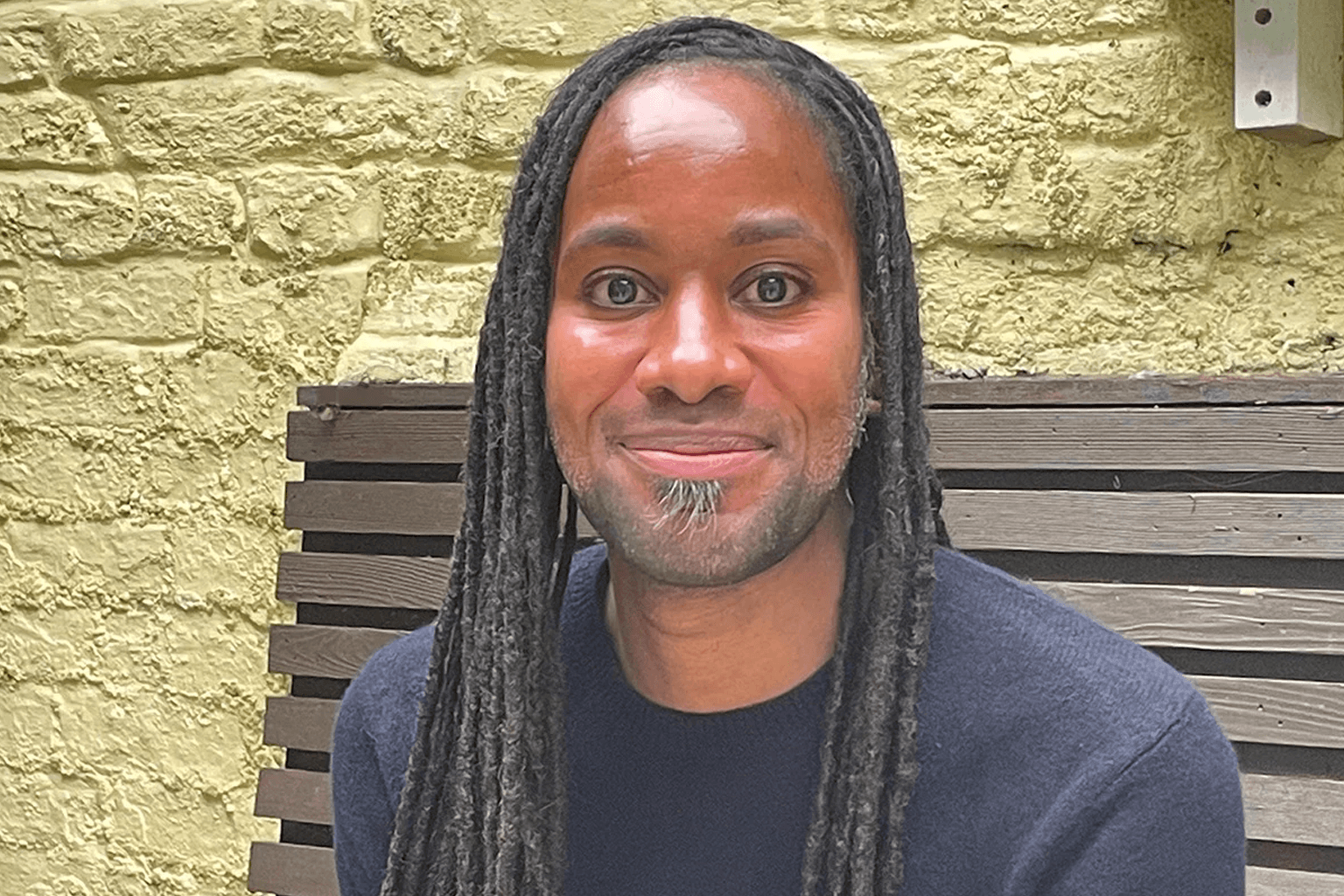
Until the recent controversy surrounding Jason Arday, I had never heard of the guy. Then suddenly his name was everywhere.
Arday was 41. In 2023, he became the youngest Black person ever appointed to a professorship at Cambridge. He was autistic, reportedly did not speak until he was 11 and could not read or write until he was 18. Cambridge understandably made a big deal out of the story. Here was a Black autistic man who had supposedly overcome enormous obstacles and landed at one of the most prestigious universities on Earth.
Then the story began coming apart. Serious allegations of plagiarism emerged. Questions were raised about his academic work and parts of the extraordinary biography that had helped make him famous. Cambridge began reviewing his qualifications and how he had been appointed. Arday resigned on August 5.
I considered writing about him, and it wasn’t going to be kind.
My initial reaction was that Cambridge had found itself the perfect DEI poster child. Black, autistic, inspirational, with an almost unbelievable overcoming-the-odds story and an academic career built largely around race and inequality. Then came evidence suggesting that at least some of what Cambridge had so proudly promoted deserved much closer scrutiny.
There was plenty about the story that caught my attention. Race, DEI, institutional incompetence, questionable scholarship and one of the world's great universities standing in the middle of it all. I had plenty of material, and knowing me, I probably would have been brutal.
Then Jason Arday died today.
And suddenly the essay I had been considering didn’t seem quite so clever.
I started thinking about what I might have written, how brutal I probably would have been, and how I would feel tonight if I had published it yesterday.
What if I had spent a couple thousand words tearing this guy apart, made a few especially vicious jokes, called him a fraud and hit publish, only to wake up the next morning and discover he was dead?
I know myself well enough to know it would have haunted me.
Not because I would suddenly decide everything I had written was wrong. Death does not make plagiarism disappear. It doesn’t turn dishonesty into honesty, and it shouldn’t make legitimate questions off-limits.
But I would wonder whether he had read it. Was he already falling apart? Had something I wrote become one more thing piled on top of a guy who thought his entire life had just collapsed?
I would never know. That is exactly why I think the question would stay with me.
Police have not said Jason Arday committed suicide. His death is being treated as unexpected but not suspicious, and the coroner will eventually tell us more. Maybe his death had absolutely nothing to do with the scandal surrounding him. I sincerely hope that’s the case.
Still, given the timing, suicide crossed my mind. Nine days ago he resigned from Cambridge after watching his career and reputation implode in public. Today he is dead at 41.
That possibility hits me differently because I know what it is like to reach a place where continuing doesn’t seem particularly important.
Almost a Statistic
I wrote about this before in an essay called Anti-Depression Obsession.
I was thirty years old, restless, having trouble sleeping and struggling to concentrate. I eventually ended up on antidepressants. They didn’t make me happy. They made me numb.
Food lost its taste. Laughter stopped meaning much. I was sweating constantly, foggy and increasingly detached from everything around me. One afternoon I came home from work early, sat on the floor of my closet, stripped down because I was sweating so badly, and held a loaded gun.
I wasn’t crying or angry. Mostly, I felt nothing.
Somehow, I didn’t pull the trigger. I got off the medication, went through a miserable withdrawal and continued with my life.
Nearly thirty years later, I sometimes think about that guy on the closet floor, especially lately.
Sometimes life seems useless. You look around at the things that have gone wrong, the money you don’t have, the mistakes you’ve made and the people depending on you, and you start feeling like a complete failure.
I’ve felt some of that lately. There are days when I wonder whether I have let down my wife, my kids and plenty of other people who expected something better from me.
Then I think about that gun and everything that happened because I didn’t pull the trigger.
Not because I went on to become some perfect man. Jesus Christ, no. That isn’t how redemption works.
We like redemption stories with clean endings. Somebody screws up, learns his lesson, changes his life and supposedly never fucks up again. Real life isn’t anything like that.
I’ve come through for people in some pretty important moments and managed to screw things up somewhere between many of them. Sometimes I have been exactly the guy somebody needed. Other times I have been the problem.
That’s just life.
Redemption isn’t becoming perfect. It is having the chance to do something worthwhile after you have failed.
If I had pulled that trigger at thirty, whatever version of me existed on that closet floor would have become the final version. There would have been no children raised afterward, no people helped, no businesses built, no essays written and no moments when somebody desperately needed me and, despite all my other shortcomings, I happened to come through.
Of course, there also would have been no future mistakes.
I got both. Plenty of good mixed in with plenty of fucking up.
But I got more chapters.
What If He Was a Fraud?
That is what made me start thinking differently about Arday.
Suppose the worst allegations against him eventually prove true. Suppose he really was a fraud. Does that mean his entire existence was fraudulent?
I don’t think so.
I would be amazed if Jason Arday didn’t inspire somebody. Maybe an autistic kid heard that a boy who supposedly didn’t speak until he was 11 became a Cambridge professor and started thinking differently about his own future. Maybe a Black kid who had never pictured himself anywhere near an elite university saw Arday standing at Cambridge and aimed a little higher. Or maybe some kid who was way behind in school heard that Arday supposedly learned to read and write at 18 and figured being behind didn’t mean he was finished.
If one of those people went out and conquered the world, does that accomplishment become fake because the man who provided the inspiration may have lied?
Of course not.
Flawed people can still do good things. Somebody can lie about one part of his life and still say something another person desperately needed to hear. Somebody can fail spectacularly and still inspire somebody else to succeed.
I’ve lived enough of that contradiction myself that I would be a hypocrite to pretend otherwise.
Maybe that’s one of the mistakes we make when somebody falls publicly. We learn the worst thing about him and suddenly use it to explain everything about him. A man gets caught lying and now everything he ever said was supposedly a lie. He fails and suddenly he was always a failure.
Human beings aren’t that simple.
Cambridge Still Has Some Explaining to Do
None of this lets Cambridge off the hook.
I cannot prove Cambridge knew Arday was a fraud when it hired him, so I won’t say that. What is documented is troubling enough.
Arday joined Cambridge in March 2023. Within roughly two months, senior university officials had been warned about substantial plagiarism allegations involving one of his papers. Arday agreed to take down the paper, but Cambridge continued publicly supporting him and declined to investigate the underlying work because it predated his arrival at the university.
That is absurd.
Cambridge had just hired a man partly on the strength of his academic record, then treated serious questions about that record as somebody else’s problem because the work had been done somewhere else.
If Arday’s death is eventually ruled a suicide, I will think Cambridge bears some responsibility for the circumstances that preceded it. Not because Cambridge exposed him, but because Cambridge helped build the pedestal.
It publicly celebrated the race, disability and remarkable biography that made Arday such an irresistible symbol. Then serious warning signs appeared almost immediately and the university had an opportunity to deal with them quietly, thoroughly and honestly.
Instead, the problems sat there until the eventual reckoning became enormous and public.
Sometimes protecting someone from consequences isn’t kindness. Sometimes it just gives him farther to fall.
The Guy on the Other End
But Cambridge isn’t really why I’m writing this. I keep thinking about the essay I didn’t write.
Maybe Arday never would have seen it. Maybe he would have read it and thought I was an asshole. Maybe he would have laughed at it and moved on.
Or maybe he would have been sitting alone somewhere, already thinking his reputation, career and future were gone, and my essay would have been one more stranger telling him what a worthless piece of shit he was.
I would never know.
That does not mean I am going to stop being blunt. If somebody lies, I am going to call it a lie. If an institution lowers its standards because it wants an ideological success story, I want that exposed too.
Truth doesn’t become cruelty simply because it hurts. But not every cruel thing we say becomes more truthful simply because the target has done something wrong.
There is a line there. I have probably crossed it before, and what happened today reminded me that I should at least know where it is.
Jason Arday was 41. Even if every allegation against him eventually proved true, he had time to admit it, apologize, walk away from academia and try to rebuild whatever was left.
He probably would have screwed up again. Most of us do.
Maybe somewhere between those future mistakes he would have done something great. Maybe he already had. There may already be somebody walking around today living a bigger life because Jason Arday once convinced him that he could.
That is closer to what redemption actually looks like. You don’t become a saint. You get another chance, and hopefully you do something worthwhile with at least some of it.
Thirty years ago, I was sitting on a closet floor with a loaded gun, feeling as though whatever my life had become wasn’t worth continuing.
I was wrong.
Since then I’ve done things I’m proud of and things I’m not. I’ve come through for people and I’ve failed people. There has been a lot of good mixed in with a fair amount of fucking up.
I got more chapters.
Some of them were worth sticking around for.
I don’t know what killed Jason Arday today, and I don’t know what he would have done with the rest of his life. Maybe he would have redeemed himself. Maybe he would have fucked up again. Most likely, like the rest of us, he would have done some of both.
I just wish he’d had the chance to find out.
And I’m glad the last thing I contributed to his story wasn’t an essay telling him what a piece of shit I thought he was.
There is probably something in that for all of us. Tell the truth. Hold people accountable. Expose fraud when you find it.
Just remember that the person you’re tearing apart today may still become somebody better tomorrow.
You might too.
RIP Jason Arday.
Some of us can relate, whether we care to admit it or not.
I was honestly expecting the essay you were going to write, Chris. I was almost hoping for it, just so I could be "right" about the apparent fraud that this man had committed.
My faith teaches me forgiveness, and it would have been rather un-Christian of me to root for you to kick this man while he was already down. As you say, honesty is not cruel, it's just the truth. We can, however, still utilize the sharp knife of truth to cut in a cruel fashion and I must say that I'm glad that you wrote this essay and not the one you had planned.