

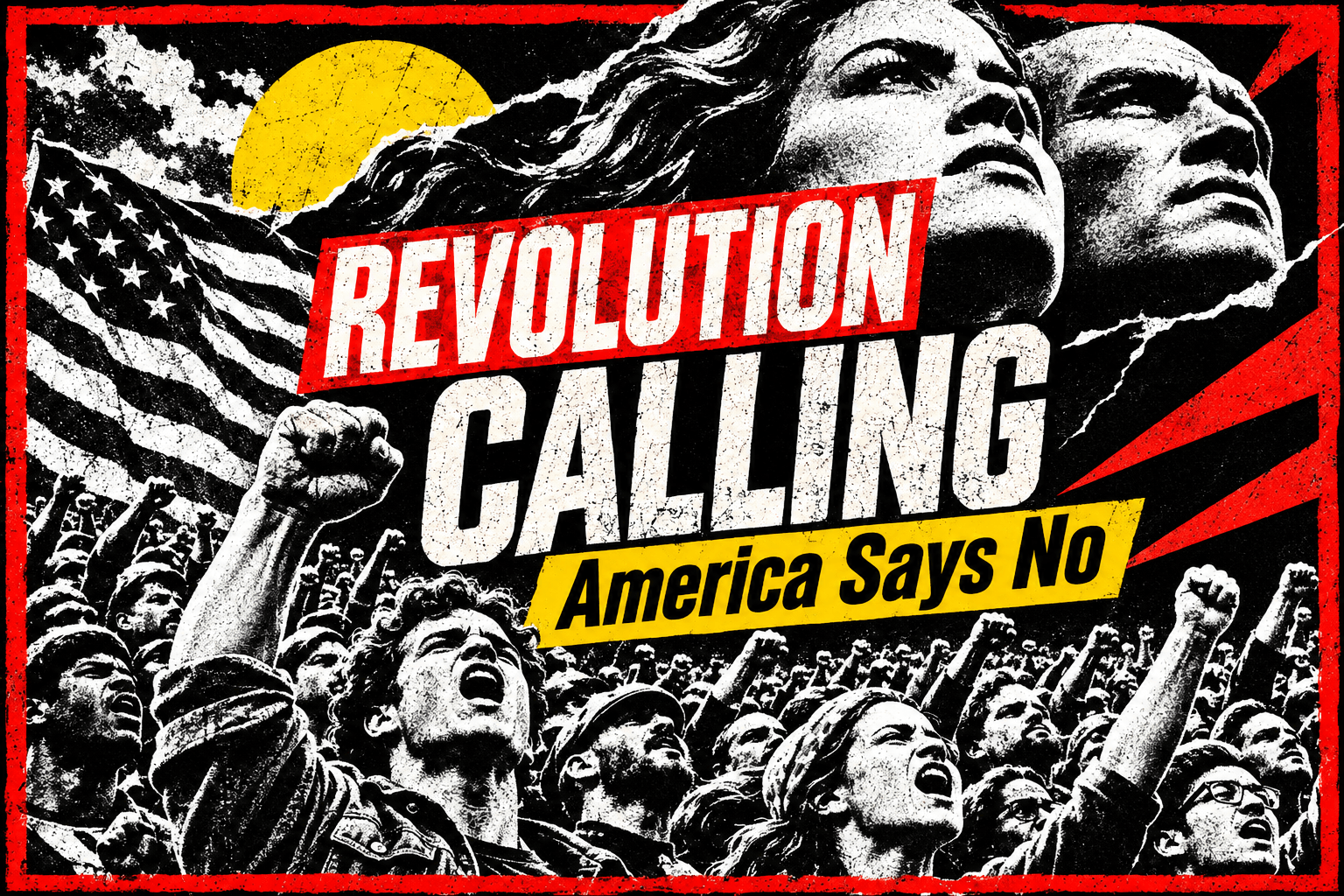
“What happens when a government decides it no longer has to obey the courts? The answer may depend less on the politicians holding power than on the Americans willing to tell them no.”
Part Two of a two-part essay. Read Part One, Revolution Calling: They Think They’ve Got Us, for the political proposals and hypothetical events leading to this confrontation.
Three weeks into the confrontation, the federal government is still enforcing restrictions a judge has ordered it to stop. The company asks the court to hold federal officials in contempt. Government lawyers prepare another appeal, but the original order remains in force.
A court can issue an injunction, order officials to explain their conduct, and impose legal consequences for defiance. But judges don’t operate an independent executive branch. Their authority ultimately depends on other public institutions respecting and enforcing the law.
Washington now has to answer a question nobody intended to put on the ballot: Who restrains a government that refuses to be restrained?
The People Nobody Counted On
The greatest mistake a socialist movement could make is assuming that everybody who dislikes Republicans must therefore support replacing America’s constitutional system.
According to Pew Research Center’s analysis of the 2024 presidential election, voters identifying as independents, including those who leaned toward a party, split evenly between Donald Trump and Kamala Harris, with 48% supporting each. Among conservative and moderate Democrats and Democrat-leaning voters, 90% supported Harris.
Those figures describe an electorate with political loyalties, not a country that has agreed to abolish the Senate, subordinate the courts to Congress, or place major industries under public ownership.
Consider the voter who supported Harris because she favored abortion rights or disliked Trump’s personality. She may also own a business, support the police, and believe that federal judges should be able to stop unconstitutional government actions.
Or the independent who favors environmental regulations but has spent twenty years building a construction company. He’s not likely to appreciate being told that his contracts and employees must wait indefinitely while Congress decides whether his industry satisfies the latest political program.
These Americans don’t have to become conservatives. They can remain liberals, moderates, independents, and lifelong Democrats while concluding that the government has exceeded its authority.
The first prominent Democrat to break publicly with the administration calls the defiance unacceptable. Others follow, some because they believe it and others because their constituents are furious. Both kinds of politicians become a problem for the governing coalition.
Republicans begin gaining support among independents. Moderate Democrats face demands from voters who supported the party’s economic proposals but never endorsed a constitutional confrontation. Attorneys general from competing political camps join litigation challenging the administration.
The movement that spent years building influence inside the Democrat Party discovers that the same narrow congressional margins that once gave it leverage can turn against it. A few legislators withdrawing support can make the difference between passing another bill and watching the entire agenda stall.
Fifty States. One Very Large Problem.
The federal government doesn’t govern every community directly. Fifty states operate their own institutions, employ their own officials, and possess powers that Washington cannot simply absorb whenever the president finds cooperation inconvenient.
State governments can challenge federal actions in court. Their attorneys general can seek injunctions. Governors and legislatures can refuse to administer certain federal regulatory programs when the Constitution does not require state participation.
The Supreme Court has repeatedly recognized that Washington cannot simply order state officials to carry out federal regulatory duties. That principle, known as anti-commandeering, was reinforced in cases including Printz v. United States in 1997 and Murphy v. NCAA in 2018.
States cannot nullify valid federal law merely because they dislike it. But the distinction between enforcing federal law and forcing state governments to administer federal programs gives the states meaningful independence.
Now imagine governors in a dozen states challenging the administration’s conduct. Some are Republicans. Others are Democrats who consider the government’s refusal to obey the courts an extraordinary abuse of authority.
The conflict spreads into Congress. Committees subpoena officials and demand records explaining why a binding judicial order was disregarded. The administration refuses to provide certain documents, claiming executive privilege or insisting that congressional investigators are interfering with its work.
Congress also controls federal appropriations, although using that power to force changes requires sufficient legislative support and must contend with the president’s veto powers.
A revolutionary organization can issue a statement promising to replace the Supreme Court. Getting enough Americans, legislators, and states to agree to that replacement is another matter.
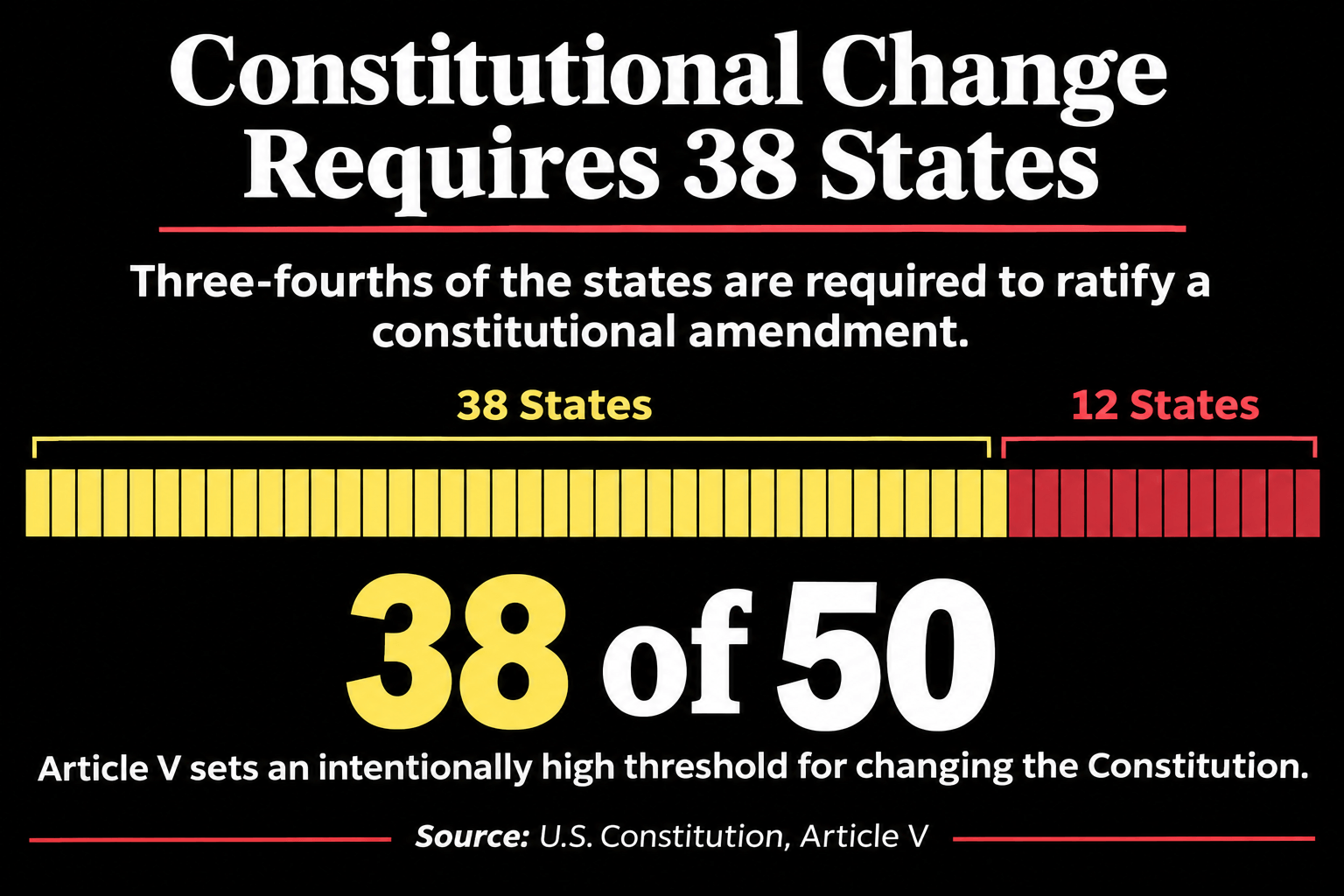
Article V requires amendments to be ratified by three-fourths of the states. With fifty states, that’s thirty-eight. The Constitution also protects each state’s equal representation in the Senate without that state’s consent.
Good luck persuading Wyoming that its two senators should disappear because a socialist chapter in New York has decided the arrangement is undemocratic.
When the Government Begins Losing Its Own People
The administration’s greatest problem develops inside the institutions it needs to carry out its policies. Federal employees, agency attorneys, and political appointees begin confronting instructions that conflict with judicial orders. Some resign. Others refuse particular directives and seek legal guidance.
The longer the administration refuses to comply, the more its legal position deteriorates. The more public attention the dispute receives, the harder it becomes for moderate legislators to defend. The more institutions challenge the government’s conduct, the greater the political cost of continuing.
But the administration needs far more than a group of enthusiastic activists to prevail in this confrontation. It needs judges to surrender their independence, legislators to tolerate executive defiance, state governments to accept additional federal authority, and voters to keep supporting officials whose conduct is becoming increasingly difficult to defend.
In 1974, Richard Nixon lost an 8-to-0 Supreme Court decision requiring him to provide the Watergate recordings. He complied and resigned sixteen days later.
That outcome required more than eight justices writing an opinion. It required the president to comply, Congress to investigate, and enough members of his own party to conclude that defending his presidency was no longer defensible.
The administration's most loyal supporters want a confrontation. Its less committed allies want the crisis to end. The people who invested in the economic program begin realizing that the administration may destroy its political future trying to defend it.
A government can lose a court case and continue governing. It can lose an election and return to power later.
What it cannot easily recover is the public’s confidence that the law means the same thing when the government loses as when it wins.
When America Pushes Back
Financial markets have a nasty habit of recognizing political disasters before the politicians responsible for them are willing to admit anything is wrong.
By the time our constitutional confrontation reaches the higher courts, businesses have begun treating American political instability as an additional investment risk. Banks are reconsidering loans, construction companies are postponing projects, and corporate boards are reluctant to commit billions of dollars when they cannot predict which regulations the government will enforce next year.
A manufacturer postpones an expansion. The construction company expecting the contract reduces its workforce. Local businesses that expected hundreds of additional customers reconsider their plans. Families begin postponing major purchases because nobody is particularly enthusiastic about accumulating new debt while employment looks uncertain.
This doesn’t require nationwide warfare. It requires enough uncertainty to persuade businesses and consumers that waiting is safer than spending.
The America They Forgot About
My March 2025 hypothetical civil-war essay examined the economic and geographic realities of a prolonged national confrontation. Those realities apply here.
According to the 2020 Census, 80% of Americans lived in urban areas, with the remaining 20% living outside them. Political preferences differed substantially across those communities.
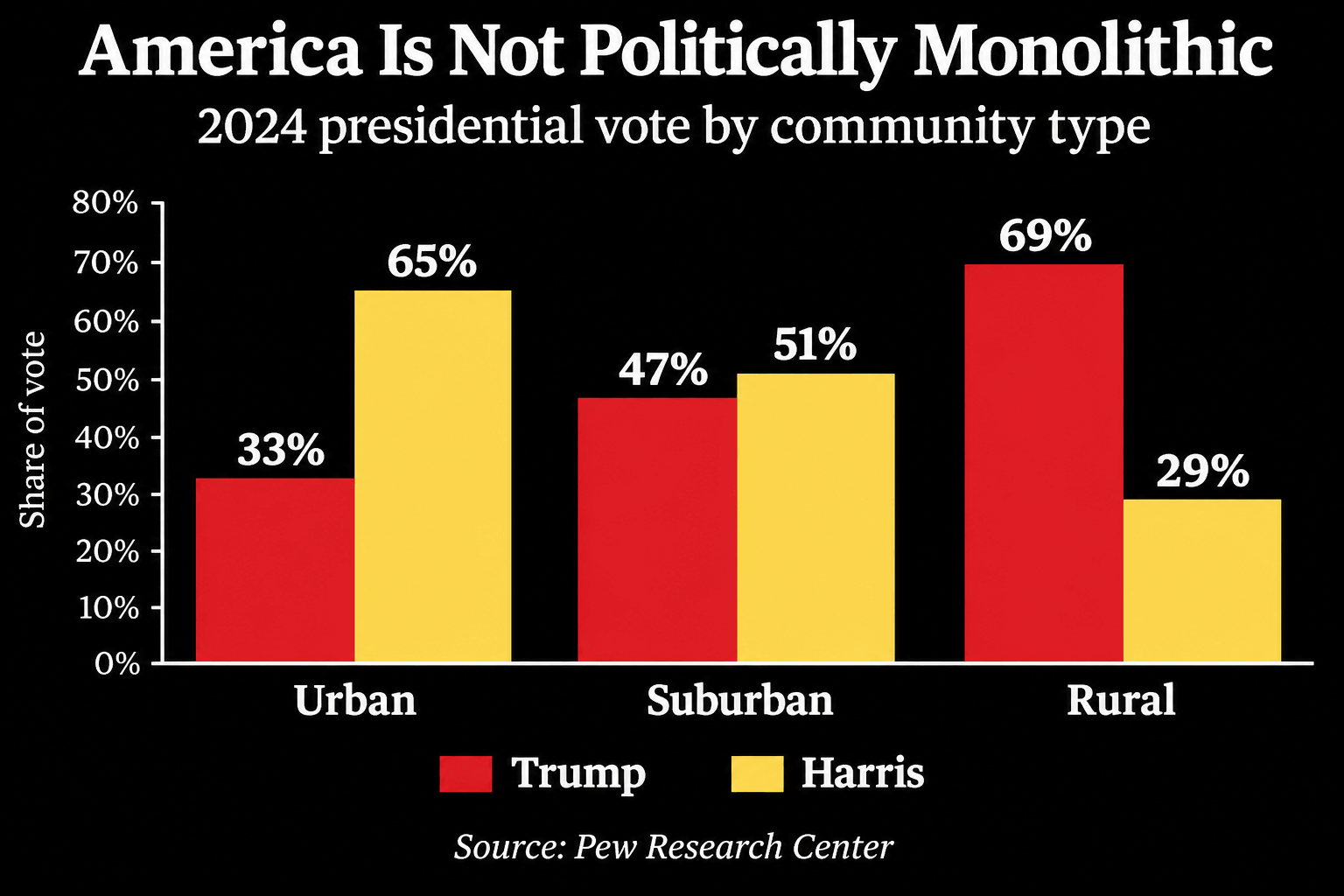
Pew Research Center found that Donald Trump received 69% of the rural vote in 2024, while Kamala Harris received 29%. Urban voters favored Harris by 65% to 33%. The suburban vote was much closer, with Harris receiving 51% and Trump 47%.
Cities contain tremendous concentrations of money, employment, hospitals, universities, technology, manufacturing, and financial services. Rural areas and smaller communities contain large portions of the farmland, energy production, and industries that make modern urban life possible.
Texas produced approximately 12 trillion cubic feet of marketed natural gas in 2024. Pennsylvania produced about 7.4 trillion. Both were major sources of the energy used by American homes and businesses, despite their different electoral histories. California, meanwhile, recorded approximately $59 billion in agricultural sales in the 2022 Census of Agriculture, making it the nation’s largest agricultural state by sales.
Anybody who believes Republicans own all the food and fuel because rural America votes conservative has overlooked California. Anybody who believes America’s largest cities can operate independently of the regions supplying their food and energy has apparently never examined what it takes to keep one running.
A supermarket depends on farmers, processors, trucking companies, warehouses, electrical utilities, suppliers, and banks. A farmer depends on machinery, fuel, financing, fertilizers, repairs, communications, and customers.
The machinery doesn’t manufacture itself. The crops don’t drive themselves to market. And the bank financing the operation doesn’t particularly care whether the farmer voted Republican or Democrat.
Hospitals would face greater uncertainty about staffing and supplies. Businesses would confront interruptions and higher expenses. Consumers could experience rising prices or shortages if transportation, production, or distribution were seriously disrupted.
The impact would be especially severe for households living from paycheck to paycheck. Wealthy Americans can generally absorb more unexpected expenses. A family with fifty dollars left after paying the rent has fewer options.
That’s one of the cruelest ironies of revolutionary politics. The people promising to protect ordinary workers can end up exposing those same workers to the greatest economic hardship when their political experiments destabilize the institutions and markets on which employment depends.
The Country Is Armed. The Government Is Divided.
In 2018, the Small Arms Survey estimated that American civilians possessed approximately 393 million firearms in 2017, or 120.5 firearms for every hundred residents. An armed population is not automatically a unified political force. Some gun owners are conservatives. Others are liberals, independents, or people who have no intention of becoming involved in somebody else’s political crusade.
But a society containing that many privately held weapons would face terrible risks if its constitutional institutions ceased functioning and political disputes escalated into widespread violence.
American service members swear an oath to support and defend the Constitution, not the party holding the presidency. Senior military officers and commanders have legal responsibilities that cannot simply be replaced with political loyalty tests.
A president possesses substantial authority over the armed forces, but that authority is exercised within a legal and constitutional system. The legality of particular orders, the conduct of civilian officials, and the willingness of institutions to carry out their responsibilities would become central questions during an extraordinary national crisis.
Why I Believe the Constitutional Opposition Wins
A movement seeking to replace major American institutions begins with a considerable disadvantage: it must persuade enough people to abandon or fundamentally restructure a system that already exists, while overcoming the legal restraints built into that system. Its opponents don’t have to invent a new government. They have state governments, courts, established electoral procedures, private institutions, and constitutional provisions that make sweeping changes extraordinarily difficult.
Court orders, however, do not enforce themselves. A determined president could prolong the crisis if executive officials kept carrying out the disputed directives and Congress refused to intervene. The turning point would be the administration losing the cooperation it needs to govern, including from people who originally supported its economic program.
Suppose the governing party holds the House by five seats. Three members from competitive districts announce that they will no longer defend the administration’s refusal to comply with a binding judgment. They can support oversight hearings, withhold votes needed for new legislation, and demand that agency officials answer questions under oath. Party leaders now lack the reliable majority that once allowed a small socialist faction to extract concessions.
That rupture changes the calculations inside the executive branch. Government lawyers have stronger reasons to insist that their agencies comply with court orders. Political appointees must decide whether continued defiance is worth the legal and professional consequences. Governors and businesses see that the administration’s own allies are withdrawing support, making legal challenges and demands for enforceable rules harder to dismiss as ordinary partisan warfare.
The political calendar makes the problem worse. An administration can appeal a ruling, but it cannot unilaterally postpone congressional elections. If independent voters and moderate Democrats turn against the confrontation, legislators have every incentive to separate themselves from the officials prolonging it. A few defections make new legislation harder; an election can remove the majority altogether.
The opposition would still need discipline. Its members would disagree about taxes, immigration, abortion, and the size of government, and some would be tempted to answer executive overreach with overreach of their own. If the courts were ignored, Congress remained loyal, and voters tolerated the disruption, the crisis could continue. Anger alone would not settle it. The government would begin losing when legal defeats, economic costs, and defections inside its coalition reinforced one another.
The decisive moment would come when the administration could no longer persuade enough of its own officials and allies to carry out its will. That is a far more credible path to political defeat than predicting the outcome of a civil war from a county election map.
The Reckoning
Twenty years later, Americans would probably remember the confrontation very differently from the politicians who started it. A father whose employer canceled an expansion would remember the months he spent looking for work. A couple approaching retirement would remember watching their investments fall while Washington argued about who possessed the authority to make decisions affecting their savings.
And if the confrontation descended into violence, some families would have losses that no election, court decision, or subsequent economic recovery could repair.
Revolutions tend to look considerably more romantic when the people advocating them aren’t required to pay the bills.
The government might eventually change hands. Regulations could be repealed, unlawful directives withdrawn, and public confidence gradually restored. But the money lost, opportunities abandoned, and years consumed by political turmoil would not simply reappear.
There is no government program capable of refunding a family five years of its life.
America in 2046
Imagine students in 2046 examining the political movement that proposed abolishing the Senate, restructuring the presidency and judiciary, and placing much of the economy under public ownership. They would study the promises alongside the results.
Did the proposed economic system improve living standards? Did concentrating more authority in Washington make government more accountable? Were citizens better protected when officials tried to weaken the institutions capable of ruling against them?
Those questions would be more useful than memorizing which politician delivered the most inspiring speech about changing the world.
The Americans who opposed the administration weren't all conservatives. Some supported expanded healthcare, stronger labor protections, or environmental regulation. Others wanted lower taxes, less federal spending, and fewer restrictions on private enterprise.
What united them was the conviction that government officials were not entitled to exceed their constitutional authority merely because they believed their objectives were worthwhile.
And the surviving constitutional system would still allow political movements to propose changes, contest elections, challenge laws, and persuade voters. The socialist movement could continue advocating its program. It simply would not possess the authority to impose it outside the law.
That is a much more demanding arrangement than letting one political faction declare itself the permanent representative of the people. It requires accepting the possibility of losing elections, losing court cases, and watching policies you consider essential get repealed by politicians who disagree with you.
And Americans would continue arguing. Good. The alternative would be a country in which one movement possessed enough authority to end the arguments by preventing its opponents from challenging the government effectively.
A constitutional republic is not valuable because its politicians always make the right decisions. It is valuable because its citizens possess legal means to challenge those decisions, replace the people making them, and preserve freedoms that do not depend on the approval of the current administration.
The best evidence of their success would be the ordinary, sometimes infuriating business of living in a country where the government still has to accept being told no.
Revolution Calling
In 1988, Queensrÿche released Operation: Mindcrime, a concept album about a disillusioned young man named Nikki who becomes involved with a revolutionary organization led by a mysterious figure known as Dr. X.
Nikki is angry about corruption, hypocrisy, and the condition of society. He wants something better, which makes him a useful recruit for a man who understands how to turn frustration into obedience.
Dr. X offers him a purpose, an enemy, and a cause worth sacrificing everything for. Before long, the young man who wanted to fight corruption has become an instrument of somebody else’s ambitions.
The revolution that was supposed to liberate him has taken possession of his life. That’s why I opened Part One with a passage from Operation: Mindcrime.
Revolutionary movements have a remarkable ability to convince people that surrendering their independence is the first step toward gaining freedom. The leaders promise a better society, identify the people standing in the way, and gradually demand more authority to accomplish their objectives.
Their followers become convinced that the cause is so important that ordinary rules no longer apply. Nikki eventually begins remembering how he got there and what he surrendered along the way.
The revolutionary movements we’ve examined can organize, campaign, publish their plans, and ask Americans to support them. They can propose a different economy or an entirely different Constitution. The people living here get to decide whether those proposals deserve their consent. And the politicians who lose that argument must accept the answer.
America may need fixing. It doesn’t need a new owner.
A Personal Request
I’ve kept my essays free because I believe this information should reach as many people as possible. But right now, I need your help.
As many of you know, my October 7 car accident cost me approximately five weeks of driving income while I was already struggling to rebuild financially.
On Friday, I received a three-day notice to pay my overdue rent or vacate. Management says eviction proceedings will begin Tuesday, November 17, if I cannot resolve the balance.
Thanks to your generosity, I’ve raised approximately $500 toward the estimated $2,100 I owe. I’m still about $1,600 short.
I’m working to get back on my feet, but time is running out. If you’ve valued these essays and can comfortably contribute, I would be enormously grateful.
Venmo (fastest option):
https://account.venmo.com/u/mrchrisarnell
Paid subscriptions ($8/month or $80/year):
https://mrchr.is/help
Resistance Core (normally $1,200/year, adjustable):
https://mrchr.is/resist
Buy Me a Coffee:
https://mrchr.is/give
Buy Me a Coffee payouts take several days, so Venmo is preferable for this immediate deadline. Subscription payouts may also take time to become available.
To everyone who has already contributed, thank you. Your help has made a real difference.
I’m not asking anyone to solve my life. I’m asking for a chance to keep my family in our home while I work my way back.